
Did you know that search engines are now using AI to understand content nuances better than ever before? In 2026, the landscape of search engine optimization (SEO) is dramatically different, and artificial intelligence (AI) is at the forefront of this transformation. Gone are the days of simply stuffing keywords and hoping for the best. Today, search engines like Google are employing sophisticated AI algorithms to decipher user intent, assess content quality, and ultimately determine what appears at the top of the search results. This shift means that for businesses and individuals aiming for online visibility, understanding "AI ranking" isn't just beneficial; it's absolutely essential.
Key Takeaways
- AI is central to how search engines rank content in 2026.
- Understanding and satisfying user intent is paramount.
- High-quality, comprehensive, and original content is rewarded.
- User experience (UX) signals are critical ranking factors.
- Demonstrating Experience, Expertise, Authoritativeness, and Trustworthiness (E-E-A-T) is essential.
- Focus on natural language, semantic relevance, and structured data.
- Avoid outdated tactics like keyword stuffing and thin content.
Who is This For?
This guide is for anyone who wants their website to rank well in search engines in 2026 and beyond. This includes:
- Website Owners: Small business owners, entrepreneurs, and bloggers looking to increase their online visibility.
- SEO Professionals: Marketers and specialists aiming to refine their strategies for the current AI-driven search landscape.
- Content Creators: Writers, editors, and publishers focused on producing valuable content that resonates with both users and search engines.
- Digital Marketers: Professionals seeking to understand the latest trends and adapt their campaigns effectively.
Who is This NOT For?
This article might not be the best fit for individuals who:
- Are looking for quick, spammy "hacks" to manipulate search rankings.
- Are not interested in creating high-quality, user-focused content.
- Believe that traditional, keyword-stuffing tactics will still yield significant results.
- Are not willing to invest time in understanding user behavior and website experience.
What Exactly is AI Ranking?
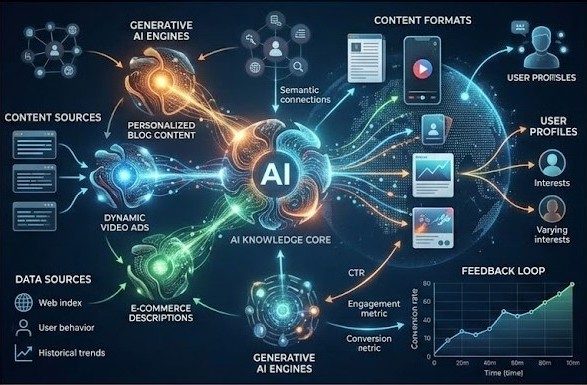
AI ranking refers to the use of artificial intelligence and machine learning technologies by search engines to evaluate and order web pages in their search results. AI overviews are one visible outcome of these systems, but AI ranking is the broader algorithmic framework behind many SERP behaviors. Think of AI as the super-smart librarian of the internet, meticulously cataloging, understanding, and recommending the most relevant information to users. Instead of relying solely on rigid rules, AI algorithms can learn, adapt, and interpret complex patterns. This includes understanding the context of search queries, the sentiment of content, the expertise of authors, and the overall user experience a website offers.
Search engines utilize AI for a multitude of tasks that directly impact rankings. One of the most prominent is Natural Language Processing (NLP). NLP allows AI to understand human language as it's written and spoken, grasping the meaning behind words, synonyms, and even the subtle nuances of user intent. This means search engines can now better interpret queries like "best place to get a cuppa near me" and understand you're looking for a local coffee shop, not just any place that sells tea. Another key AI component is Machine Learning (ML), which enables algorithms to improve their performance over time by analyzing vast amounts of data. As more users interact with search results, AI learns which pages are most helpful and authoritative, adjusting rankings accordingly.
How is AI Reshaping Search Engine Rankings?
The integration of AI into search algorithms has fundamentally altered how websites are evaluated. It's a move away from superficial metrics towards a deeper understanding of content and user satisfaction.
Understanding User Intent with AI
Perhaps the most significant impact of AI on ranking is its ability to decipher user intent. Previously, search engines might have matched keywords directly. Now, AI can infer why a user is searching. Are they looking to buy something (transactional intent)? Do they want to learn about a topic (informational intent)? Are they trying to navigate to a specific website (navigational intent)? Understanding this intent allows AI to serve the most appropriate results, even if the exact keywords aren't present on a page. This is a crucial aspect of semantic SEO, where content is structured and written to answer questions comprehensively, rather than just targeting keywords. Examining 7 Successful Semantic SEO Examples That Drove Massive Ranking Gains can offer tangible insights into this approach.
Content Quality and Authority
AI algorithms are becoming incredibly adept at assessing the quality and authority of content. They can identify well-researched, comprehensive, and original pieces. Factors like the depth of information, the clarity of writing, and the presence of expert authorship (often assessed through signals like author bios and consistent publishing) play a role. AI can also detect duplicate or thin content, penalizing it in the rankings. This emphasis on quality encourages creators to produce valuable, user-centric content that genuinely answers questions and solves problems.
User Experience Signals
AI also monitors how users interact with a website. Metrics like bounce rate, time on page, and click-through rates are analyzed. If users quickly leave a page or don't engage with the content, AI interprets this as a sign that the page isn't meeting their needs, negatively impacting its ranking. Conversely, pages that keep users engaged and satisfied are favored. This underscores the importance of a seamless user experience, including fast loading times, mobile-friendliness, and intuitive navigation. Maintaining a website's performance is paramount, which is why services like The Best Website Maintenance Services are so vital.
E-E-A-T and AI
Experience, Expertise, Authoritativeness, and Trustworthiness (E-E-A-T) are critical ranking factors, and AI plays a significant role in evaluating them. AI can analyze author credentials, review signals, and the overall reputation of a website to gauge these qualities. For example, if a medical advice website consistently features articles written by board-certified doctors and has a history of reliable information, AI will recognize its E-E-A-T. This focus on credibility is particularly important for Your Money or Your Life (YMYL) topics, where accuracy and trustworthiness are paramount.
Google's Search Quality Rater Guidelines serve as the foundation for how search systems evaluate Experience, Expertise, Authoritativeness, and Trustworthiness (E-E-A-T). Human raters use these guidelines to benchmark search result quality, generating data that trains Google's machine learning and AI algorithms to programmatically reward trustworthy sites.
The guidelines explicitly address the role of AI in content creation and evaluation:
- Trust as the Core Metric: Trust is the most vital component of E-E-A-T. Pages with high Experience, Expertise, or Authority still receive the lowest quality rating if they lack overall trustworthiness.
- Low-Quality AI Content & Scaled Abuse: Content generated purely to manipulate rankings—such as unedited, auto-generated text, filler, or scaled content that offers no original value—is classified as low-quality or spam, triggering algorithmic demotions.
- Assisting Tool vs. Sole Creator: Google treats generative AI as a helpful assisting tool for ideation and drafting. However, human oversight, factual verification, and unique insights are required to establish true E-E-A-T.
- Elevated Standards for YMYL Topics: For Your Money or Your Life (YMYL) health, financial, or civic topics, AI systems heavily prioritize verified author credentials, expert citations, and peer-reviewed sources.
Learn the core SEO concepts with this essential guide. Learn to build organic traffic, satisfy search intent, and boost your Google rankings today.
Strategies for AI-Powered SEO Success
Adapting to AI ranking requires a strategic shift in how we approach SEO. The focus moves from manipulation to genuine value creation.
Prioritize Comprehensive, High-Quality Content
The cornerstone of AI-driven SEO is creating content that is truly helpful. This means going beyond surface-level information. Aim to answer every potential question a user might have on a given topic. Use clear language, provide in-depth explanations, and cite credible sources. Think about creating evergreen content – pieces that remain relevant and valuable over a long period. Finding the right topics often involves exploring long tail keywords for evergreen content.
Optimize for Natural Language and User Intent
Write content that sounds natural and conversational, as if you were explaining something to a friend. Incorporate synonyms and related terms naturally within your text. Structure your content logically with clear headings and subheadings. Tools that help identify long tail keywords for SEO Unlock Targeted Traffic Long Tail Keywords For Seo can be invaluable here, as these often represent specific user intents. Consider the questions users are asking and answer them directly.
Enhance User Experience (UX)
A positive user experience is non-negotiable. Ensure your website loads quickly on all devices. Make sure it's easy to navigate and visually appealing. Use responsive design so your site looks great on smartphones, tablets, and desktops. Optimize images for faster loading and ensure there are no broken links. A smooth, enjoyable experience encourages users to stay longer and engage more, signaling positive value to AI.
Build Authority and Trust
Demonstrate your expertise and build trust with your audience. Feature author bios with credentials. Encourage customer reviews and testimonials. Ensure your contact information is easily accessible. Secure your website with HTTPS. Building backlinks from reputable websites also signals authority. Utilizing the best link-building tools can significantly help in this area, boosting your SEO and rankings Best Link Building Tools for SMBs: Boost SEO & Rankings.
Ready to Scale Your AI-Driven SEO Efforts?
AI-Driven SEO Development & Scalability
Stay ahead in the AI-driven SEO landscape by leveraging advanced strategies and tools to optimize your content and boost your search rankings.
Be seen In AI OverviewsLeverage Structured Data
Structured data, like Schema markup, helps search engines understand the context of your content more precisely. By using schema, you can provide explicit information about your pages, such as article details, author information, reviews, and product specifics. This can lead to rich snippets in search results, improving click-through rates and providing clearer signals to AI.
AI Ranking vs. Traditional SEO: A Comparison

The evolution of AI has created a distinct difference between how SEO worked a few years ago and how it functions today.
| Feature | Traditional SEO (Pre-AI Dominance) | AI-Powered SEO (2026) |
|---|---|---|
| Keyword Focus | Heavy reliance on exact keyword matching and density. | Focus on understanding user intent, synonyms, and semantic relevance. |
| Content Value | Often prioritized quantity and keyword inclusion over depth. | Emphasizes comprehensive, high-quality, original, and user-satisfying content. |
| Algorithm Logic | Rule-based, with predictable ranking factors. | Machine learning-driven, adaptive, and capable of nuanced interpretation. |
| User Signals | Less emphasis on user interaction metrics. | Significant weight given to user experience, engagement, and satisfaction. |
| Authority | Primarily built through backlinks. | Assessed through E-E-A-T signals, author credibility, and trustworthiness. |
| Understanding | Superficial understanding of content. | Deep understanding of context, topic, and user intent. |
What are the common AI SEO mistakes to avoid?

Navigating the AI ranking landscape can be tricky. Here are some common pitfalls to steer clear of:
- Ignoring User Intent: Focusing solely on keywords without understanding why someone is searching is a major misstep.
- Keyword Stuffing: Overusing keywords unnaturally will harm your rankings. AI can detect this easily.
- Thin or Duplicate Content: Publishing low-value or copied content signals poor quality to search engines.
- Neglecting User Experience: A slow, difficult-to-navigate website will deter users and negatively impact your AI-driven rankings.
- Lack of E-E-A-T: Failing to establish credibility and trustworthiness, especially for YMYL topics, will hinder your performance.
- Outdated Strategies: Relying on SEO tactics from several years ago will likely yield diminishing returns. The search world moves fast!
- Technical SEO Oversights: Ignoring site speed, mobile-friendliness, and crawlability issues can create significant barriers. Websites like Painting And Vino might seem unrelated, but even creative sites need robust technical foundations.
Frequently Asked Questions
What is the primary role of AI in search engine rankings today?
The primary role of AI in search engine rankings today is to understand user intent with far greater nuance and to assess the true quality and relevance of content beyond simple keyword matching. AI algorithms can interpret the context of a search query, the meaning behind words, and the overall helpfulness of a webpage, leading to more accurate and satisfying search results for users.
How can I ensure my content is seen as high-quality by AI algorithms?
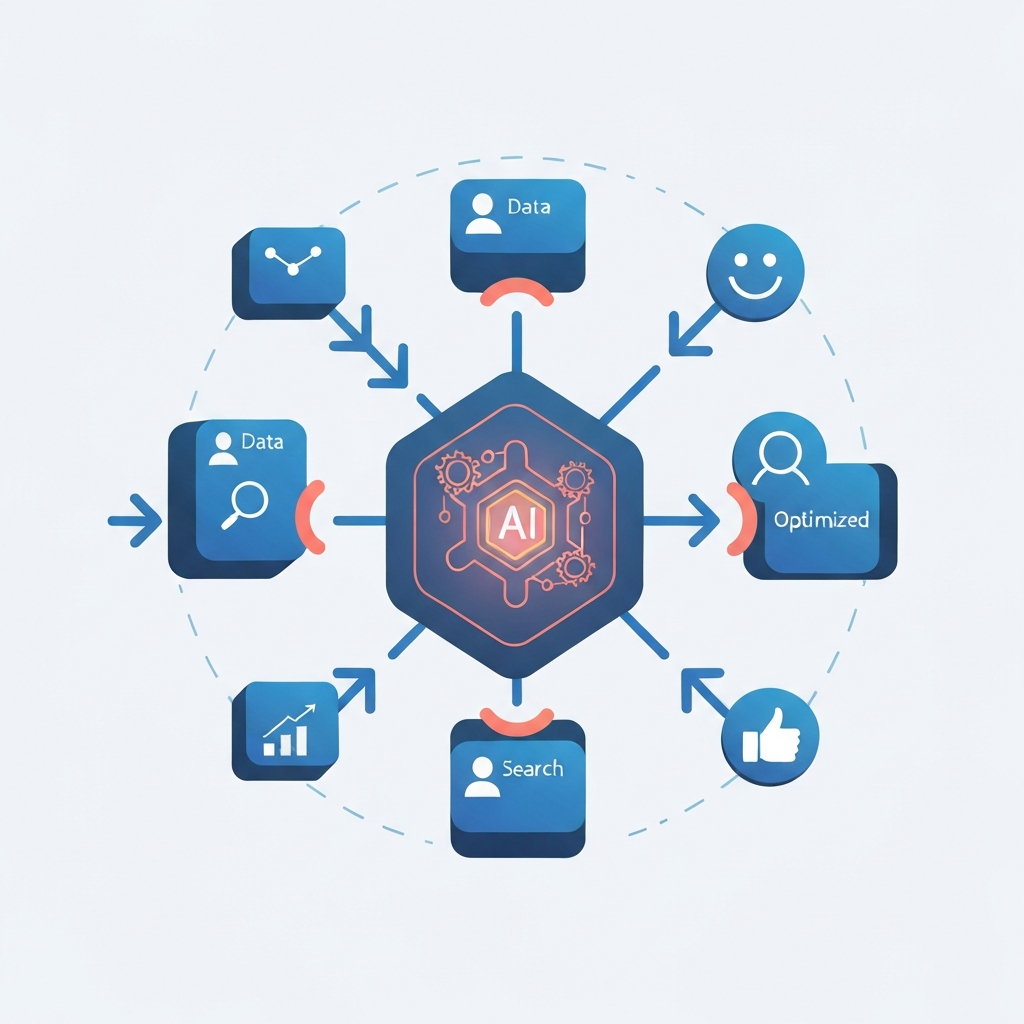
To ensure your content is perceived as high-quality by AI, focus on depth, originality, and user satisfaction. Create comprehensive pieces that thoroughly answer user questions, cite credible sources, and are written with clarity and expertise. Ensure your content is well-organized, easy to read, and provides a positive user experience. Demonstrating authoritativeness and trustworthiness through author credentials and reliable information is also key.
Will AI replace human SEO professionals?
No, AI is unlikely to replace human SEO professionals entirely. Instead, AI acts as a powerful tool that enhances the capabilities of SEO experts. Professionals will need to adapt by understanding AI's workings and focusing on strategic tasks like content strategy, user experience optimization, and building topical authority. AI automates many analytical tasks, freeing up humans to focus on higher-level strategy and creativity.
How important is user experience (UX) for AI ranking?
User experience (UX) is critically important for AI ranking. Search engines use AI to analyze how users interact with a website. Metrics like time spent on page, bounce rate, and engagement indicate whether a page is meeting user needs. A positive UX, characterized by fast loading times, easy navigation, and mobile-friendliness, signals to AI that the page is valuable and relevant, thus improving its ranking potential.
Can I still use keyword research in an AI-driven SEO strategy?
Absolutely, keyword research remains vital, but its role evolves. Instead of focusing on exact match keywords, AI-driven keyword research aims to uncover the intent behind searches. This involves identifying long-tail keywords, related questions, and semantic variations that reveal what users are truly looking for. Understanding these nuances allows you to create content that directly addresses user needs, aligning perfectly with AI's evaluation criteria.
Conclusion

The era of AI ranking is here, and it's fundamentally transforming how we approach search engine optimization. The focus has shifted decisively towards creating genuinely valuable, user-centric content that satisfies intent and provides an excellent experience. By embracing AI's capabilities, prioritizing quality, and adapting our strategies, we can navigate this exciting new landscape and achieve lasting online success. The future of SEO is intelligent, helpful, and deeply connected to the user. It's an exciting time to be involved in making the web more useful for everyone.
Related Articles
About the Author

Brian Keary
Founder & Lead Developer
Brian is the founder of BKThemes with over 20 years of experience in web development. He specializes in WordPress, Shopify, and SEO optimization. A proud alumnus of the University of Wisconsin-Green Bay, Brian has been creating exceptional digital solutions since 2003.
Expertise
Writing since 2003