Introduction: Unlocking the Power of Semantic SEO
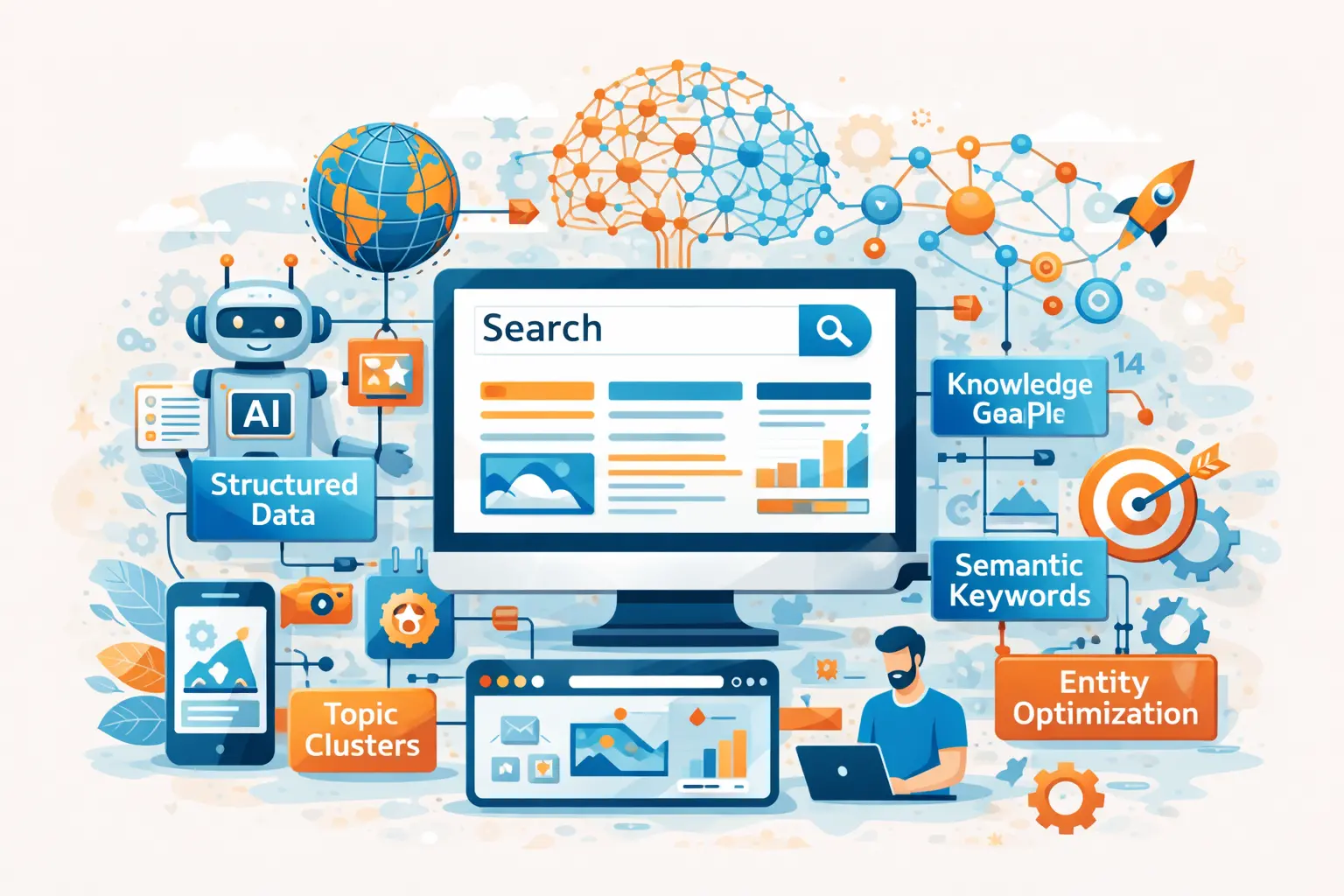
Search engines have moved way beyond just matching keywords. Today, semantic SEO —the craft of optimizing content for meaning, connections, and what users actually want—is the secret sauce for lasting search rankings. Instead of chasing single keywords, smart websites are built around topics, entities, and context, mirroring how Google’s AI truly understands information.
Semantic SEO helps brands establish themselves as go-to authorities, boosting their visibility in voice search, featured snippets, and knowledge panels. Let’s dive into why semantic SEO works so well—and look at seven real-world examples of companies that used it to own their niches.
What Semantic SEO Is and Why It's Crucial for 2025
Semantic SEO means fine-tuning your web content around search intent, topic relevance, and how concepts relate, rather than just specific keywords. It’s all about understanding how ideas connect—for instance, linking “running shoes” with “marathon training,” “preventing injuries,” and “foot care.”
Learn how to improve your website's semantic SEO by following best practices for topic clusters, entity linking, and structured data implementation.
How Does Semantic Search Stand Apart from Old-School Keyword SEO?
Traditional SEO often fixates on exact keywords like “best coffee maker.” Semantic SEO, however, zeroes in on related themes—“brewing methods,” “espresso versus drip,” and “cleaning your coffee maker.” This approach lets Google grasp the context of your content.
What is the Role of Google’s Knowledge Graph and NLPin Semantic SEO?
Google’s Knowledge Graph and Natural Language Processing (NLP) technologies empower the algorithm to understand entities (people, places, ideas) and their connections. Websites that align with this structure climb higher because their content communicates with search engines in a language they readily understand.
What are the Key Ingredients for a Winning Semantic SEO Strategy?
The best semantic seo strategy includes:
Topic Clusters and Contextual Depth
The topic cluster model involves a central pillar page supported by interconnected subtopic pages. This builds a semantic map of related concepts, signaling your expertise and comprehensive coverage.
Schema Markup and Structured Data
Schema markup provides Google with clear context. For example, adding FAQ schema or recipe schema helps search engines correctly categorize your content, enhancing its visibility.
Internal Linking with Meaningful Connections
Internal links should use descriptive anchor text that accurately reflects the content’s meaning. This is how you build a robust internal semantic network.
User Intent Focus and Content Thoroughness
Each piece of content should fully satisfy the reader’s intent—whether informational, navigational, or transactional—to strengthen semantic connections.
7 What are Some Real-World Examples of Semantic SEO Successes?
Some real-world semantic SEO success stories are:
1. HubSpot: Topic Clusters Fueling B2B Growth
HubSpot pioneered the topic cluster model, organizing its vast content library around core business themes. By linking pillar pages (like “Content Marketing”) to related cluster posts (“How to Write a Blog Post,” “Content Strategy Examples”), HubSpot saw significant gains in organic visibility and reduced keyword cannibalization.
2. Healthline: Semantic Content for E-E-A-T and Authority
Healthline excels by using medically reviewed content structured around semantic themes—diseases, treatments, and symptoms. Their entity-driven content consistently earns top spots for highly competitive health-related searches.
3. Shopify: Contextual Internal Linking for E-commerce Pages
Shopify masterfully integrates semantic internal links within their product guides and blog posts. Each page connects logically to related e-commerce topics, boosting user engagement and topical relevance.
4. Ahrefs Blog: Deep Semantic Content for Information Seekers
Ahrefs creates in-depth, interconnected educational content that explores topics exhaustively. Their blog ranks for thousands of keywords because each article acts as a mini-knowledge hub.
5. Wikipedia: Entity-Based SEO on a Massive Scale
Wikipedia stands as the ultimate demonstration of semantic SEO. Every page links to entities, related concepts, and other internal pages, forming an immense semantic network that dominates search results.
6. WebMD: Leveraging Schema and NLP for Health SERP Dominance
WebMD effectively uses schema markup, structured data, and contextual linking to signal trustworthiness and relevance. Google’s NLP easily interprets its well-organized medical entities.
7. Semrush: Mapping Content to User Intent
SEMrush strategically structures its content around user intent categories, ensuring every keyword supports a broader semantic topic. This approach has significantly boosted their domain authority and overall search presence.
Common Threads in Successful Semantic SEO Implementations
| Pattern | Description |
|---|---|
| Entity-centric structure | Focuses on “things” (entities) rather than just “keywords.” |
| Contextual internal linking | Builds meaningful content relationships across your site. |
| Schema markup | Helps search engines understand the precise meaning of your pages. |
| Topic depth | Thoroughly covers every facet of a main concept. |
| Intent mapping | Aligns content directly with real user goals. |
How do you Apply These Winning Strategies to Your Website?
To apply these semantic SEO strategies to a website, you need to restructure your existing content into a hub-and-spoke model and optimize it for user intent. This process shifts your focus from targeting isolated keywords to building deep, connected topical authority.
1. Map Out Content Hubs (Topic Clusters)
- Select Core Hubs: Choose three to five broad, high-volume topics central to your business.
- Identify Sub-topics (Spokes): Use search data to find specific questions or sub-topics related to each hub.
- Build a Content Matrix: Map out which existing pages fit into these clusters and what new pages you need to create.
2. Implement the Internal Linking Architecture
- Link Spokes to Hubs: Ensure every sub-topic page links back to its main category hub page using clear anchor text.
- Link Spokes Together: Connect related sub-topic pages to each other to help search engines crawl your content smoothly.
- Pass Link Equity: Use your highest-authority pages to pass SEO value down to newly created spoke content.
3. Optimize for Entity-Based Search and Intent
- Answer Questions Directly: Structure your content to explicitly answer common user questions near the top of the page.
- Include Related Concepts: Integrate naturally occurring variations, synonyms, and secondary concepts that define the topic.
- Add Schema Markup: Use structured data (like About and Mentions schema) to help search engines understand the exact entities you are discussing.
4. Audit and Refresh Existing Pages
- Merge Thin Content: Combine short, underperforming articles that cover similar topics into one comprehensive guide.
- Update Old Data: Rewrite outdated sections of your high-traffic pages to maintain their search visibility.
- Prune Irrelevant Content: Delete or redirect old pages that no longer align with your core topic clusters.
How do you Measure the Impact of Your Semantic SEO Efforts?
To measure semantic SEO, track keyword cluster growth, internal link health, and holistic organic traffic gains rather than single keywords. Look at search engine visibility, user engagement rates, and topical authority over three to six months.
Key Metrics to Track
- Topical Visibility: Watch total impressions and average rank for entire keyword groups in search console tools.
- Organic Traffic Growth: Measure total visits to your hub and spoke content clusters.
- User Engagement: Check bounce rates and time on page to see if content answers user needs.
- Internal Link Flow: Track how well your main pages connect to related sub-topics.
Steps to Measure Impact
- Define Clusters: Group your pages by main topics and sub-topics.
- Audit Content: Find missing links between related articles on your site.
- Monitor Queries: Look for increases in long-tail search terms that point to deep content.
- Review Rankings: Check if your core pages rank for a wider set of related words.
FAQs About Semantic SEO Implementations
Conclusion: Building a Future-Proof SEO Strategy with Semantic Principles
Semantic SEO represents the future of organic search visibility. By deeply understanding user intent, content context, and entity relationships, you create content that truly connects with both your audience and search algorithms. From HubSpot’s pioneering topic clusters to Healthline’s expert entity mapping, these examples clearly show that semantic optimization drives lasting growth and authority.
About the Author

Brian Keary
Founder & Lead Developer
Brian is the founder of BKThemes with over 20 years of experience in web development. He specializes in WordPress, Shopify, and SEO optimization. A proud alumnus of the University of Wisconsin-Green Bay, Brian has been creating exceptional digital solutions since 2003.
Expertise
Writing since 2003