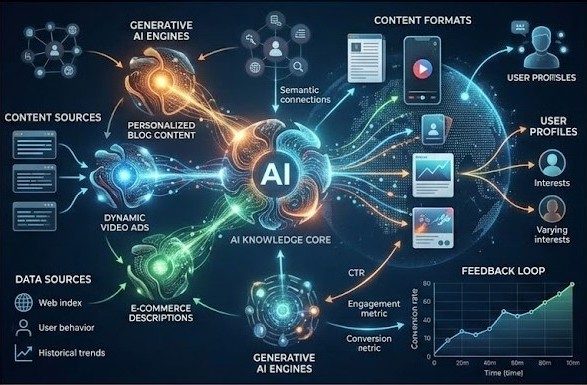
AI Overviews (AIO) are changing how search results are generated, moving from link-based lists to synthesized answers. Ranking in these results requires optimizing for entity relevance, structured data, and direct, authoritative answers to user queries.
This page is your tactical playbook for ranking in AI overviews. If you need the broader algorithm-level foundation, see AI Ranking: Master Search Engine Optimization 2026.
Key Takeaways From Mastering How to Rank in AI Overviews
AI overviews are reshaping search optimization, emphasizing content relevance and quality.
- Understanding AI's role in search engines is vital for maintaining visibility in 2026
- Google's AI overviews prioritize authoritative content that answers user queries succinctly.
- Effective keyword strategies remain crucial in AI-driven environments
- Monitoring and adjusting your AI overview approach ensures long-term SEO success
Why are AI Overviews Important for SEO?

AI Overviews are important for SEO because they sit at the very top of Google's search page and fundamentally change how users find information, click on links, and interact with brands. AI overviews are not just a buzzword; they represent a cutting-edge frontier in search optimization. As search engines increasingly rely on AI to deliver accurate results, understanding its impact on search rankings has become paramount. Businesses that grasp this concept can prioritize content relevance and quality, ensuring they don't fade into obscurity in the AI era.
Shift to Zero-Click Searches
- Fewer traditional clicks: AI Overviews provide direct answers on the search page. This creates "zero-click searches" where users get what they need without visiting a website.
- Lower organic traffic: Traditional organic search results are pushed further down the page, which can reduce organic click-through rates.
- Higher quality traffic: While total clicks may drop, visitors who do click through are often more qualified and ready to convert.
Redefining Visibility and Authority
- Source citations: AI Overviews pull data from multiple websites and display direct source links. Being cited inside an overview builds massive brand authority and visibility, even if it does not always lead to an immediate click.
- New ranking rules: Google's AI looks past basic keyword stuffing. It favors E-E-A-T (Experience, Expertise, Authoritativeness, and Trustworthiness), topical depth, and clear, structured content.
- Long-tail focus: AI Overviews frequently trigger on complex, conversational, multi-step questions rather than short, broad keywords.
How is AI Search (Artificial Intelligence Search) Changing the Content Landscape?
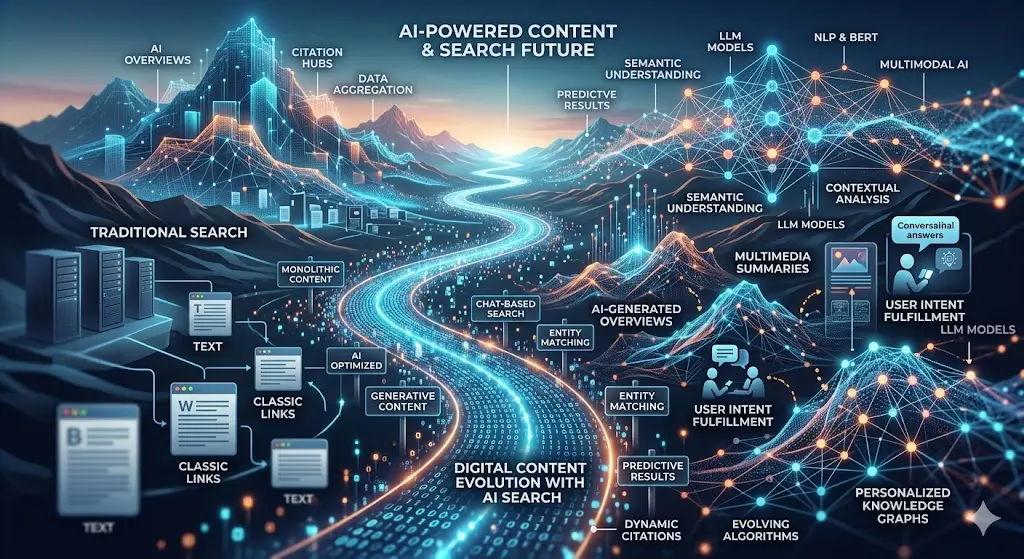
AI search is shifting the content landscape from keyword matching to intent satisfaction. Because search engines now understand context, nuance, and user journeys, the way content is planned, written, and structured is undergoing a massive transformation.
Structural Shifts in the Content Ecosystem
- The Decline of "Filler" Content: Simple, facts-based articles (e.g., "What is SEO?") are being entirely replaced by instant AI answers. Content creators must pivot toward deep, actionable insights.
- The Rise of GEO (Generative Engine Optimization): SEO is expanding into Generative Engine Optimization. Instead of optimizing purely for Google's traditional algorithm, creators must format content so large language models can easily parse, cite, and synthesize it.
- Platform Fragmentation: Users are no longer just searching on Google. They are searching for information inside ChatGPT, Claude, and Perplexity, forcing brands to optimize for an omni-channel AI ecosystem.
Changes in How Content is Created
- Prioritizing Human Firsthand Experience: As AI-generated content floods the web, search engines are heavily prioritizing unique human perspectives, original data, and case studies (often referred to under Google's E-E-A-T framework as Experience).
- Targeting Conversational, Long-Tail Queries: People talk to AI tools like humans. Content is moving away from rigid keyword strings and shifting toward natural phrases, multi-step questions, and conversational problem-solving.
- Content Formats Built for AI Scannability: Content must be highly structured to be cited by AI engines. This means heavier reliance on clear headings, bulleted lists, Q&A formats, and robust schema markup.
Marketers must embrace the evolution of the search landscape driven by AI platforms. AI search encourages the creation of content that is not only diverse but also tailored to users' specific needs. This shift necessitates a focus on providing comprehensive answers, as AI systems evaluate content based on how well it aligns with user intent. As a result, businesses that adapt to this change can position themselves as industry leaders, delivering content that resonates with their audience.
What is the Role of Google AI Overviews in Content Ranking?
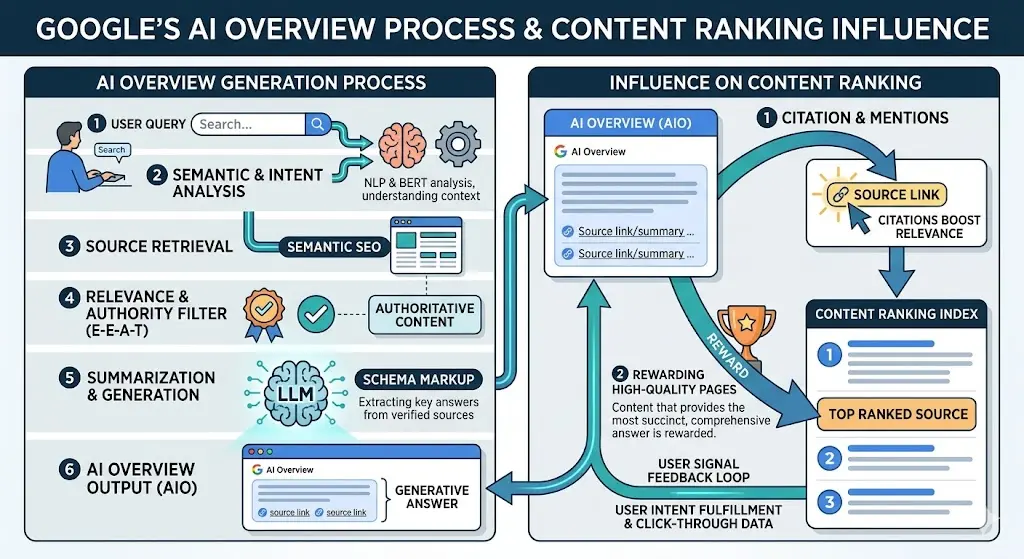
Google's AI overviews have revolutionized the way content is ranked and evaluated. By prioritizing highly relevant content, Google ensures that users receive the most accurate and valuable information. For marketers, this means that creating content that aligns with AI expectations is crucial for success. Google's AI-driven tools assess the depth and breadth of information, rewarding content that demonstrates expertise and authority.
Marketers should aim for content that answers user queries succinctly and effectively. Google's AI overviews prioritize articles that offer comprehensive insights, making it essential for businesses to focus on delivering value. By aligning topics with user needs and expectations, businesses can enhance their Google search visibility and establish themselves as authoritative sources in their industry.
Moreover, Google's AI overviews emphasize the importance of articles that demonstrate authority and trustworthiness. By creating topics that align with these criteria, businesses can gain a competitive edge in the Google search landscape. Google's AI rewards content that delivers genuine value, reinforcing the need for marketers to prioritize quality and relevance in their content strategy.
How Do AI Overviews Work, and How Can Marketers Get Mentions?
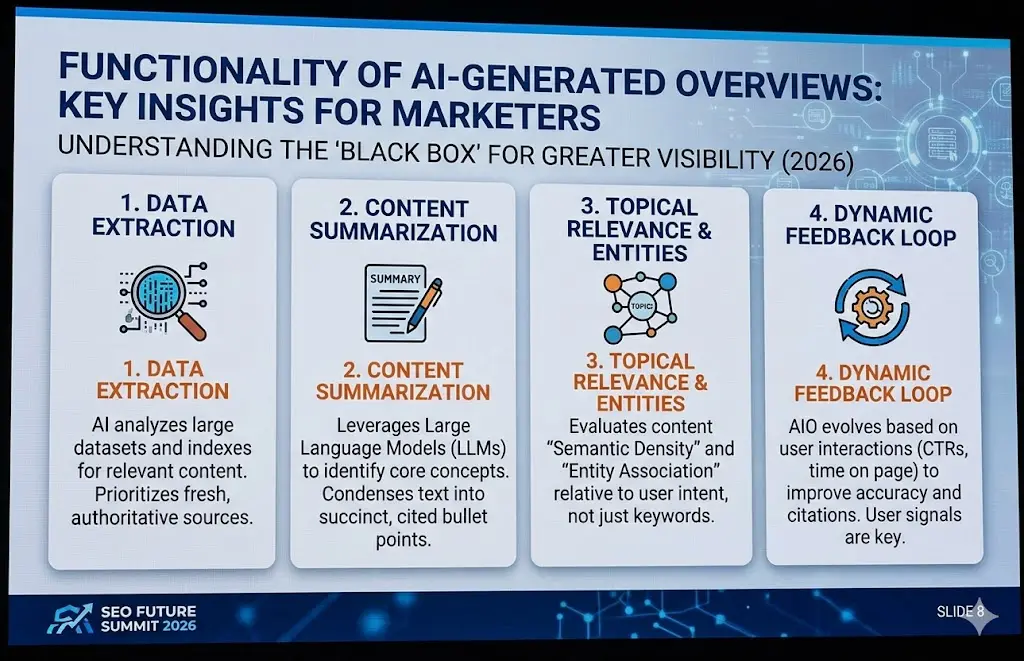
Google AI overviews operate by extracting key points to summarize content effectively. This mechanism allows marketers to boost content visibility by presenting concise summaries that capture the essence of their message. For businesses, this means ensuring that their content structure supports AI extraction, enabling AI systems to identify the most impactful content segments.
Understanding how overviews work is crucial for marketers seeking to optimize their content strategy. By focusing on the most impactful content segments, businesses can enhance their visibility and engagement. AI overviews prioritize pages that offer genuine value, making it essential for marketers to craft content that not only aligns with AI assessment criteria but also with search intent.
Moreover, AI overviews provide marketers with insights into content creation and optimization. By understanding how AI systems extract key points, businesses can craft content that resonates with their audience and meets AI-driven expectations. This understanding empowers marketers to create pages that not only rank well but also deliver value to users.
The Core Technical Engine: Retrieval-Augmented Generation (RAG)
To generate accurate, context-aware answers without relying solely on static model training data, Google’s AI Overviews utilize an architectural framework called Retrieval-Augmented Generation (RAG). RAG bridges the gap between foundational Large Language Models (LLMs) and real-time search engine indices.
Instead of generating responses purely from memory, the AI Overview pipeline operates through a multi-step retrieval and synthesis process:
- Real-Time Web Retrieval: When a query triggers an AI Overview, the system executes real-time web retrieval to gather live, top-ranking content directly from Google's search index.
- LLM Synthesis & Verification: The foundational LLM processes the retrieved web pages, extracting relevant key points, facts, and structured data while cross-referencing information to minimize hallucinations.
- Generating Citation Cards: The AI generates a concise summary answer and directly attaches citation cards (source links) to the exact web pages used during the RAG process.
Key SEO Takeaway: Because RAG relies on real-time web retrieval, your content doesn't need to be part of an LLM's original training dataset to appear in AI Overviews. By structuring your pages for easy extraction and maintaining high search relevance, the RAG framework can retrieve and cite your site dynamically as a live source.
What are Effective Keyword Strategies for AI Overview Optimization?
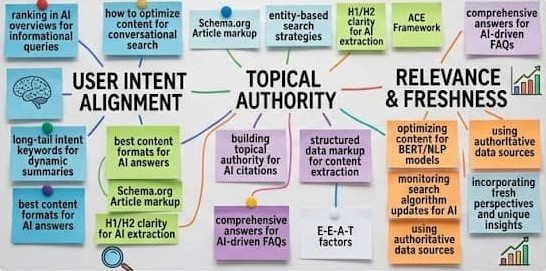
Optimizing keywords for AI Overviews requires shifting from exact-match keyword targets to semantic intent and query extraction. Google’s AI systems use "query fan-out" to analyze multiple subtopics simultaneously. Therefore, your keyword strategy must focus on how LLMs parse and group natural language.
1. Shift from Keywords to "Topic Clusters"
AI Overviews prioritize contextual depth rather than single-phrase optimization.
- Target Semantic Networks: Instead of repeatedly using a primary keyword like "remote project management software," optimize for Latent Semantic Indexing (LSI) and related concepts (e.g., "asynchronous communication," "agile sprint planning," "team bandwidth tracking").
- Build Comprehensive Resource Hubs: Ensure your target keywords are mapped across a single page that exhaustively covers a specific niche topic. The term for this is widely known as content clusters.
2. Target Question-Based, Conversational Keywords
AI Overviews are highly triggered by complex informational queries, often reflecting voice search or chat-like phrasing.
- Mine "People Also Ask" (PAA) and Forums: Identify real-user queries by pulling questions from Google's PAA boxes or threads on Reddit and Quora.
- Optimize for Multi-Step Long-Tails: Target longer, highly specific strings (e.g., "how to fix a leaky faucet without turning off main water supply" instead of just "fix leaky faucet").
- Format as Question Headers: Phrase your
H2andH3tags as direct questions. Research shows that question-based headers are significantly more likely to be cited by AI engines.
3. Capture Commercial "Comparison" and "Best" Modifiers
For e-commerce or B2B brands, AI Overviews frequently synthesize product options when users look to make a transaction.
- Optimize for "X vs Y" Terms: Build direct comparison matrices. AI models pull text from pages that clearly distinguish trade-offs between competitors.
- Target "Best [Category] for [Specific Niche]" Keywords: For example, target "best CRM for real estate solo agents" rather than a broad "best CRM." Provide concise lists and product roundups structured for easy model extraction.
4. Build "Zero-Search Volume" and First-Party Term Strategies
Because AI tools excel at reasoning across niche datasets, relying solely on traditional search volume tools can cause you to miss major AI Overview opportunities.
- Target High-Demand Customer Pain Points: Use internal data—like customer support tickets, sales calls, or site search history—to build keyword targets around highly specific problems that lack high search engine data but represent acute user needs.
- Incorporate Intent Modifiers into Informational Pages: Identify commercial intent keywords that competitors are winning in AI Overviews and weave those terms naturally into your comprehensive guide pages.
5. Connecting Brand Entities to Knowledge Graph Nodes
AI models and Large Language Models (LLMs) rely on entity resolution to determine which brands are trustworthy sources worth citing in AI Overviews. Beyond basic keyword target selection, your keyword and entity strategy must connect your brand to recognized Knowledge Graph nodes:
- Claiming Your Wikidata ID: Wikidata acts as a primary, open-source structured database fueling Google's Knowledge Graph and LLM training sets. Creating and maintaining a dedicated Wikidata item (Wikidata ID) for your brand explicitly defines your organization, key people, products, and industry domain as verifiable entities.
- Establishing Entity-Attribute-Value Relationships: Structure your target terms so they map directly to recognized properties within knowledge graphs (e.g., linking your brand entity to specific topical concepts like Search Engine Optimization or Shopify Development).
- Topical Authority for AI Citation: When search engine LLMs parse queries, they evaluate whether a cited source is an established entity within that topic's semantic graph. Aligning your brand keywords with Wikidata entries and SameAs schema properties validates your authority, making your content significantly more likely to be extracted and cited in generated AI summaries.
6. How Can AI Extraction Techniques Improve Search Results?

AI extraction tools have transformed the way content is summarized and delivered to users. By identifying critical content elements, AI extraction techniques enable marketers to refine content structure and enhance visibility through mentions. Businesses can leverage these techniques to highlight key information and improve user engagement by providing quick answers and highlighting their expertise through informational queries in the featured snippets.
The ability to utilize AI extraction tools empowers marketers to research and deliver content that resonates with users and meets AI-driven expectations. By refining content structure and focusing on the most impactful content segments, businesses can enhance their Google visibility, mentions, and engagement. This strategic approach to content delivery ensures that businesses remain competitive in the AI-driven landscape.
Moreover, AI extraction techniques enable businesses to highlight key information and enhance user engagement. By providing quick answers and relevant insights, businesses can deliver content that meets user needs and expectations. This focus on user-centric content delivery reinforces the importance of embracing AI to deliver comprehensive content while still appearing in traditional search results.
In conclusion, leveraging AI extraction techniques is crucial for achieving better results in the digital age. By refining content structure and focusing on key information, businesses can enhance their visibility and engagement. As AI continues to evolve, marketers who embrace these techniques will unlock new opportunities for success in the digital landscape.
7. How to Craft Content with Intent for AI Overviews?

Crafting content that ranks effectively in AI overviews requires a strategic approach to content creation. Content clarity plays a vital role in enhancing AI's ability to rank effectively. By using structured data snippets to support AI interpretation, marketers can create content that resonates with users and meets AI-driven expectations.
AI overviews prioritize content that offers fresh perspectives and aligns with user search patterns. Businesses should focus on crafting content that not only meets user needs but also provides unique insights and perspectives. This focus on originality and relevance ensures that content remains aligned with AI-driven expectations and ranks effectively in search results.
Moreover, businesses can enhance their visibility by crafting content that meets AI criteria and aligns with user intent. By understanding how AI evaluates content and tailoring content strategy accordingly, businesses can achieve higher rankings and engagement. This strategic approach to content creation reinforces the importance of crafting content that resonates with users and meets AI-driven expectations.
In conclusion, crafting content that ranks in AI overviews requires a focus on clarity, originality, and relevance. By aligning content with AI criteria and user search patterns, businesses can enhance their visibility and engagement. As AI continues to shape the search landscape, marketers who embrace these changes will thrive in the digital age.
8. What is Generative Engine Optimization?
Generative Engine Optimization (GEO) is the practice of optimizing digital content so that it is easily found, cited, and recommended by generative AI search engines.
While traditional SEO focuses on ranking blue links at the top of Google, GEO focuses on convincing large language models (LLMs)—like Google’s AI Overviews, ChatGPT Search, Claude, and Perplexity—to include your brand in their AI-synthesized responses.
How GEO Differs from Traditional SEO
The core shift moves your focus from manipulating traditional search rankings to ensuring content is optimized for LLM data retrieval and synthesis.
| Feature | Traditional SEO | Generative Engine Optimization (GEO) |
|---|---|---|
| Primary Target | Search engine crawlers (Googlebot) | Large Language Models (LLMs) & AI Search Agents |
| Output Type | Ranked list of blue website links | Single, synthesized text response with embedded citations |
| Core Metric | Keyword rankings & Domain Authority | Citation Share of Voice & Mention Frequency |
| Content Focus | Content length, keyword density, backlink profile | Topical depth, structured factual data, human expertise |
Core Optimization Strategies for GEO
To rank inside generative AI search results, content must be tailored to how LLMs pull, summarize, and display information.
- Cite Authoritative Sources & Data: AI models are heavily trained to look for accuracy. Including credible statistics, outbound links to high-authority domains, and structured data helps the engine flag your content as a verifiable source.
- Incorporate Unique Human Perspective: AI search engines try to avoid regurgitating generic AI text. Emphasize first-person case studies, unique quotes, proprietary research, and actionable "Experience" (the new 'E' in Google's E-E-A-T framework).
- Format for LLM Extraction: Use clear hierarchical structures (
H2,H3), concise bullet points, and explicit Q&A formats. If a model can easily scrape your answer in under 2-3 sentences, it is much more likely to be used as a direct snippet. - Optimize for Sentiment and Brand Alignment: AI engines summarize user sentiment from across the web. To be recommended for queries like "what is the best software for...", your brand needs positive reviews, discussions, and mentions on third-party forums like Reddit, Quora, and industry-specific review sites.
Read our comprehensive guide on how to use Reddit and Quora to get backlinks.
Why GEO is Essential
As search engines shift from index-matching to conversational answers, traditional organic search traffic is declining due to "zero-click" searches. Implementing a GEO strategy ensures that even if a user doesn't click a traditional link, your brand remains the underlying source fueling the AI's answer.
Why Do Queries and Pages Matter in AI Search?
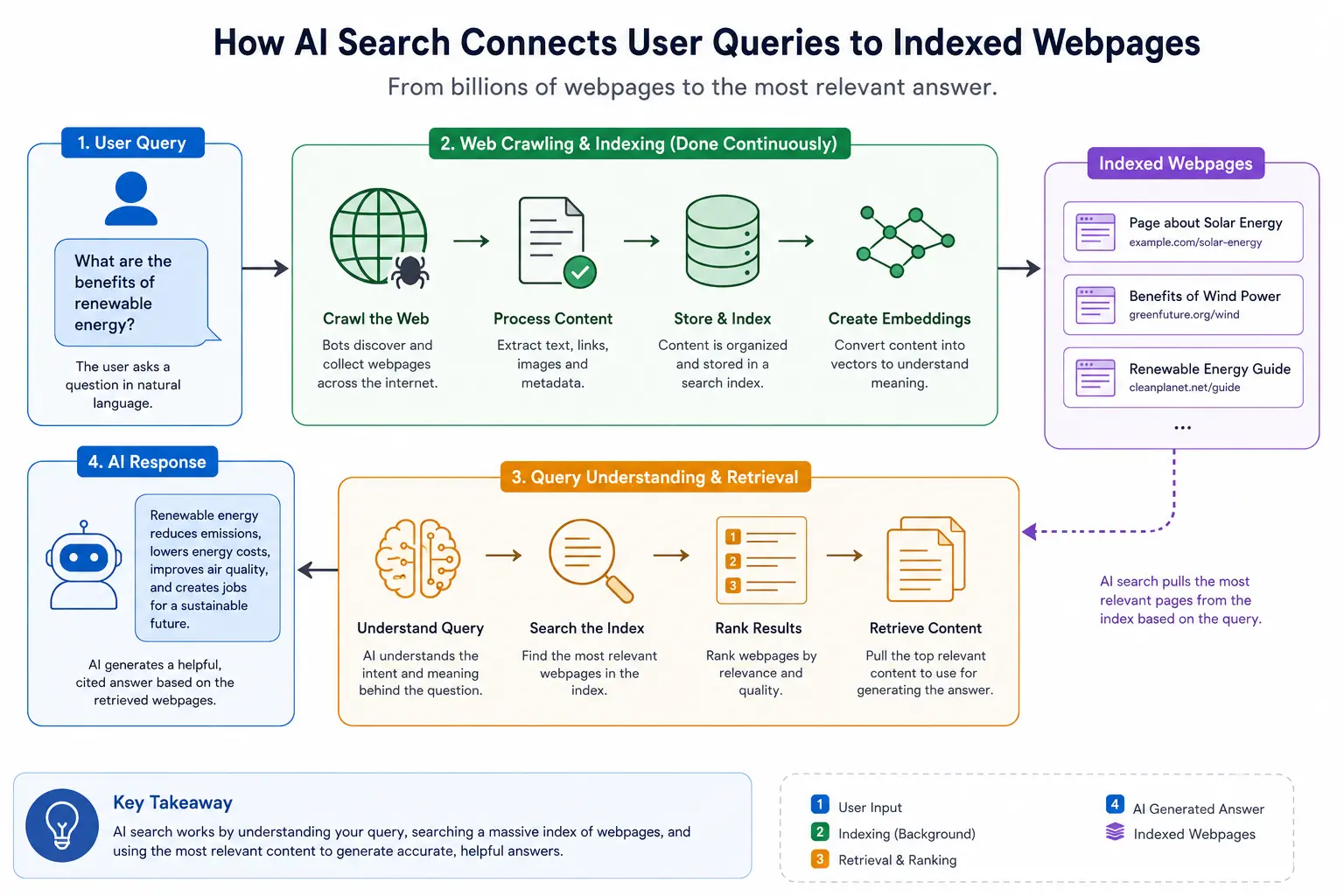
In AI search, queries and pages matter because they form the exact input-output loop that trains and triggers generative models.
Unlike traditional search, which acts as a card catalog matching a user’s keywords to a page's text, AI search acts as a human-like synthesis engine. Understanding how queries are interpreted and how pages are parsed determines whether your brand is cited or completely erased from the generative answer.
Why Queries Matter (The Input)
In generative search, search queries are no longer treated as rigid strings of text; they are treated as conversational intent paths.
- The Shift to "Query Fan-Out": When a user types a complex query, AI search engines instantly deconstruct it into multiple underlying micro-queries. For example, a query like "best budget laptop for editing video while traveling" triggers the AI to look for sub-queries regarding laptop specifications, specific pricing tiers, and battery life benchmarks simultaneously.
- Understanding Implicit Context: AI engines analyze user behavior, past prompts, and geographic location to deduce intent. The query is treated as an evolving dialogue, meaning businesses must target the holistic problem a user is trying to solve rather than a static phrase.
- Long-Tail Dominance: Because users can chat with AI naturally, queries have become significantly longer and more specific. Short-tail head keywords (e.g., "SEO tips") are bypassed in favor of multi-step, contextual questions.
Why Pages Matter (The Output & Retrieval Source)
Pages are the "textbooks" the AI searches through to build its synthesized answers. If your page cannot be easily digested or verified by a large language model, it cannot be used as a citation.
- Information Extraction Efficiency: LLMs use Retrieval-Augmented Generation (RAG) to scan indexed pages in real-time, extract the most accurate sentences, and piece them together into an AI Overview. Pages must be structured with pristine formatting so the model can pull data in milliseconds.
- The "Source of Truth" Anchor: AI models are prone to hallucination. To combat this, platforms like Perplexity and Google AI Overviews aggressively prioritize pages that offer hard data, clear schema markup, and verifiable facts.
- Proof of Real-World Experience: AI models penalize generic, paraphrased content. Pages matter because they are the home for proprietary data, unique case studies, expert commentary, and deep expertise—elements that an AI cannot invent on its own and must source from the web.
The Bottom Line
In the AI search landscape, the search query dictates the multi-layered intent the AI needs to solve, while the page provides the structured, hyper-reliable proof the AI needs to confidently display a citation.
Which On-Page Elements Directly Trigger AI Overview Citations?
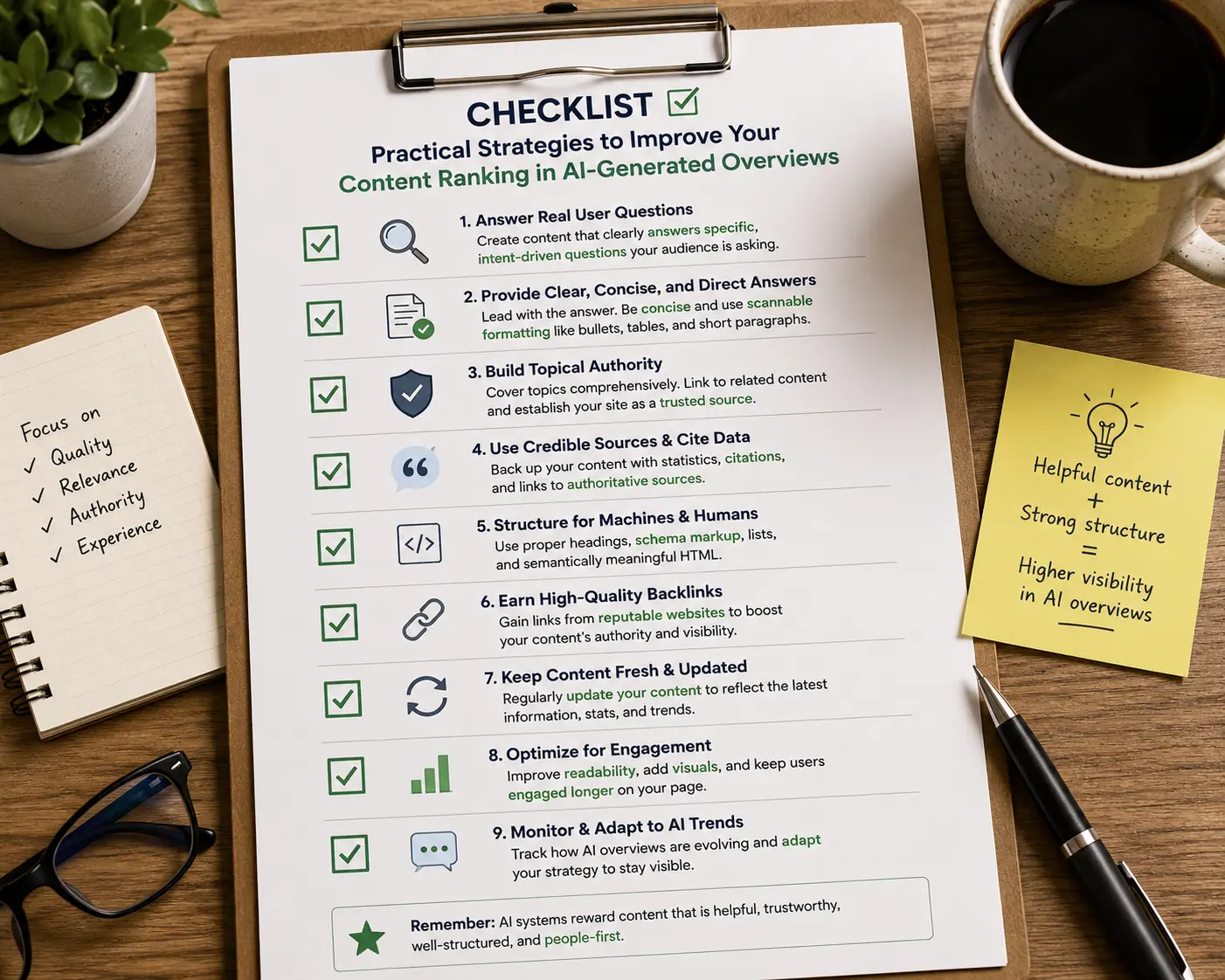
To rank in AI Overviews, format direct 40–60 word answer summaries immediately under H2 tags, implement relevant Schema markup, and cite primary benchmark statistics. By focusing on user-centric content strategies, businesses can enhance their visibility and engagement. Regular content audits and alignment with AI-driven expectations ensure that content remains relevant and valuable.
AI overviews reward pages that demonstrate authority and trustworthiness, making it essential for marketers to prioritize quality and relevance in their content strategy. By crafting content that aligns with user needs and expectations, businesses can enhance their visibility and engagement. This focus on quality reinforces the importance of staying up to date on AI trends and algorithm changes.
Moreover, businesses can benefit from regular content audits to ensure alignment with AI-driven expectations. By understanding how AI evaluates content and tailoring content strategy accordingly, businesses can achieve higher rankings and engagement. This strategic approach to content optimization reinforces the importance of crafting content that resonates with users and meets AI-driven expectations.
How Do You Format Content for Google AI Retrieval (RAG)?

Optimizing content for Google's AI overview requires a strategic approach to content creation and delivery. By aligning content strategies with Google's AI guidelines, businesses can enhance their visibility and engagement. AI overviews favor content that delivers value and clarity, making it essential for marketers to prioritize quality and relevance in their content strategy.
Businesses should focus on delivering content that addresses user pain points and aligns with user needs and expectations. By leveraging Google's AI tools for optimization insights, businesses can enhance their visibility and engagement. This strategic approach to content optimization ensures that businesses remain competitive in the digital age.
Moreover, businesses can benefit from continuous content improvement and testing to ensure alignment with AI-driven expectations. By understanding how AI evaluates content and tailoring content strategy accordingly, businesses can achieve higher rankings in the top 10 results. This focus on quality and relevance reinforces the importance of staying up to date on AI trends and algorithm changes.
Implementing Schema.org (TechArticle, FAQPage) for Structured Entity Extraction
To streamline how search crawler pipelines and Retrieval-Augmented Generation (RAG) models parse your content, implement explicit JSON-LD Schema markup. Providing machine-readable metadata reduces reliance on algorithmic guessing, enabling AI engines to quickly extract facts, entity relationships, and direct answers:
TechArticleSchema: UseTechArticle(orArticle) to explicitly define technical depth, author credentials, target audience, and main entity topics. Key properties likedependencies,proficiencyLevel,author(linked viaSameAsto verified profile URLs), andaboutexplicitly map your content to recognized industry entities in search knowledge graphs.FAQPageSchema: Wrap direct question-and-answer blocks inFAQPageschema usingQuestionandacceptedAnswerproperties. This structured format signals to search crawlers that a precise, self-contained answer is readily available for query extraction in AI Overviews and conversational search results.- JSON-LD Implementation: Embed your structured metadata cleanly using
<script type="application/ld+json">tags within the document<head>. This ensures search crawler pipelines isolate key text passages and entity definitions during early indexing stages.
Why This Matters for AI Overviews: Large language models rely on efficient data extraction to synthesize accurate answers without hallucinating. Implementing explicit
TechArticleandFAQPageJSON-LD schema feeds structured entity relationships directly into search crawler pipelines, significantly increasing the probability that your content is selected and cited as a verified source in generated AI summaries.
What is the Impact of AI Overviews on Search Results?
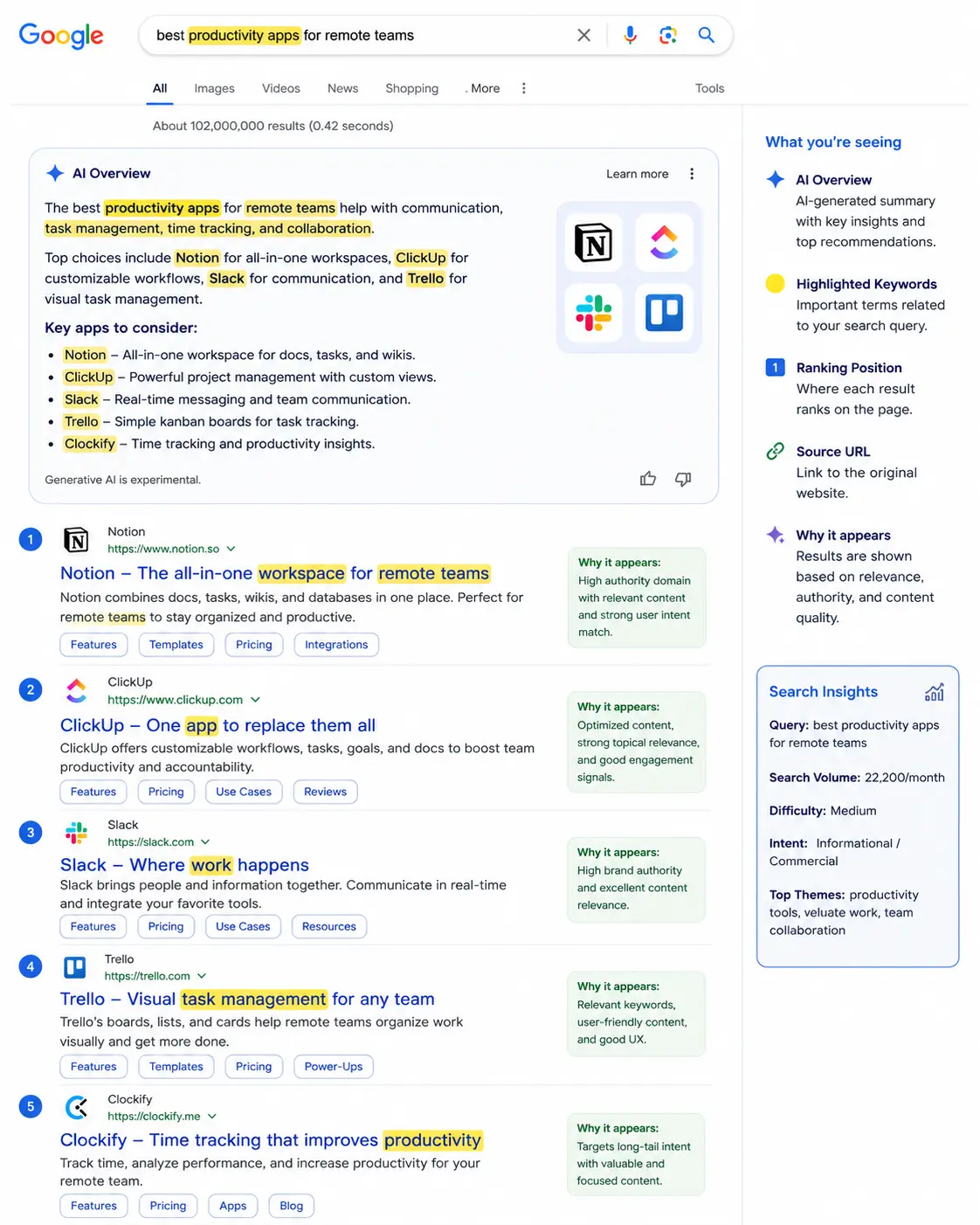
AI overviews have a profound impact on search results by influencing click-through rates and engagement. By optimizing content for AI visibility, marketers can enhance their search results and engagement. Businesses benefit from AI's ability to deliver precise search results that align with user needs and expectations.
AI overviews impact how content is perceived by searchers, making it essential for marketers to focus on enhancing content quality and relevance. By crafting content that resonates with users and meets AI-driven expectations, businesses can enhance their visibility on search engine results pages. This focus on quality reinforces the importance of staying updated on AI trends and algorithm changes.
Moreover, businesses can benefit from AI's ability to deliver precise search results and enhance user engagement. By understanding how AI evaluates content and tailoring content strategy accordingly, businesses can achieve higher rankings and engagement. This strategic approach to content optimization ensures that businesses remain competitive in the digital age.
What Technical and E-E-A-T Signals Do AI Overviews Require?
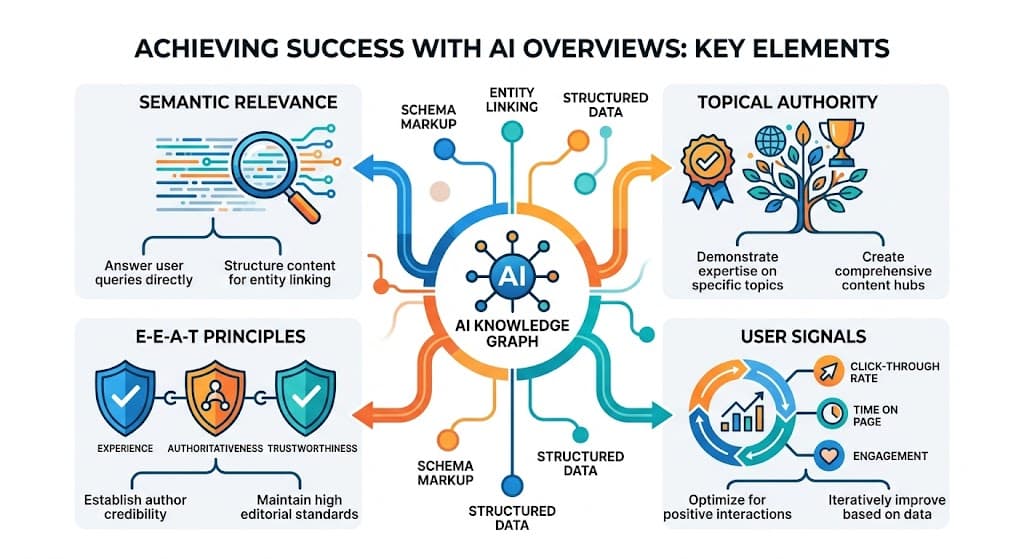
Relevance remains a cornerstone of AI content evaluation, making it essential for marketers to prioritize content that offers comprehensive insights. By focusing on user satisfaction and experience, businesses can enhance their visibility and engagement. AI overviews assess content based on structural coherence, reinforcing the importance of crafting content that meets evolving AI standards.
Marketers should prioritize content that aligns with AI-driven expectations and offers comprehensive insights. By understanding how AI evaluates content and tailoring content strategy accordingly, businesses can get to the top of search results pages. This focus on quality and relevance ensures that content remains aligned with user needs and expectations.
Moreover, businesses can benefit from focusing on user satisfaction and experience to enhance their visibility and engagement. By crafting content that resonates with users and meets AI-driven expectations, businesses can achieve higher rankings and engagement. This strategic approach to content optimization reinforces the importance of staying updated on AI trends and algorithm changes.
How to Integrate AI Overview Strategies into Your SEO Plan?

Integrating AI overviews into your search strategy requires a strategic approach to content creation and optimization. By incorporating AI insights into SEO strategies, businesses can enhance their long-term search visibility and engagement. This strategic approach ensures that businesses remain competitive in the digital age.
Businesses can benefit from aligning SEO practices with AI requirements to enhance their visibility and mentions. By understanding how AI evaluates content and tailoring SEO strategies accordingly, businesses can achieve higher organic rankings and search performance. This focus on quality and relevance reinforces the importance of staying up to date on AI trends and algorithm changes.
Moreover, marketers should focus on the seamless integration of AI tools to enhance SEO practices and content delivery. By leveraging AI insights and tools, businesses can enhance their visibility in featured snippets. This strategic approach to SEO optimization ensures that businesses remain competitive in the digital age.
How to Monitor and Adjust Your AI Overview Approach?
Regular monitoring and adjustments are crucial for ensuring that content remains aligned with AI trends and expectations. By analyzing AI performance data, marketers can make informed decisions about adjustments to their content strategy. This proactive approach ensures that businesses remain competitive and responsive to AI-driven shifts in the digital landscape.
Businesses can benefit from a flexible approach to AI content optimization, allowing them to adapt to changes and enhance their visibility and engagement. By understanding AI insights and tailoring content strategy accordingly, businesses can achieve higher rankings and engagement. This focus on adaptability reinforces the importance of staying up to date on AI trends and algorithm changes.
Moreover, AI insights guide ongoing improvements and content revisions, ensuring that content remains aligned with user needs and expectations. By leveraging AI insights and tools, businesses can enhance their visibility and engagement. This strategic approach to content optimization ensures that businesses remain competitive in the digital age.
Conclusion
In this dynamic digital age, mastering AI overviews is no longer optional —it's a necessity. As AI continues to weave itself into the fabric of SEO, the strategies and insights shared here will be your beacon in navigating the complexities of AI-driven content optimization. By understanding the nuances of AI overviews, embracing innovative tools, and aligning your content strategy with AI expectations, you position yourself for success.
Remember to focus on creating content that is not only relevant but also authoritative and user-centric. It's about crafting narratives that resonate with your audience, using keywords strategically, and staying agile to adapt to the ever-evolving digital landscape.
Frequently Asked Questions
How to rank content in AI Overview?
To rank content in AI Overview, focus on high-quality content that's relevant and informative. Use targeted keywords naturally within your text. Ensure your content is well-structured with clear headings and subheadings. Engaging with multimedia elements like images and videos can boost your visibility. Also, regularly update your content to keep it fresh and relevant. Don't forget to monitor analytics to understand what's working and what needs improvement. Consistency and optimization are key.
Is SEO dead or evolving in 2026?
SEO isn't dead; it's evolving. In 2026, SEO will likely integrate more with AI and machine learning, with a focus on user experience and intent-based searches. Voice search and mobile optimization will be more crucial than ever. The basics—like keyword research and quality content—remain important, but adapting to new technologies and algorithms will be essential. Staying informed about these changes will help you stay ahead in the SEO game.
How to win AI Overviews?
Winning AI Overviews requires creating content that aligns with the user's intent. Focus on answering common questions succinctly and accurately. Use structured data and schema markup to help AI better understand your content. Optimize for long-tail keywords and ensure your content is mobile-friendly. Engaging with your audience through comments and feedback can also enhance your content's visibility. Remember, AI values relevance and user satisfaction.
How to rank in AI answers?
To rank in AI answers, ensure your content is concise and directly addresses the query. Use bullet points or lists where applicable to enhance clarity. Provide comprehensive answers that are easy to read and understand. Using schema markup can help AI systems identify and rank your content. Regularly updating your content to reflect the latest information can also help maintain its relevance and ranking.
Is schema necessary for featured snippets?
Schema markup is not strictly necessary for featured snippets, but it can significantly improve your chances of being selected. Schema helps search engines understand the context and structure of your content, making it easier for them to extract relevant information for snippets. While high-quality, well-structured content is the primary factor, using schema can enhance your visibility and increase the likelihood of appearing in featured snippets.
About the Author

Brian Keary
Founder & Lead Developer
Brian is the founder of BKThemes with over 20 years of experience in web development. He specializes in WordPress, Shopify, and SEO optimization. A proud alumnus of the University of Wisconsin-Green Bay, Brian has been creating exceptional digital solutions since 2003.
Expertise
Writing since 2003