
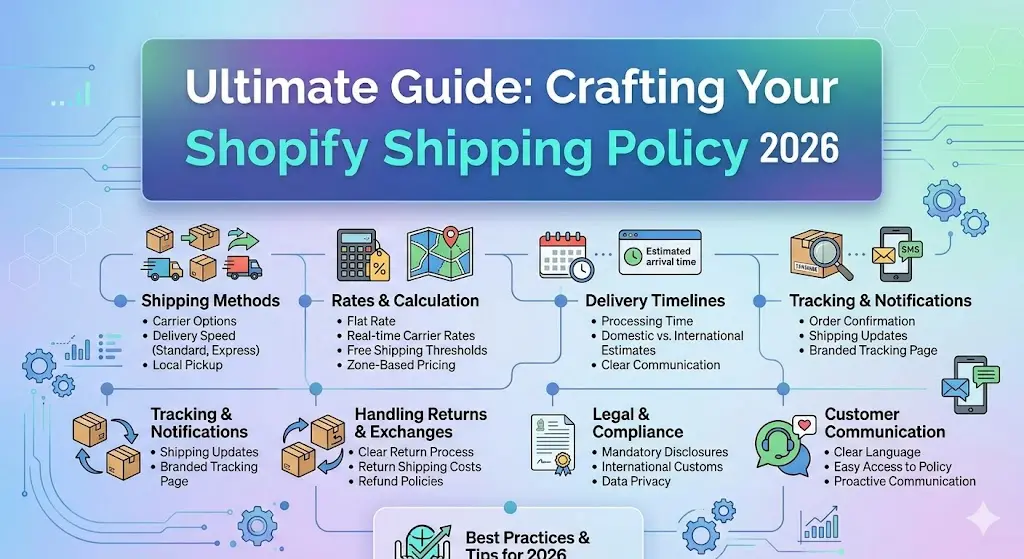
Did you know that a clear and comprehensive shipping policy can significantly boost customer trust and reduce cart abandonment rates? In 2026, shoppers expect instant information, and how you handle shipping is a major part of that equation. It’s not just about getting products to doors; it’s about setting expectations, managing costs, and building a brand that people feel good about supporting. A well-defined shipping policy acts as your silent salesperson, reassuring potential buyers and smoothing the path to a successful transaction. Think of it as the handshake before the deal, a promise of reliability.
Why Your Shopify Shipping Policy Matters
Your shipping policy is more than just a legal document; it's a crucial piece of your customer service puzzle. It directly influences purchasing decisions, impacting everything from conversion rates to customer satisfaction. When customers can easily find answers to their shipping questions, they feel more confident buying from you. This transparency builds trust, a cornerstone of any successful e-commerce venture. A poorly communicated shipping policy, conversely, can lead to confusion, frustration, and lost sales. Imagine a customer eagerly awaiting a package, only to be surprised by unexpected delays or exorbitant shipping fees. That’s a recipe for a negative review and a lost future sale.
Key Components of a Stellar Shipping Policy
A robust Shopify shipping policy typically includes several essential elements. These aren't just boxes to tick; they are opportunities to demonstrate your commitment to your customers.
- Processing Time: This is the time it takes after an order is placed to prepare it for shipment. It’s distinct from delivery time. Clearly stating this helps manage customer expectations. For example, "Orders are typically processed within 1-3 business days."
- Shipping Methods & Costs: Detail the shipping options you offer (e.g., standard, expedited, international) and how costs are calculated. Are they flat rates, weight-based, or calculated in real-time? Transparency here is key. Providing a clear breakdown prevents sticker shock at checkout.
- Estimated Delivery Times: While you can’t always guarantee exact delivery dates, providing estimated delivery windows for each shipping method is vital. Use phrases like "estimated 3-5 business days for standard shipping" rather than absolute promises.
- Shipping Zones: Specify where you ship to. Are you domestic-only, or do you offer international shipping? If international, list the countries and any potential customs or duties your customers might incur.
- Order Tracking: Explain how customers can track their orders. Do you send tracking numbers via email? Is there a dedicated tracking page on your site?
- Shipping Restrictions: Are there any items you cannot ship to certain locations? Are there any specific delivery restrictions (e.g., P.O. boxes, APO/FPO addresses)?
- Damaged or Lost Shipments: Outline your procedure for handling packages that arrive damaged or go missing. This builds confidence that you’ll resolve issues.
- Returns & Exchanges: While often a separate policy, briefly referencing how shipping costs are handled for returns can be helpful.
Crafting Your Shopify Shipping Policy: A Step-by-Step Approach
Creating your shipping policy doesn't need to be a daunting task. You also do not need to be a web designer. By breaking it down, you can build a clear, customer-friendly document.
If you need help crafting a shipping policy for your Shopify store we have Shopify developers on stand-by ready to help you out.
1. Define Your Shipping Strategy
Before writing a single word, solidify your operational approach. This involves understanding your product types, your target market's location, and your budget. For instance, if you're selling fragile items, you might need specialized packaging and expedited shipping options. If your customers are primarily local, a local pickup option could be a value-add. Consider your fulfillment process: are you dropshipping, fulfilling from a warehouse, or shipping yourself? Each has implications for processing and delivery times. If you're using dropshipping, understanding how your suppliers handle shipping is critical. Exploring The 5 Best Shopify Dropshipping Apps - How to Use Them can help streamline this aspect significantly.
2. Choose Your Shipping Methods and Pricing
Decide on the shipping carriers you'll use (e.g., USPS, FedEx, UPS, DHL) and the service levels you'll offer. Will you offer free shipping above a certain order value? This is a powerful incentive! Or perhaps flat-rate shipping for simplicity? Real-time carrier rates can be accurate but might appear complex to customers. Weigh the pros and cons for your specific business model. Remember, the goal is clarity and perceived value.
3. Determine Processing and Delivery Times
Be realistic. Factor in weekends, holidays, and potential unforeseen delays. It’s always better to under-promise and over-deliver. If your typical processing time is 2 days, state "1-3 business days" to allow for any minor hiccups. For delivery times, provide ranges based on the shipping method and destination.
4. Write Clear, Concise Language
Avoid jargon and legalese. Your policy should be easily understandable by anyone. Use simple sentences and a friendly, professional tone. Imagine you're explaining it to a friend. This human-centric approach aligns perfectly with building a brand that resonates.
5. Structure for Readability
Use headings, bullet points, and bold text to break up the content and highlight key information. Make it scannable. Customers often look for specific details, so make them easy to find. A well-structured policy is like a well-organized store – easy to navigate and pleasant to browse.
6. Place it Prominently
Your Shopify shipping policy should be easily accessible from your website's navigation menu, footer, and ideally, linked from your product pages and checkout process. Don't bury it!
7. Review and Update Regularly
As your business grows and evolves, so should your shipping policy. Review it annually, or whenever you make significant changes to your shipping processes or offerings.
Example Shopify Shipping Policy Structure
Here’s a foundational structure you can adapt. Remember, this is a starting point; tailor it to your unique business.
Our Shipping Promise
At [Your Store Name], we’re committed to getting your order to you swiftly and safely. We understand that timely delivery is a crucial part of your shopping experience. This policy outlines how we handle shipping to ensure clarity and peace of mind.
Processing Your Order
- Processing Time: Orders are typically processed and prepared for shipment within 1-3 business days (Monday-Friday, excluding federal holidays). Please note that this is the time it takes us to get your order ready, not the delivery time itself.
- Order Cut-off Times: Orders placed after [e.g., 1 PM EST] will be processed on the next business day.
- Weekends & Holidays: Orders placed on weekends or holidays will begin processing on the following business day.
Shipping Methods & Estimated Delivery Times
We offer several shipping options to meet your needs:
- Standard Shipping:
- Estimated Delivery: 3-7 business days after processing.
- Cost: [Specify cost structure, e.g., Flat Rate XX.XX]
- Expedited Shipping:
- Estimated Delivery: 1-3 business days after processing.
- Cost: [Specify cost structure, e.g., Flat Rate $Y.YY, Calculated at Checkout]
- [Optional: International Shipping]:
- Estimated Delivery: Varies by destination (typically 7-21 business days after processing).
- Cost: Calculated at checkout. Please note: International customers are responsible for any customs duties, taxes, or import fees that may be assessed upon delivery.
Shipping Zones
We currently ship to:
- [List countries or regions, e.g., All 50 United States, Canada, United Kingdom, Australia]
- Note: We do not currently ship to [List any restricted countries, if applicable].
Order Tracking
Once your order has shipped, you will receive a shipping confirmation email containing your tracking number. You can use this number to track your package’s progress on the carrier’s website or via our [link to tracking page, if applicable].
Shipping Restrictions
- We are unable to ship to P.O. Boxes for expedited shipping options.
- [Add any other specific restrictions, e.g., regarding certain product types or locations].
Damaged or Lost Shipments
If your order arrives damaged, please contact us within [e.g., 48 hours] of delivery with photos of the damaged item and packaging. We will work with you to find a satisfactory solution, which may include a replacement or refund.
If your order appears to be lost in transit, please contact us after [e.g., 10 business days] have passed since your shipping confirmation. We will initiate an investigation with the shipping carrier.
Returns & Exchanges
For information on returning or exchanging items, please visit our [Link to Returns Policy page]. Shipping costs for returns are typically the responsibility of the customer unless the item is faulty or incorrect.
Mistakes to Avoid
Navigating the world of shipping policies can be tricky. Steer clear of these common pitfalls:
- Vagueness: Ambiguous language creates confusion. Be specific about times, costs, and processes.
- Inconsistency: Ensure your policy aligns with your actual practices. Mismatched information erodes trust.
- Hiding Information: Don't make customers hunt for your shipping details. Prominent placement is essential.
- Unrealistic Promises: Over-promising on delivery times leads to disappointment and negative feedback.
- Ignoring International Nuances: If you ship internationally, clearly address customs, duties, and taxes. Failing to do so can result in unhappy customers and returned packages.
- Not Having a Policy at All: This is perhaps the biggest mistake. A lack of policy signals unprofessionalism and can deter potential buyers. Building a brand involves meticulous attention to detail, much like the careful planning required for The 2026 Shopify Dropshipping Blueprint: From Zero to High-Authority Entity.
Actionable Checklist for Your Shipping Policy
Use this checklist to ensure your policy is comprehensive and customer-friendly:
- Clearly defined processing time.
- Specific details on available shipping methods.
- Transparent shipping costs or calculation methods.
- Realistic estimated delivery times for each method.
- List of shipping destinations (countries/regions).
- Information on how customers can track their orders.
- Explanation of procedures for damaged or lost shipments.
- Mention of any specific shipping restrictions (P.O. boxes, etc.).
- Reference to your returns/exchanges policy.
- Policy is easily accessible on your website.
- Language is clear, concise, and customer-focused.
- Policy is reviewed and updated regularly.
Conclusion
Your Shopify shipping policy is a powerful tool for building customer loyalty and driving sales. By investing time in creating a clear, transparent, and comprehensive policy, you set accurate expectations, reduce customer service inquiries, and foster a sense of trust. It’s a foundational element of a successful e-commerce business, demonstrating your professionalism and commitment to a positive customer journey. Treat it not as a chore, but as an opportunity to shine. A well-crafted policy is a testament to your brand's dedication to excellence, much like mastering 7 Successful Semantic SEO Examples That Drove Massive Ranking Gains.
Frequently Asked Questions
What is the most important part of a shipping policy?
The most crucial element is clarity and transparency regarding shipping costs and estimated delivery times. Customers need to know exactly what to expect before they commit to a purchase. Unexpected charges or delays are major reasons for cart abandonment.
Should I offer free shipping?
Free shipping can be a powerful marketing tool and a significant conversion booster. Consider offering it above a certain order threshold (e.g., "Free shipping on orders over $50"). However, ensure you can absorb the costs or factor them into your product pricing sustainably. It’s a strategic decision based on your margins and target audience.
How specific should I be about delivery times?
Be specific but realistic. Provide estimated delivery windows (e.g., "3-5 business days") rather than guaranteed dates, as unforeseen circumstances can always arise. It’s better to under-promise and over-deliver. Always account for processing time separately from transit time.
What if I ship internationally?
If you ship internationally, your policy must clearly state which countries you ship to and address potential customs duties, taxes, and import fees. Inform customers that these are their responsibility and can vary significantly by destination. This prevents surprises and disputes later on.
How often should I update my shipping policy?
You should review and update your shipping policy whenever there are changes to your shipping carriers, methods, pricing, delivery areas, or processing procedures. A good practice is to conduct a full review at least once a year to ensure it remains accurate and relevant.
Key Takeaways
- A clear shipping policy builds customer trust and reduces cart abandonment.
- Essential components include processing time, shipping methods/costs, delivery estimates, zones, and tracking information.
- Use simple, direct language and structure your policy for easy readability.
- Prominently display your policy on your website.
- Avoid common mistakes like vagueness, inconsistency, and hiding information.
- Regularly review and update your policy to reflect business changes.
- Consider offering free shipping as a marketing incentive, but ensure it's sustainable.
- International shipping requires explicit details on duties and taxes.
About the Author

Brian Keary
Founder & Lead Developer
Brian is the founder of BKThemes with over 20 years of experience in web development. He specializes in WordPress, Shopify, and SEO optimization. A proud alumnus of the University of Wisconsin-Green Bay, Brian has been creating exceptional digital solutions since 2003.
Expertise
Writing since 2003