
Roughly 43% of all websites on the internet currently run on WordPress, making it the dominant engine driving the modern web. Because so many people use this platform, your competition is fierce and the bar for quality has never been higher.
WordPress SEO involves optimizing site architecture, technical performance, and content relevance to improve search engine visibility. This guide outlines seven actionable strategies to enhance your site's ranking potential in 2026.
Who is this WordPress SEO guide for?
This guide is for small business owners, freelance creators, and marketing managers who manage their own WordPress sites and feel overwhelmed by fluctuating search rankings. If you have been blogging consistently but aren't seeing the traffic spikes you expected, this is your roadmap to clarity. We are focusing on actionable, high-impact changes that you can implement today without needing a degree in computer science.
Who this is NOT for
This article is not for enterprise-level developers looking for advanced server-side optimization or custom API-driven search indexing strategies. If you are looking for a "get rich quick" scheme or a way to trick Google into ranking low-quality content, you will not find it here. We believe in sustainable growth, not chasing volatile hacks that get your domain penalized.
Understanding the core of WordPress SEO
The core of WordPress SEO is defined by site architecture, page speed, and semantic relevance to search crawlers. While WordPress is built with SEO in mind, it is essentially a blank canvas that can become cluttered with bloat if not managed properly. You must treat your website like a digital storefront; if the aisles are blocked or the lighting is poor, customers will simply leave. To truly move the needle, you should unleash your websites potential mastering semantic seo with natural language and long tail keywords to ensure your content speaks the same language as your target audience.
What are the most common WordPress SEO mistakes to avoid?
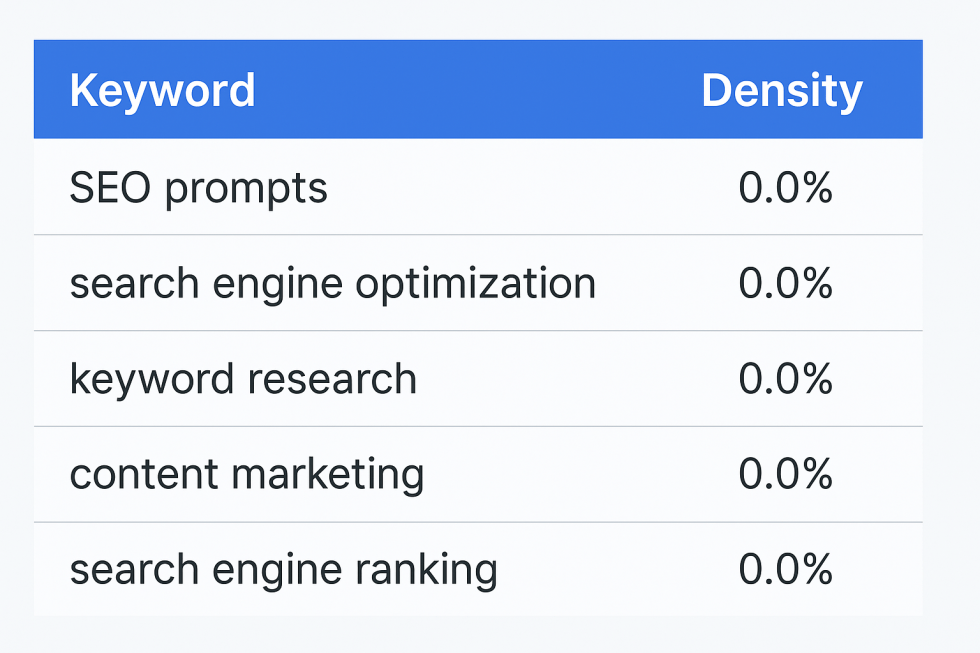
The most common trap is over-optimizing for keywords while forgetting the human on the other side of the screen. Many site owners obsess over density percentages, which is a relic of the past that can actually hurt your standing in 2026. Another mistake is ignoring technical debt, such as bloated themes or unoptimized images that drag your loading speeds into the mud. You should also be wary of installing too many plugins; every extra line of code is a potential bottleneck that slows down your server response times. If you are struggling with low engagement, you might want to look into why my wordpress website is not converting to identify if your user experience is driving visitors away.
Actionable checklist for WordPress success
To keep your site in top shape, you need a repeatable process that addresses both the front-end experience and back-end logic. Follow this checklist to ensure you aren't missing the low-hanging fruit that your competitors are likely ignoring.
- Audit your permalink structure to ensure they are readable and contain your primary topic.
- Optimize every image using WebP formats to reduce file sizes without sacrificing visual clarity.
- Check your internal linking strategy to ensure you are connecting related posts logically.
- Review your H1, H2, and H3 headers to ensure they contain descriptive, user-focused language.
- Implement a caching solution to minimize server load and improve time-to-first-byte.
- Verify your XML sitemap is submitted correctly to search consoles.
Comparing SEO strategies: Custom vs Builders
Choosing the right foundation for your site is the single most important decision you will make in 2026. Many people fall for the siren song of drag-and-drop builders, but these often come with significant SEO baggage in the form of messy code. Below is a comparison to help you understand where your platform stands in the current landscape.
| Feature | Custom WordPress Theme | Page Builder Plugins |
|---|---|---|
| Code Cleanliness | High (Hand-coded) | Low (Bloated DOM) |
| Speed Optimization | Excellent | Variable/Poor |
| Security | Tight control | Higher vulnerability risk |
| SEO Flexibility | Total control | Often restricted |
| Maintenance | Simplified | High complexity |
When you look at this table, it becomes clear that while builders offer convenience, they often require why monthly website maintenance pays protect performance grow traffic and reduce risk to counteract the performance issues they introduce. If you want to scale, you need to prioritize a lean architecture that doesn't buckle under the weight of excessive scripts.
The importance of semantic search
Semantic search is about understanding the intent behind a query rather than just matching keywords. In 2026, Google is essentially an answer engine, not just a link directory, which means your content must be authoritative and comprehensive. When you write, aim to answer the "who, what, where, and why" of your topic in a way that provides genuine value. You can further refine your strategy by learning how to master long tail keywords a practical seo playbook to increase traffic and conversions to capture high-intent traffic that is ready to engage with your brand.
Why site speed is the ultimate metric
Site speed is the silent killer of conversion rates because it affects both your bounce rate and your crawl budget. If your site takes longer than three seconds to load, you have already lost nearly 40% of your potential mobile visitors Source: Google 2026. This isn't just a technical annoyance; it is a major ranking signal that search engines use to determine if your site provides a good user experience. By slimming down your CSS and minifying your JavaScript, you create a frictionless environment where users can focus on your message rather than a loading spinner.
LCP (Largest Contentful Paint), FID (First Input Delay), and CLS (Cumulative Layout Shift) are the core performance metrics that make up Google's Core Web Vitals.
Google uses these metrics as explicit ranking signals in its Search algorithm to evaluate user experience on a webpage.
1. Largest Contentful Paint (LCP)
- What it measures: Loading performance and perceived load speed.
- How it works: It measures how long it takes for the largest visual element (such as a main banner image, video thumbnail, or large block of text) to become visible within the viewport.
- SEO Impact: A slow LCP tells Google that your page takes too long to show meaningful content to users. Pages with low LCP scores risk higher bounce rates, leading to lower search rankings.
- Target: Under 2.5 seconds.
2. First Input Delay (FID)
- What it measures: Initial page interactivity and responsiveness.
- How it works: It tracks the delay between when a user first interacts with a page (e.g., clicking a button, tapping a link, or opening a menu) and when the browser is actually able to begin processing that interaction.
- SEO Impact: Poor responsiveness frustrates users, signaling to search engines that the page provides a poor user experience.
Important Note on SEO: In March 2024, Google officially replaced FID with Interaction to Next Paint (INP) in the Core Web Vitals framework. While FID only measured the first interaction, INP measures page responsiveness across all user interactions throughout the visit.
- Target: Under 100 milliseconds (for legacy FID metrics).
3. Cumulative Layout Shift (CLS)
- What it measures: Visual stability.
- How it works: It calculates how much page content unexpectedly shifts around while loading (e.g., text moving down because an ad or slow image loaded above it).
- SEO Impact: Unexpected layout shifts cause accidental clicks and create a bad user experience. Sites with severe layout shifts are penalized in page experience evaluations, hurting their organic ranking potential.
- Target: A score of 0.1 or lower.
Key takeaways
- Prioritize user experience over keyword stuffing to align with current search engine goals.
- Regular maintenance is the most effective way to prevent technical decay and security vulnerabilities.
- Semantic structure and clear headings help crawlers understand your content hierarchy.
- Use internal linking to guide users through a journey rather than dead-ending them on a single page.
- Performance is a feature, not an afterthought; keep your site lean to keep your rankings high.
What is the most important factor for WordPress SEO in 2026?
The most important factor is the quality and relevance of your content combined with a fast, mobile-responsive technical foundation. While technical settings are the floor, content is the ceiling; you need both to reach your full potential.
How often should I perform website maintenance?
You should perform basic maintenance, such as plugin updates and database optimization, on a monthly basis. Consistent care prevents the accumulation of technical debt, which is far more expensive to fix once it causes a site crash or a ranking drop.
Does the number of plugins I use hurt my SEO?
Yes, if those plugins are poorly coded or redundant, they can significantly increase your page load times. Always audit your plugin list every quarter and remove anything that isn't providing a measurable benefit to your users.
Should I focus on long-tail or short-tail keywords?
You should focus primarily on long-tail keywords because they represent specific user intent and typically convert at a much higher rate. Short-tail keywords are often too broad and competitive, making them difficult to rank for without massive domain authority.
How do I know if my SEO efforts are working?
You should track key metrics like organic traffic growth, time on page, and conversion rates through integrated analytics tools. If your traffic is rising but your conversions are flat, it means your SEO is bringing people in, but your site content or user journey needs refinement.
Conclusion
Maximizing your WordPress SEO is a marathon, not a sprint, and it requires a consistent commitment to quality and technical hygiene. By focusing on semantic relevance, site performance, and a clean architecture, you build a foundation that can weather any algorithm update. Remember that your primary goal is to serve the human visitor, as search engines are simply proxies for human preferences. Take the time to audit your site, prune the unnecessary bloat, and cultivate content that truly answers the questions your audience is asking. When you align your technical setup with a helpful content philosophy, you create a digital asset that works for you every single day of the year. Start today by reviewing your current site structure, and you will find that even small, intentional changes can lead to significant long-term growth.
The Role of AI in Your 2026 Strategy
We cannot talk about the current SEO landscape without addressing the elephant in the room: Artificial Intelligence. In 2026, AI is no longer a futuristic concept; it is integrated into the very fabric of search results. Tools like Google’s AI Overviews have shifted the goalposts. You are no longer just competing for the blue link; you are competing to be the source of truth that the AI summarizes.
To thrive in this environment, your WordPress content needs to be "AI-friendly." This means focusing on unique insights, original data, and human-centric perspectives that bots struggle to synthesize from existing web content. If you are simply recycling common knowledge, an AI overview will likely replace your traffic entirely. Instead, inject your brand’s unique voice, case studies, and proprietary expertise into every post. When you provide information that cannot be found elsewhere, you become a primary source, which is exactly what search engines—and their AI agents—are programmed to prioritize.
Why Mobile-First Isn't Optional
If you are still checking your site’s design primarily on a desktop monitor, you are operating at a disadvantage. By 2026, mobile traffic accounts for the vast majority of web browsing globally. Search engines now use mobile-first indexing, meaning they look at the mobile version of your site to determine its ranking potential.
A mobile-responsive theme is the baseline, but you must go further. Are your buttons easy to tap with a thumb? Is your font size legible without zooming? Are your images compressed enough to load over a 4G connection in a crowded area? Testing your site on actual mobile devices—not just a browser simulator—is the only way to ensure your user experience holds up. A site that feels "clunky" on a smartphone is a site that users will abandon instantly, and those high bounce rates will eventually signal to search engines that your content isn't providing the value it promises.
Security as an SEO Signal
Many site owners forget that security is a ranking factor. When Google sees that a site is insecure—perhaps due to an expired SSL certificate or a history of malware—it will flag the site with a "Not Secure" warning in the browser. This is the ultimate trust-killer. Users will flee, and search engines will penalize your visibility to protect their own users.
In the WordPress ecosystem, security is largely about vigilance. Keep your WordPress core, themes, and plugins updated at all times. Use reputable security plugins to monitor for unauthorized access and implement two-factor authentication for all administrative accounts. A secure site is a stable site, and search engines favor platforms that aren't prone to downtime or malicious redirects. Think of security as the foundation of your SEO; if the house isn't safe, nobody is going to stay long enough to appreciate the decor.
Final Thoughts: The Philosophy of Sustainable Growth
SEO is often marketed as a series of "hacks" or "secrets," but the reality is much more boring—and much more rewarding. It is about building a digital experience that respects your user's time and provides them with the answers they need. When you focus on speed, clarity, and genuine helpfulness, you stop playing a game of cat-and-mouse with search algorithms and start building a sustainable asset.
WordPress gives you the tools to do this better than almost any other platform. It is flexible, powerful, and scalable. Whether you are a solo blogger or a growing business, the path to visibility remains the same: create great things, keep your technical house in order, and stay patient. The search landscape will continue to evolve, but the core principles of quality and user-first design will always stand the test of time. Your journey to the top of the search rankings starts with the very next post you publish. Make it count.
About the Author

Brian Keary
Founder & Lead Developer
Brian is the founder of BKThemes with over 20 years of experience in web development. He specializes in WordPress, Shopify, and SEO optimization. A proud alumnus of the University of Wisconsin-Green Bay, Brian has been creating exceptional digital solutions since 2003.
Expertise
Writing since 2003