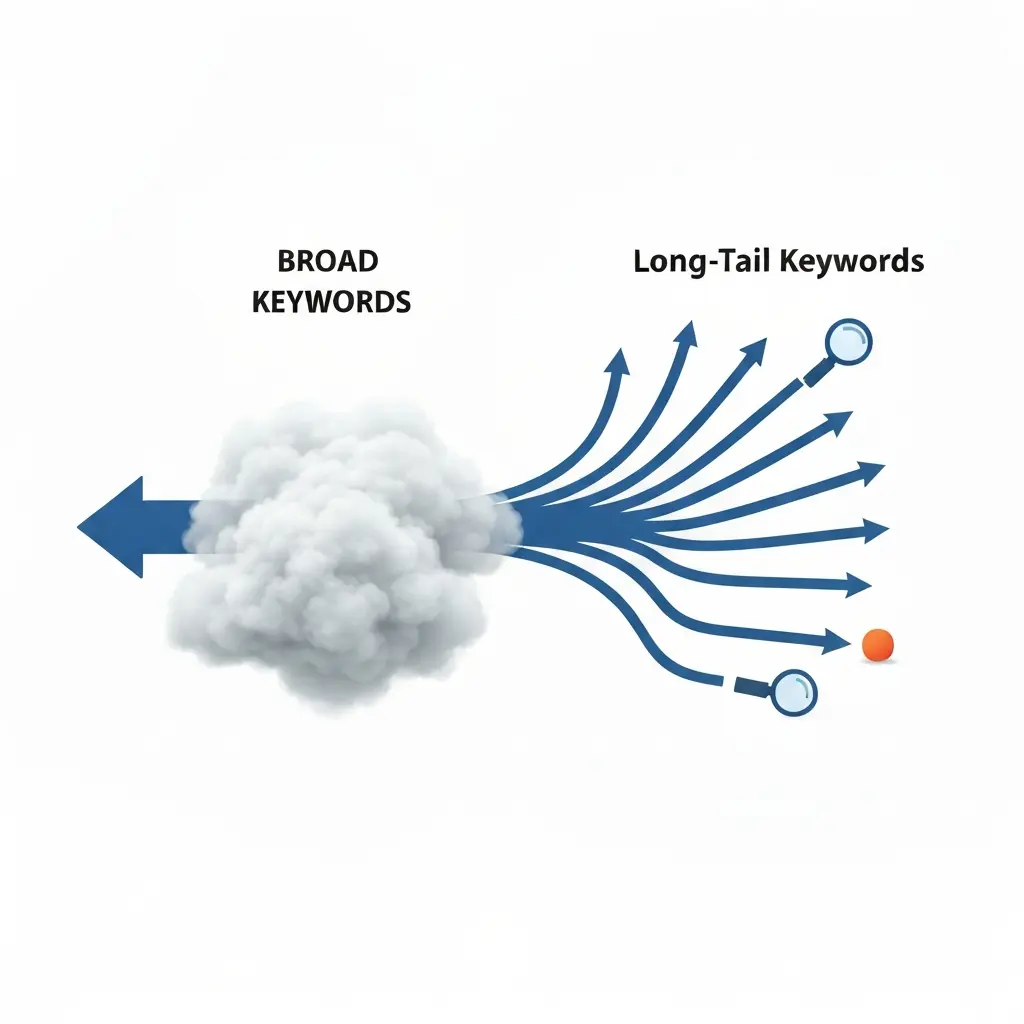
Long-tail keywords are specific, multi-word search queries—typically three words or more—that reflect precise user intent. While individual long-tail phrases have lower search volume than broad seed terms, they account for over 70% of all searches and generate higher organic conversion rates. Optimizing content for long-tail keywords requires identifying targeted queries, aligning with exact search intent, and structuring comprehensive, direct answers across on-page elements. This isn't about chasing the biggest, most competitive search terms; it's about precision, relevance, and connecting with users who know exactly what they're looking for. Our outreach playbook can help figure out which are the best long-tails terms to use.
Key Takeaways
- Long-tail keywords (3+ words) represent over 70% of all searches and indicate high user intent.
- They are less competitive, easier to rank for, and drive more qualified traffic.
- Effective keyword research involves identifying seed keywords, using tools, and analyzing competitors.
- Always understand and align your content with the user's search intent.
- Naturally integrate long-tail keywords into titles, headings, body copy, and meta descriptions.
- Create in-depth, valuable content that comprehensively answers specific user queries.
- Optimize on-page elements like URLs, title tags, meta descriptions, and image alt text.
- Implement a strategic internal linking plan to distribute link equity and improve navigation.
- Off-page signals like backlinks and user engagement metrics are also crucial.
- Avoid keyword stuffing, ignoring intent, and creating low-quality content.
- Track keyword rankings, organic traffic, and conversion rates to measure success.
Optimizing your content for long-tail keywords might sound technical, but at its heart, it's about understanding your audience deeply. It’s about anticipating their questions, solving their specific problems, and speaking their language. When you nail this, you don't just get more traffic; you get better traffic – visitors who are more likely to convert because they've found precisely what they need. This guide is your roadmap, a practical blueprint to help you master the art and science of long-tail keyword optimization. We'll break down the process step-by-step, making it accessible and actionable for everyone.
What Are Long-Tail Keywords and Why Do They Matter?
Long-tail keywords are the specific, often multi-word phrases that users type into search engines when they are further along in their buying journey or have a very precise information need. Think of them as the difference between someone searching for "car" and someone searching for "used 2020 Honda CR-V EX-L with under 30,000 miles in blue." The latter is a long-tail query. These phrases are typically less competitive, have lower search volume individually, but collectively drive a significant portion of search traffic. They are the detailed questions, the specific product features, and the problem-solution queries.
Why Long-Tail Keywords Matter More Than Ever
The digital landscape is crowded. Trying to compete for broad, high-volume keywords is like trying to be heard in a stadium full of shouting fans. Long-tail keywords allow you to find quieter corners where your specific message can resonate. They signal a higher level of user intent. When someone searches for "best waterproof hiking boots for wide feet," they're not just browsing; they're likely looking to buy. This intent translates into higher conversion rates. Furthermore, optimizing for long-tail keywords often has a domino effect, improving your rankings for related, slightly broader terms as well. It's a foundational strategy for sustainable SEO growth.
The Anatomy of a Long-Tail Keyword
A long-tail keyword typically consists of three or more words. They often include:
- Specific attributes: "red leather sectional sofa"
- Problem/solution queries: "how to fix a leaky faucet under sink"
- Location-based terms: "best pizza delivery downtown Seattle"
- Question-based phrases: "what are the benefits of intermittent fasting?"
- Product/service modifiers: "affordable web design services for startups"
These phrases are conversational and directly reflect how people naturally speak and search. They are the breadcrumbs leading users directly to the solution they seek.
Step 1: How Do You Research and Uncover Long-Tail Keywords?
This is arguably the most critical step. You can't optimize for keywords you don't know exist. This phase is about becoming a detective, uncovering the exact language your target audience uses.
Identifying Seed Keywords
Start with broad topics related to your business or content. These are your "seed" keywords. If you sell handmade soaps, your seed keywords might be "soap," "handmade soap," "natural soap," "artisanal soap." These are starting points, not endpoints.
Leveraging Keyword Research Tools
Tools are your best friends here. They help you expand your seed keywords into a comprehensive list of long-tail variations.
- Google Keyword Planner: Free with a Google Ads account, it provides search volume data and related keyword ideas.
- SEMrush, Ahrefs, Moz Keyword Explorer: These are powerful paid tools offering in-depth data on keyword difficulty, search volume, related terms, and competitor analysis. They are invaluable for uncovering sophisticated long-tail opportunities. For instance, using Master backlinks keyword tools for seo ranking boosts, you can discover terms your competitors are ranking for that you haven't considered.
- AnswerThePublic: This visual tool shows questions people are asking related to your seed keywords, often revealing excellent long-tail question-based queries.
- Google Search Autocomplete & "People Also Ask" (PAA): Simply typing your seed keywords into Google and observing the suggestions and PAA boxes can reveal a goldmine of long-tail phrases.
See The history of keyword research for 2026 to learn more about keywords.
Analyzing Competitor Keywords
See what long-tail keywords your successful competitors are ranking for. Tools like SEMrush and Ahrefs allow you to input a competitor's URL and see which keywords drive traffic to their site. This can reveal opportunities you might have missed.
Understanding Search Intent
This is paramount. For every keyword you identify, ask yourself: What does the user really want when they search for this? Are they looking for information (informational intent), trying to compare options (commercial investigation), or ready to buy (transactional intent)? Your content must align perfectly with this intent. A blog post answering "how to choose the right running shoes" serves informational intent, while a product page for "Nike ZoomX Invincible Run Flyknit 3" serves transactional intent.
Triggering Diverse Search Engine Results Page (SERP) Layouts
Long-tail keywords directly influence how search results are presented because they communicate explicit user intent and specific context. Search engines respond to these detailed queries by rendering dynamic SERP features designed to provide immediate answers:
- Featured Snippets (Position Zero): Because long-tail queries often take the form of specific questions (e.g., "how to bake sourdough bread without a starter"), search engines frequently pull direct answers into a Featured Snippet at the top of the page. Structuring your content to answer these queries concisely gives you a high chance of occupying Position Zero.
- People Also Ask (PAA) Modules: Question-focused long-tail terms regularly populate PAA expandable accordions. Targeting these micro-queries allows your content to appear across multiple intent-driven drop-down listings beyond traditional organic blue links.
- Rich Snippets & Specialized Modules: Specific product or transactional long-tail keywords (e.g., "affordable web design services for startups") often trigger specialized SERP elements such as star ratings, pricing tables, image carousels, or local map packs, matching the specific transactional or navigational intent of the searcher.
On-Page Placement Example: When discussing keyword research, naturally weave in phrases like "finding long-tail keywords for my niche" or "what are the best long-tail keyword research tools."
Step 2: Mapping Keywords to Content Strategy
Once you have a robust list of long-tail keywords, it's time to integrate them strategically into your content plan. Don't just stuff them in; weave them in where they make sense.
Content Auditing and Gap Analysis
Review your existing content. Are there pieces that could be updated to target relevant long-tail keywords? Are there gaps in your content where you could create new pieces to address specific user queries? For example, if you have a general article on "gardening tips," you might identify a gap for a specific article on "organic pest control for tomato plants."
Creating a Content Calendar
Organize your keyword targets into a content calendar. Assign specific long-tail keywords to upcoming blog posts, product descriptions, landing pages, or FAQs. This ensures a systematic approach to content creation and optimization.
Prioritizing Keywords
Focus on keywords that have a reasonable search volume, align with your business goals, and have achievable difficulty levels. Don't chase terms with zero search volume, no matter how specific they are. Conversely, don't get discouraged by slightly lower volumes for highly relevant, high-intent keywords.
On-Page Placement Example: In a section about content planning, use phrases like "mapping long-tail keywords to blog post ideas" or "using long-tail keywords to fill content gaps."
Step 3: How Do You Structure Content for Long-Tail Search Queries?
This is where the magic happens. You've done the research; now you need to create content that satisfies user intent and naturally incorporates your target long-tail keywords.
Answering User Intent Directly
This is the core of helpful content. When a user searches for "how to bake sourdough bread without a starter," your content should immediately provide that answer. Don't make them hunt for it.
Answering User Intent Directly Example:
Example: Direct Answer Formatting for Sourdough Bread
To bake sourdough bread without a traditional starter, you can utilize a commercial yeast method infused with a small amount of sourdough discard or a pre-ferment like a poolish or biga. This approach mimics the flavor profile while ensuring leavening. Alternatively, some recipes use a combination of commercial yeast and a small amount of active sourdough starter to achieve a quicker rise and distinct taste.
Creating In-Depth, Valuable Content (Information Gain Score)
Long-tail keywords often target specific questions or detailed problems, requiring more than just rehashed top-ranking answers. Google increasingly evaluates content using an Information Gain Score—a metric designed to measure the amount of original information a piece of content offers a user beyond what they have already encountered in other search results.
When matching complex, multi-word long-tail queries, search engines assess informational novelty and unique value by analyzing:
- Novel Insights vs. Search Echo Chambers: Rephrasing the same basic facts as existing SERP competitors yields a low Information Gain Score. Google rewards pages that introduce original data, primary research, step-by-step experiment results, or expert commentary.
- First-Hand Experience & Perspective (EEAT): Providing specific case studies, original screenshots, video demonstrations, or nuanced counterpoints signals genuine expertise and practical experience.
- Comprehensive Resolution: High-scoring content doesn't just restate common advice; it addresses unique edge cases, potential pitfalls, and follow-up questions linked to the long-tail intent, ensuring the user doesn't need to return to the SERP to refine their query.
Natural Keyword Integration
Sprinkle your long-tail keywords throughout your content. They should appear naturally in:
- Titles and Headings (H1, H2, H3): Use them in your main title and subheadings where appropriate.
- Introduction: Hook readers by addressing their query early on.
- Body Paragraphs: Weave them into sentences where they make logical sense.
- Image Alt Text: Describe images using relevant keywords.
- Meta Descriptions: Entice users to click by including the keyword.
Using Synonyms and Related Terms (LSI Keywords)
Don't just repeat the exact long-tail keyword. Use synonyms and related terms (Latent Semantic Indexing keywords) to provide context and depth. This helps search engines understand the broader topic.
Readability and User Experience
Ensure your content is easy to read and navigate. Use short paragraphs, bullet points, and clear headings. A positive user experience encourages visitors to stay longer and engage more deeply with your content.

Step 4: On-Page Optimization Tactics for Long-Tail Keywords
Beyond content creation, several technical on-page elements play a role in signaling relevance to search engines.
Schema Markup & FAQPage Structured Data (JSON-LD)
To maximize the visibility of your content in search engine results, implementing structured data is essential. Structured data helps search engines understand the exact context of your content, making your site eligible for rich snippets and expanded search presence.
- JSON-LD Implementation: Use JSON-LD (JavaScript Object Notation for Linked Data) formatted structured data inserted into the HTML of your page. JSON-LD is Google's preferred format because it is clean, easy to maintain, and does not interfere with visual user experience elements.
- FAQPage Schema for Long-Tail Queries: Long-tail keywords often mirror specific questions users ask. By wrapping question-and-answer pairs in FAQPage schema markup, you increase the likelihood of triggering rich FAQ accordion snippets directly under your organic search listing.
- Improving Snippet Eligibility: Rich results expand your physical footprint on the Search Engine Results Page (SERP). Occupying more SERP real estate draws user attention, clarifies content relevance before a click occurs, and significantly improves Click-Through Rates (CTR) for competitive long-tail search terms.
Optimizing Title Tags and Meta Descriptions
These are your first impression in the search results.
- Title Tag: Include your primary long-tail keyword, preferably near the beginning. Keep it concise (around 50-60 characters) and compelling.
- Example: "How to Bake Sourdough Bread Without a Starter | Easy Recipe"
- Meta Description: Expand on the title, include the keyword naturally, and provide a clear call to action or benefit. Aim for around 150-160 characters.
- Example: "Discover a simple, step-by-step recipe for delicious sourdough bread, even if you don't have a starter. Perfect for beginners!"
Optimizing Meta Data Example:
Title Tag: "Best Waterproof Hiking Boots for Wide Feet | Expert Reviews 2026"
Meta Description: "Find the perfect waterproof hiking boots for wide feet in 2026. Our expert reviews cover top brands, comfort, durability, and value."
Strategic URL Structure
Keep URLs short, descriptive, and include your main keyword if possible.
- Good Example:
yourwebsite.com/blog/bake-sourdough-no-starter - Less Ideal:
yourwebsite.com/p?id=12345
Internal Linking Strategy
Link relevant pages and posts within your website. If you have a page about "hiking boot materials," link to it from your "best waterproof hiking boots for wide feet" article. This distributes link equity and helps users discover more content. A solid internal linking strategy can significantly boost your SEO. Learn more about Speed and seo how i optimized my shopify store and boosted traffic.
Image Optimization
Use descriptive file names and alt text for your images. If you have an image of the sourdough bread, name it sourdough-bread-no-starter-recipe.jpg and use alt text like "Close-up of rustic sourdough bread baked without a starter."
Step 5: Off-Page Signals and User Experience
While on-page optimization is crucial, off-page factors and user experience also contribute to your content's success with long-tail keywords.
Building Relevant Backlinks
Backlinks from reputable, relevant websites act as votes of confidence. Focus on earning links from sites within your niche. If a high-authority food blog links to your sourdough recipe, it signals to Google that your content is valuable. Tools mentioned earlier can help identify backlink opportunities. Master backlinks keyword tools for seo ranking boosts can guide this process.
Social Signals
While not a direct ranking factor, social shares can increase visibility, drive traffic, and indirectly lead to backlinks. Promote your content on relevant social media platforms.
User Engagement Metrics
Google pays attention to how users interact with your content. Metrics like:
- Dwell Time: How long users stay on your page.
- Bounce Rate: The percentage of users who leave after viewing only one page.
- Click-Through Rate (CTR): The percentage of users who click on your link in the search results.
High engagement suggests your content is meeting user needs. Creating truly helpful content is the best way to improve these metrics.
Site Speed and Mobile-Friendliness
As mentioned, a fast-loading, mobile-responsive website is non-negotiable in today's digital world. Users expect seamless experiences across all devices. Slow pages or poor mobile usability will hurt your rankings, regardless of how well-optimized your content is.
Mistakes to Avoid
- Keyword Stuffing: Overloading your content with keywords. This looks unnatural and harms user experience and SEO.
- Ignoring Search Intent: Creating content that doesn't match what the user is looking for.
- Low-Quality Content: Thin, unoriginal, or inaccurate content will not rank well or engage users.
- Not Updating Content: SEO is an ongoing process. Keep your content fresh and relevant.
- Focusing Only on Volume: Overlooking highly specific, high-intent keywords with lower search volumes.
- Poor URL Structure: Using long, messy, or irrelevant URLs.
- Neglecting Mobile Users: Not ensuring your site is fully responsive and fast on mobile devices.
- Forgetting User Experience: Making your content hard to read or navigate.
Long-Tail Keyword Optimization Checklist
Here's a handy checklist to ensure you're covering all your bases:
Keyword Research
- Identified seed keywords relevant to your niche.
- Used keyword research tools to find long-tail variations.
- Analyzed competitor keywords for opportunities.
- Determined the search intent for each target keyword.
- Created a prioritized list of long-tail keywords.
Content Strategy & Creation
- Audited existing content for optimization opportunities.
- Mapped long-tail keywords to specific content pieces.
- Developed a content calendar.
- Created in-depth, valuable content answering user intent directly.
- Naturally integrated target long-tail keywords and synonyms.
- Ensured content is readable and well-structured (headings, lists).
On-Page Optimization
- Included primary long-tail keywords in title tags.
- Crafted compelling meta descriptions with keywords.
- Used descriptive, keyword-rich URLs.
- Implemented a strategic internal linking plan.
- Optimized images with descriptive file names and alt text.
Off-Page & User Experience
- Focused on earning relevant backlinks.
- Promoted content on social media.
- Monitored user engagement metrics (dwell time, bounce rate).
- Ensured excellent site speed.
- Verified mobile-friendliness.
Measuring Your Success
How do you know if your long-tail optimization efforts are paying off? Track these key performance indicators (KPIs):
- Keyword Rankings: Monitor your rankings for target long-tail keywords using tools like Google Search Console or SEMrush.
- Organic Traffic: Observe increases in organic traffic, particularly to pages optimized for long-tail terms.
- Conversion Rates: Track how many visitors from organic search (especially those hitting long-tail keywords) convert into leads or customers.
- User Engagement: Look for improvements in dwell time and reductions in bounce rate on optimized pages.
- "People Also Ask" & Featured Snippet Performance: See if your content starts appearing in these valuable SERP features for your target queries.
Frequently Asked Questions
What is the difference between short-tail and long-tail keywords?
Short-tail keywords are typically 1-2 words, very broad, and have high search volume (e.g., "shoes"). Long-tail keywords are usually 3+ words, highly specific, and have lower individual search volume but collectively drive significant traffic (e.g., "women's waterproof trail running shoes size 8"). Long-tail keywords usually indicate a more defined user intent.
How do I find long-tail keywords for my specific business?
Start with broad "seed" keywords related to your products or services. Then, use keyword research tools like Google Keyword Planner, SEMrush, Ahrefs, or AnswerThePublic to expand these into more specific, longer phrases. Also, analyze competitor websites and pay attention to Google's "People Also Ask" and autocomplete suggestions.
Is it worth optimizing content for keywords with very low search volume?
Yes, absolutely, if they are highly relevant to your niche and indicate strong user intent. While individual low-volume keywords might not bring much traffic, a collection of them can attract a very targeted audience that is more likely to convert. They are often less competitive, making them easier to rank for.
How often should I update content for long-tail keywords?
Content freshness is important. Regularly review your content, especially your top-performing pages. Update statistics, add new information, and ensure it still aligns with current user search intent and best practices. For evergreen content, a refresh every 6-12 months might suffice. For rapidly changing topics, more frequent updates are needed.
Can long-tail keyword optimization help with local SEO?
Definitely. Long-tail keywords are excellent for local SEO because they often include location-specific terms (e.g., "emergency plumber near me," "best coffee shop downtown Austin"). Optimizing for these phrases helps you attract local customers who are actively searching for your products or services in their area.
Conclusion: The Power of Specificity
Mastering long-tail keyword optimization is a marathon, not a sprint. It requires patience, consistent effort, and a deep understanding of your audience. By focusing on the specific needs and queries of your users, you can carve out a significant niche in search results. This approach not only drives more qualified traffic but also builds trust and authority for your brand. Don't underestimate the power of specificity; it's the key to unlocking sustainable growth in the ever-evolving world of search engines. Start implementing these steps today, and watch your targeted traffic soar.
Looking for implementation support? Visit our web development services page for the full service overview.
About the Author

Brian Keary
Founder & Lead Developer
Brian is the founder of BKThemes with over 20 years of experience in web development. He specializes in WordPress, Shopify, and SEO optimization. A proud alumnus of the University of Wisconsin-Green Bay, Brian has been creating exceptional digital solutions since 2003.
Expertise
Writing since 2003