Recent industry reports indicate that nearly 72% of software development teams integrated generative AI tools into their daily workflows by early 2026. This seismic shift has left many professionals wondering if their keyboard-clacking days are numbered. The short answer is that AI is not replacing developers; it is fundamentally evolving the nature of what it means to build software. Think of AI as a high-powered apprentice that can churn out boilerplate code at lightning speeds, but lacks the strategic intuition of a seasoned architect.
Who this is for
This analysis is tailored for software engineers, web developers, and technical leads who feel the looming shadow of automation. It is also designed for computer science students and career changers trying to decide if the coding profession remains a viable long-term path. If you spend your days wrestling with legacy code or debating architecture, this perspective will help you recalibrate your value proposition in an AI-augmented landscape.
Who this is NOT for
This guide is not for people looking for a magic bullet to automate their entire job so they can collect a paycheck while doing nothing. It is also not for those who believe that code is merely a commodity that can be generated without human oversight. If you are searching for a technical tutorial on how to prompt specific LLMs, you will not find that here; instead, we are focusing on the career trajectory and the survival of the human developer.
Build something better
Need a developer who can actually ship the fix, feature, or rebuild?
This post is in Web Development, so here’s the most relevant next step if you want help applying it.
We handle custom web development, performance improvements, design upgrades, and ongoing technical support for sites that need more than templates.
- Custom development for WordPress, Shopify, and modern web stacks
- Performance, UX, and conversion-focused improvements
- Hands-on implementation with no pass-the-buck nonsense
The changing role of the developer
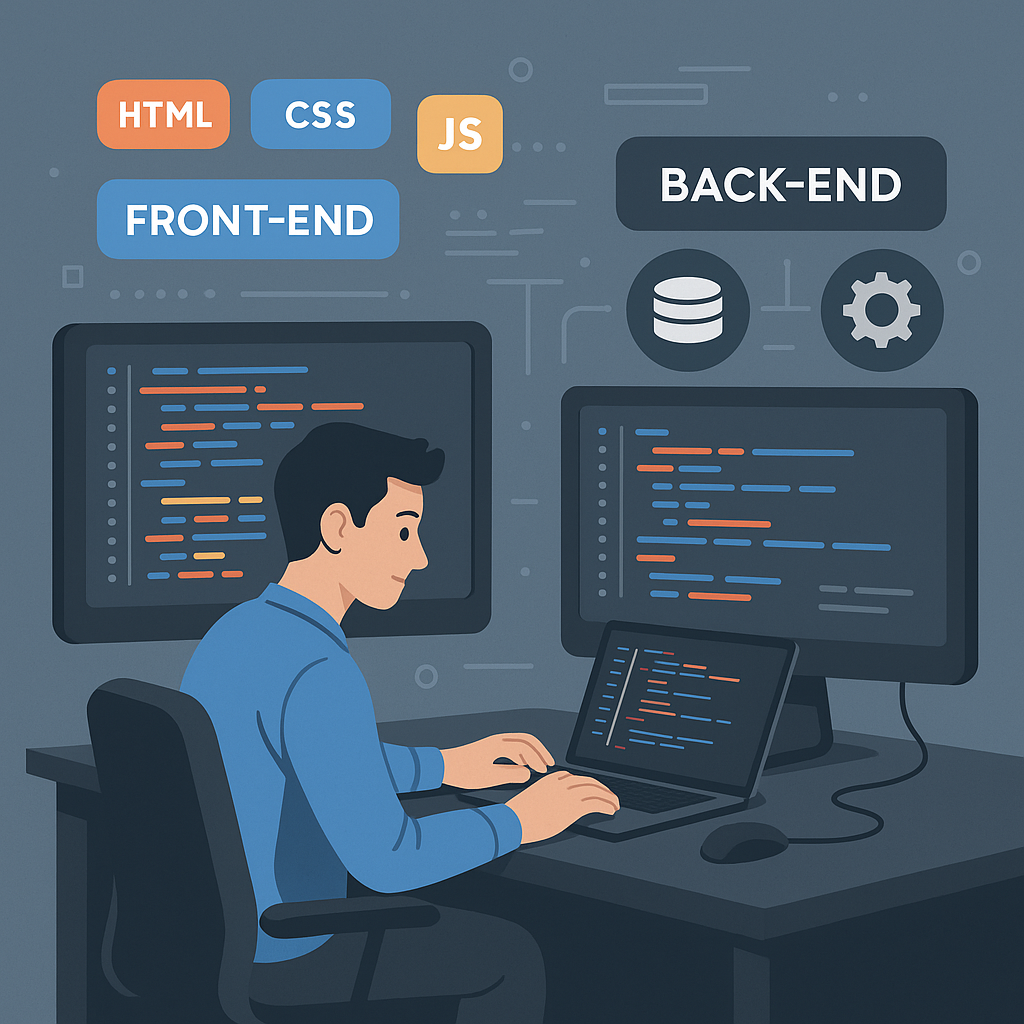
The role of a developer is shifting from writing raw syntax to managing complex technical ecosystems. In the past, a massive portion of a developer's time was spent typing out repetitive functions, handling basic CRUD operations, and debugging syntax errors. Today, AI handles these low-level tasks with ease, which pushes human developers to become "system orchestrators" rather than mere code monkeys. You are no longer just building a house; you are becoming the lead engineer overseeing a fleet of automated robots that do the heavy lifting.
If you find yourself stuck in the weeds of basic implementation, you might want to look into how why monthly website maintenance pays protect performance grow traffic and reduce risk to understand how automation fits into the broader lifecycle of a digital product. The core skill of the future is not knowing the syntax of every language, but understanding how to integrate diverse services into a cohesive, secure, and scalable whole.
Comparison of human vs AI capabilities
| Feature | Human Developer | AI Assistant |
|---|---|---|
| Creativity | High (Context-aware) | Low (Pattern-based) |
| Speed | Moderate | Extremely High |
| Logic/Reasoning | Deep/Systemic | Surface/Probabilistic |
| Accountability | Full Responsibility | None |
| Maintenance | Strategic Oversight | Code Generation |
Mistakes to avoid
One of the biggest mistakes developers make today is treating AI as a source of truth rather than a drafting tool. Relying on generated code without a rigorous review process is like letting a toddler drive your car; it might move, but it is going to crash eventually. Another pitfall is ignoring the importance of long-term architecture in favor of quick fixes. If you rely too heavily on AI to generate small, disjointed snippets, you will inevitably create a codebase that is a nightmare to maintain.
You should also avoid the trap of thinking that your job security comes from the code you write. Instead, focus on the problems you solve. When you ignore the broader business context, you become replaceable. If you are working on a web platform, consider how your code impacts the user experience and SEO. For instance, if you are managing a large ecosystem, remember that boost roi with tailored seo for multi-location businesses can be a crucial part of the value you bring to a client, which is something an AI cannot do without human strategic guidance.
Actionable checklist for future-proofing your career
- Master the art of prompt engineering: Treat AI as a junior developer that needs very clear instructions.
- Focus on system design: Learn how components fit together rather than just how to write a function.
- Prioritize soft skills: Empathy, communication, and business acumen are the three things AI cannot replicate.
- Deepen your domain knowledge: Understand the specific industry you serve to offer insights AI cannot guess.
- Embrace continuous learning: Use tools like master long tail keywords a practical seo playbook to increase traffic and conversions to stay ahead of the curve in how your software interacts with the world.
- Audit your output: Treat every AI-generated line as if it were written by a stranger—verify, test, and optimize.
Why human intuition still matters
AI works by predicting the next token in a sequence based on historical data. It is excellent at reproducing what has been done before, but it struggles with genuine innovation. When a client comes to you with a vague, half-formed idea, they are not looking for a script; they are looking for a partner who can translate their messy human desires into a structured technical reality. This "translation layer" is where the human developer will always hold the edge.
Furthermore, debugging is not just about finding a missing semicolon. It is about understanding why a system failed under load, how it interacts with external APIs, and how to balance technical debt with shipping deadlines. These are high-stakes decisions that require an understanding of human risk and business goals. AI can suggest a fix, but it cannot decide if that fix is the right choice for your company’s long-term strategy.
Key Takeaways
- AI is a tool for productivity, not a replacement for human judgment.
- Developers must pivot from writing code to managing systems and solving business problems.
- The ability to audit, debug, and architect complex software is becoming more valuable than raw coding speed.
- Soft skills and domain expertise are the new "moats" against AI-driven obsolescence.
- Continuous adaptation is the only way to stay relevant in a rapidly changing technical job market.
What is the biggest risk for developers?
The biggest risk is complacency. If you stop learning and rely entirely on AI to do your work, you will lose the ability to understand the code you are shipping. This makes you vulnerable to technical debt and security vulnerabilities that AI often introduces. You must remain the master of your craft, or you will eventually become a glorified proofreader for a machine that you do not fully comprehend.
Will AI eventually replace junior developers?
AI is already replacing some of the tasks typically assigned to junior developers, such as writing unit tests or basic front-end components. However, this does not mean the role of a junior developer is gone. It means the bar for entry is higher. Juniors now need to be better at reviewing code and understanding architecture earlier in their careers. It is a period of transition where the "easy" work is being automated, forcing a more rapid professional development cycle.
How can developers use AI to improve their productivity?
Developers can use AI for rapid prototyping, writing boilerplate code, generating documentation, and even helping with complex refactoring tasks. By offloading these repetitive chores, you free up mental bandwidth to focus on the truly difficult parts of software engineering. It is like having an infinitely fast, tireless assistant that handles the grunt work while you focus on the strategy.
Is coding still a good career path in 2026?
Yes, coding remains an incredibly strong career path, provided you view yourself as a problem solver rather than just a writer of code. The demand for high-quality software is higher than ever, and AI is enabling even more innovation. As long as businesses need custom solutions to complex problems, they will need humans who can design, implement, and maintain those systems.
What skills will be most important in the next five years?
System architecture, security, cloud infrastructure, and business communication will be the most critical skills. As AI commoditizes syntax, your ability to understand how different technologies interact to solve a specific business problem will define your salary and job security. You need to be a bridge between the technical world and the human world.
How do I stay ahead of AI developments?
You stay ahead by experimenting with new tools but maintaining a healthy dose of skepticism. Build things. Don't just read about AI; use it to build personal projects, test its limits, and understand where it fails. The more you work with these tools, the better you will understand their boundaries. Keep your focus on the fundamentals of computer science, as those principles rarely change, unlike the flavor-of-the-month AI tool.
The future of software development is not a dark, dystopian landscape where machines rule the terminal. Instead, it is a world of increased efficiency where developers are empowered to build more, faster, and with greater impact. We are moving away from the era of the "coders" and into the era of the "architects." If you embrace this change, you will not just survive; you will thrive. The machine can write the lines, but you are the one who tells the story. Keep your eyes on the horizon, keep your skills sharp, and remember that software is ultimately built for people, by people.
Looking for implementation support? Visit our web development services page for the full service overview.
📧 Want to Stay Updated?
Get the latest web development tips and insights delivered to your inbox.
🚀 What Services do you Offer?
About the Author

Brian Keary
Founder & Lead Developer
Brian is the founder of BKThemes with over 20 years of experience in web development. He specializes in WordPress, Shopify, and SEO optimization. A proud alumnus of the University of Wisconsin-Green Bay, Brian has been creating exceptional digital solutions since 2003.
Expertise
Writing since 2003