
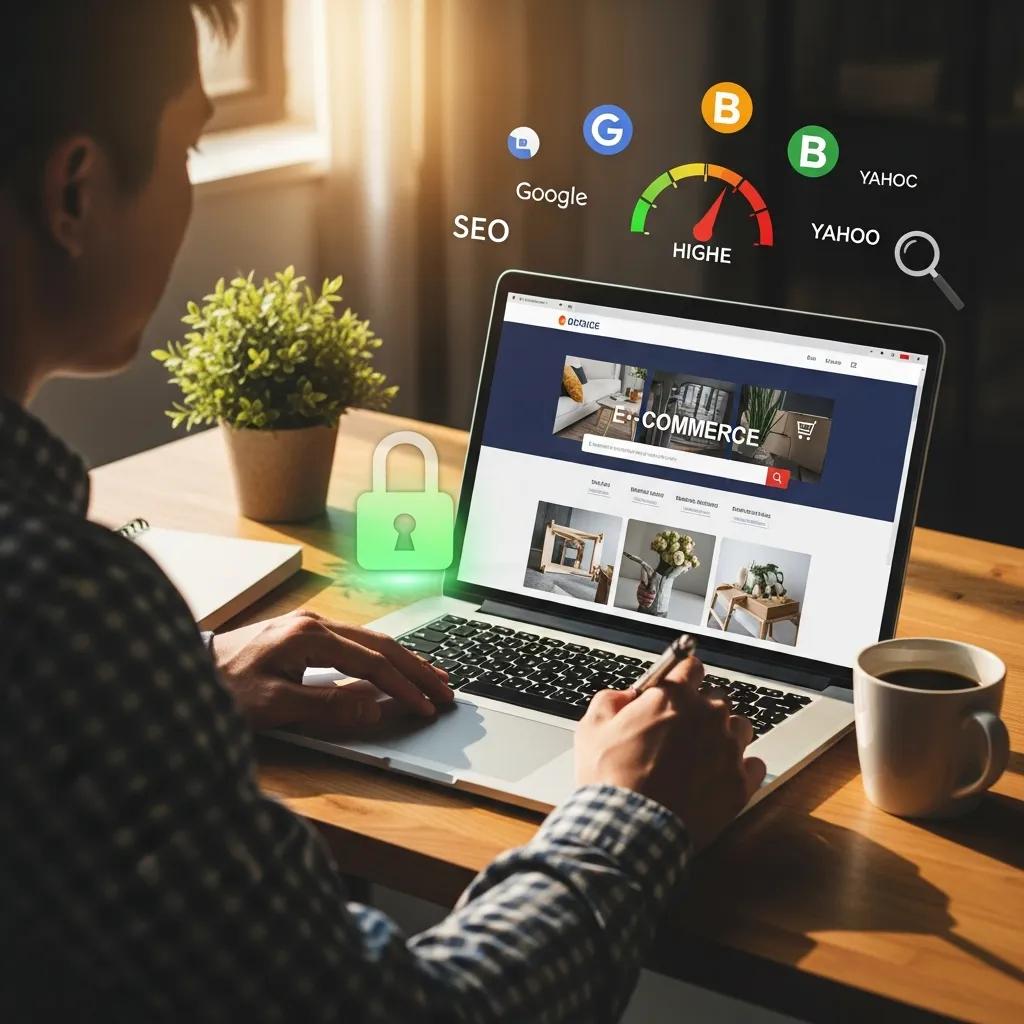
Web Design

Why Your E‑Commerce Store Needs Regular Maintenance — Benefits & Professional Services

Running an online store means keeping both the experience and the infrastructure healthy. Regular maintenance keeps your site secure, fast, and visible in search — and it prevents small problems from turning into lost sales.

By jm1CotMAha
January 14, 2026
14 min read
Why Your E‑Commerce Store Needs Regular Maintenance — Benefits & Professional Services

Running an online store means keeping both the experience and the infrastructure healthy. Regular maintenance keeps your site secure, fast, and visible in search — and it prevents small problems from turning into lost sales. Below we walk through the concrete benefits of ongoing upkeep, what a practical maintenance checklist looks like, when to bring in pros, and the risks of letting updates slide.

Key benefits of regular e‑commerce maintenance

Routine maintenance pays off in three clear ways: stronger security, faster performance, and better SEO. Prioritizing these areas keeps your storefront competitive, reduces friction for customers, and protects your revenue.

How maintenance strengthens site security

Shield icon symbolizing e‑commerce security

Security is non‑negotiable for stores that collect customer data and payments. Regular maintenance — timely patches, plugin updates, and tested backups — lowers the chance of hacks, malware, or data loss. When you can restore quickly from clean backups, downtime and revenue impact shrink dramatically.

Research also reinforces how important advanced payment and encryption protocols are for protecting sensitive transactions.
Advanced protocols for e‑commerce payment security

“Securing electronic payments is a core requirement for online commerce. SSL/TLS has become the de facto choice for protecting web payments, while SET faced adoption challenges. Newer three‑domain (3D) schemes, such as 3‑D Secure, aim to add further protection for cardholders and merchants. Building on studies of SSL, SET, and 3D schemes, researchers proposed a secure e‑payment protocol designed to add another layer of defense for both buyers and sellers.” -Secure E-commerce protocol, K Haseeb, 2011

How maintenance improves performance and page speed

Fast pages equal happier customers — and more conversions. Regular checks and optimizations (image compression, leaner code, caching) reduce load times and drop bounce rates. Industry data shows even a one‑second delay can cut conversions by roughly 7%, so maintaining speed is directly tied to revenue.

How regular maintenance lifts SEO and visibility

Visibility on search engines depends on both technical health and fresh content. Maintenance keeps your site aligned with SEO best practices so your products surface when customers search.

Why SEO maintenance matters for online stores

SEO upkeep means updating product pages, tuning keywords, and fixing technical issues that hurt rankings. Skip these tasks and organic traffic — your most cost‑effective source — will decline. Regular audits point out what to fix and where to focus.

The role of content updates and technical audits

Fresh, accurate product descriptions and timely blog posts keep your store relevant. Technical audits catch broken links, slow pages, and mobile problems before they damage rankings. Together, content and technical checks keep your site aligned with search guidelines.

Thorough SEO audits do more than flag errors — they benchmark quality and competitive positioning across marketplaces.

Raising e‑commerce quality with SEO audits

“SEO processes aim to improve overall website quality. Audits let you compare competitors, spot best practices, and measure sites using aggregate metrics like an SEO Score. Typical audits start with source‑code checks on home pages, followed by algorithmic tests with specialized tools to assess technical and content quality.
Assessing marketplace and e-commerce website quality with SEO score, D Zdonek, 2024”

What an effective e‑commerce maintenance checklist should cover

A practical checklist keeps recurring tasks on schedule so nothing slips through the cracks. At a minimum, it should include security patches, performance reviews, and content updates.

Which security updates and backups are essential?

Apply software and plugin patches promptly, keep your SSL certificate current, and run regular backups. A solid backup strategy — daily for active stores or weekly for smaller sites — lets you recover quickly and reduces business disruption.

How often should performance and plugin updates be run?

Monthly reviews are a good baseline: update plugins, test performance, and check compatibility. That cadence helps you catch conflicts early and keep the site running smoothly for customers.

Why hire professional e‑commerce maintenance services?

You can manage basic maintenance in‑house, but many stores gain speed and security by partnering with specialists. Professionals bring tooling, processes, and experience that reduce risk and free your team to focus on growth.

What expertise do certified Shopify and WordPress specialists offer?

Our certified Shopify & WordPress specialists combine platform knowledge with maintenance best practices — from secure updates to performance tuning. That expertise helps keep your store reliable while you prioritize marketing and products.

How professional services prevent downtime and support scaling

Managed services include proactive monitoring, rapid incident response, and capacity planning so your site stays online during spikes. That proactive care reduces downtime risk and helps your store scale during promotions or seasonal traffic.

How maintenance improves user experience and conversions

Smiling shopper using a mobile e‑commerce site

A healthy site creates frictionless shopping — quicker pages, intuitive navigation, and reliable checkout — which directly improves conversion rates and customer satisfaction.

Which UX factors are fixed through maintenance?

Maintenance targets load speed, mobile responsiveness, and clear navigation. Optimizing these elements makes browsing and buying easier for customers and increases the chance they complete a purchase.

How maintenance lowers cart abandonment and lifts sales

Many abandoned carts stem from slow pages or confusing checkouts. Regular testing and fixes smooth the path to purchase, cutting abandonment and boosting completed orders.

Risks of neglecting e‑commerce maintenance

Letting updates slide exposes your store to avoidable risks: security breaches, falling search rankings, and poor customer experiences that damage trust and revenue.

What security threats and data loss can happen without maintenance?

Unpatched sites are easier targets for hackers and malware, which can lead to data loss, fines, and reputational damage. A proactive maintenance plan is the simplest way to reduce that exposure.

How poor maintenance harms SEO, performance, and trust

Broken links, slow pages, and technical issues hurt search rankings and frustrate shoppers. That combination reduces traffic, conversions, and long‑term customer loyalty.

TaskFrequencyPriority
Security updatesMonthlyHigh
Performance checksMonthlyHigh
Content updatesMonthlyMedium
Plugin updatesMonthlyHigh

The table above summarizes core maintenance tasks, a recommended cadence, and their relative priority for keeping an e‑commerce site healthy.

In short: regular maintenance protects your store, improves performance, and keeps your SEO on track — all of which help you convert more visitors into customers.

Frequently asked questions

Final thoughts

Consistent maintenance is one of the highest‑impact investments for any online store: it secures customer data, keeps pages fast, and preserves search visibility. If you prefer to focus on products and marketing, partnering with a professional maintenance team can deliver reliable, ongoing care. Ready to protect and optimize your store? Explore our maintenance solutions and pick the level of support that fits your business.

📧 Stay Updated

Get the latest web development tips and insights delivered to your inbox.

☕ Support Our Work

Enjoyed this article? Buy us a coffee to keep the content coming!

Buy me a coffee

About the Author

Brian Keary

Brian Keary

Founder & Lead Developer

Brian is the founder of BKThemes with over 20 years of experience in web development. He specializes in WordPress, Shopify, and SEO optimization. A proud alumnus of the University of Wisconsin-Green Bay, Brian has been creating exceptional digital solutions since 2003.

Expertise

WordPress DevelopmentShopify DevelopmentSEO OptimizationE-commerceWeb Performance

Writing since 2003

Tags

#Web design#e‑commerce security#SEO Audit#e-commerce#maintenance

Share this article

Related Articles

Enjoyed this article?

Subscribe to our newsletter for more insights on web development and SEO.

Let's Work Together

Use the form to the right to contact us. We look forward to learning more about you, your organization, and how we can help you achieve even greater success.

Trusted Partner

BKThemes 5-stars on DesignRush
Contact Form