The digital landscape has evolved significantly since 2003, transforming from a collection of static pages into a dynamic ecosystem that powers our global economy. Today, web development careers stands as one of the most accessible and rewarding paths for those willing to invest the time to learn. Whether you are aiming for a career shift or simply looking to build your own digital products, understanding the structure of the web is your first step toward success.
Understanding the Web Development Career Landscape
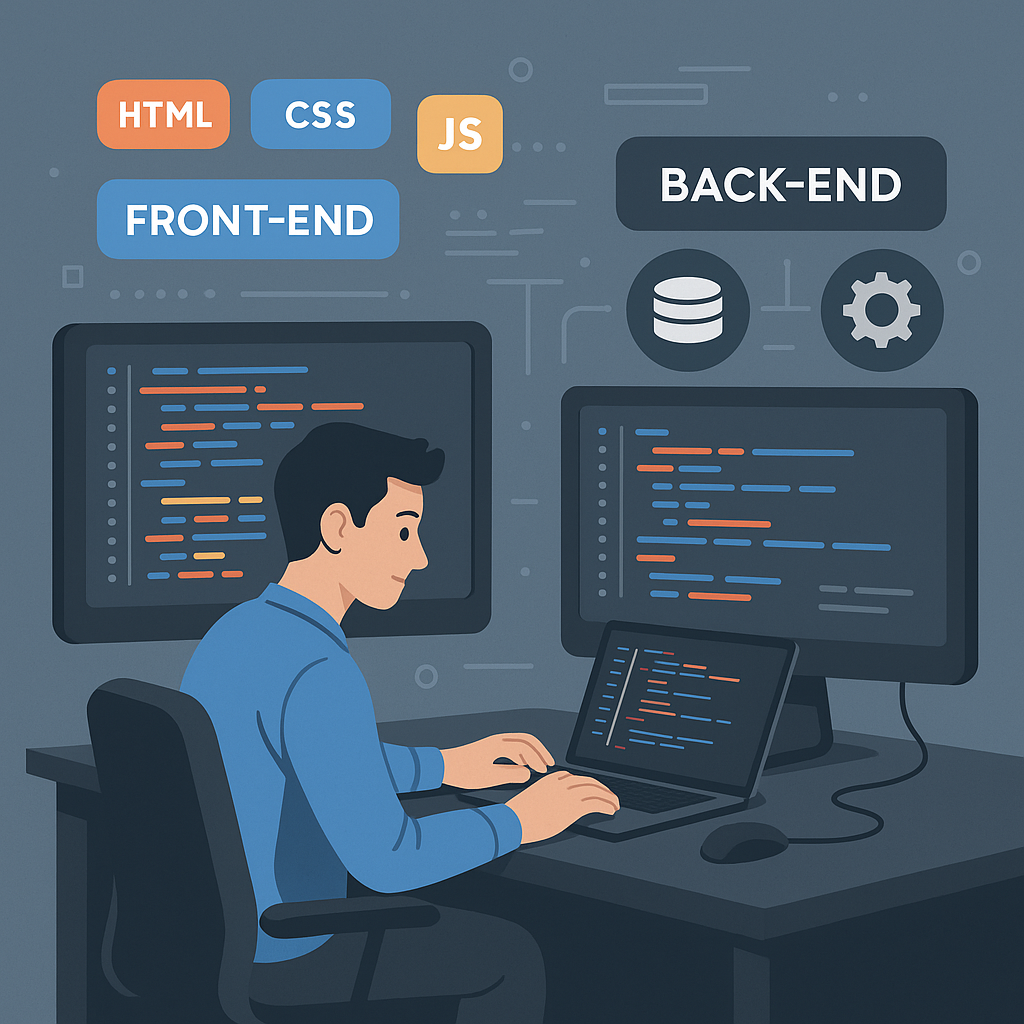
To navigate this field, you must first understand its three primary pillars: frontend, backend, and full-stack development. Each area serves a distinct purpose, though they all work in harmony to create the seamless experiences users expect in 2026.
Frontend development is the art of building the visual and interactive components of a website. When you click a button, scroll through a gallery, or fill out a form, you are interacting with frontend code. It is often the recommended starting point for beginners because it provides immediate visual feedback. You can write a few lines of code and see them change the appearance of your webpage instantly.
Backend development operates behind the scenes. It is responsible for server-side logic, managing databases, and processing the data that makes an application functional. If the frontend is the storefront, the backend is the warehouse and the logistics team that ensures the right products are delivered to the customer.
Full-stack development is the bridge between the two. A full-stack developer has the proficiency to work across both the client-side and the server-side, offering a comprehensive view of how an entire web application functions.
Essential Foundational Skills
Regardless of which path you eventually choose, every developer must master the "Big Three" foundational technologies: HTML5, CSS3, and JavaScript.
Think of HTML5 as the skeleton of your website, providing the structure and content hierarchy. CSS3 acts as the styling layer, allowing you to control colors, fonts, layouts, and animations. Finally, JavaScript brings the site to life by enabling complex logic, data manipulation, and interactive features. These languages are the universal building blocks of the modern web.
Beyond languages, you must become familiar with your environment. Browser developer tools are essential for debugging your code, inspecting elements, and testing how your site looks on different screen sizes. Learning how to use these tools early on will save you hundreds of hours of frustration as you refine your projects.
Choosing Your Backend Path
Once you have a grasp of the fundamentals, you may decide to explore the server-side. For beginners, certain technologies are more approachable than others. Node.js is a popular choice because it allows you to use JavaScript on the server, meaning you do not have to learn an entirely new language to start building backends. Similarly, Python is widely praised for its readability and simplicity. With frameworks like Flask or Django, you can get a server up and running with minimal boilerplate code.
As you progress, you will also need to understand how to store information. Familiarizing yourself with databases like MongoDB, PostgreSQL, or MySQL will allow you to build applications that can save user data, authenticate accounts, and manage complex information sets.
Learn what it takes to get a web development job with a H1B visa by visiting our detailed guide on web development careers for H1B visa holders.
The Importance of Version Control
In professional environments, code is rarely written by a single person in isolation. This is where Git and GitHub become critical. Git is a version control system that tracks every change made to your code, allowing you to revert to previous versions if something breaks. GitHub is the platform where you host your repositories, collaborate with other developers, and showcase your portfolio to potential employers. Understanding how to manage branches, commits, and pull requests is a non-negotiable skill for any modern developer.
Building Proficiency Through Projects
Reading tutorials is helpful, but the most effective way to gain practical proficiency is by building your own projects. Start small—perhaps a personal portfolio site or a simple to-do list application—and gradually increase the complexity as you learn. By applying what you study, you move from passive consumption to active problem-solving. This is the stage where you will encounter bugs, learn to use resources like MDN Web Docs, and truly begin to understand how software architecture works.
Consistency is the hidden factor behind every successful developer. Instead of cramming for long hours on weekends, aim for daily practice. Even thirty minutes of coding each day can build momentum that helps you internalize complex concepts. You can find structured learning paths on platforms like freeCodeCamp, The Odin Project, Udemy, or Coursera. These resources provide a roadmap to navigate the vast amount of information available online.
Conclusion
Starting a career in web development is a marathon, not a sprint. By mastering the fundamentals of HTML5, CSS3, and JavaScript, utilizing version control tools like Git, and committing to consistent project-based learning, you can build a solid foundation for a long-term career. The field is constantly changing, but the core principles of problem-solving and logical structure remain constant. Stay curious, keep building, and remember that every expert was once a beginner struggling with their first line of code.
Frequently Asked Questions (FAQ)
What is the best way to start?
The most effective approach is to begin with the frontend. By learning HTML5, CSS3, and JavaScript, you gain immediate feedback on your work, which keeps motivation high while you build the necessary foundation.
Do I need a degree?
No, a formal degree is not required. Many successful developers are self-taught or have completed intensive coding bootcamps. The industry values your portfolio, your ability to solve problems, and your practical coding skills above all else.
Why is Git important?
Git is essential for tracking code changes and collaborating with other developers. It prevents you from losing work and allows you to experiment with new features without breaking your main project, which is a standard requirement in any professional setting.
How long does it take to learn?
The time required varies based on your background and the amount of time you dedicate to daily practice. Most people can build functional, basic websites within a few months of consistent study, but reaching a professional level of proficiency typically takes one to two years of active development.
What is the difference between frameworks and libraries?
Libraries, like React, provide specific tools and functions to help you build features, while frameworks, such as Angular or Vue, provide a complete structure and set of rules for how your application should be organized. Both help developers work more efficiently.
How do I stay updated?
Web technology evolves rapidly. To stay current, follow industry leaders on social media, read documentation from official sources like W3C, and keep building new projects using the latest tools and standards.
Looking for implementation support? Visit our web development services page for the full service overview.
About the Author

Brian Keary
Founder & Lead Developer
Brian is the founder of BKThemes with over 20 years of experience in web development. He specializes in WordPress, Shopify, and SEO optimization. A proud alumnus of the University of Wisconsin-Green Bay, Brian has been creating exceptional digital solutions since 2003.
Expertise
Writing since 2003