Building a digital presence has evolved far past simple static pages and basic brochures. Modern organizations rely on complex digital ecosystems that require precise execution across both design and infrastructure. When businesses evaluate web development services, they discover that expectations have shifted toward dynamic, data-driven platforms. These systems must balance speed, security, and accessibility to serve diverse user bases effectively. Understanding these shifts helps project leaders allocate resources efficiently and partner with development teams that understand current architectural standards.
The Evolution of Digital Ecosystems
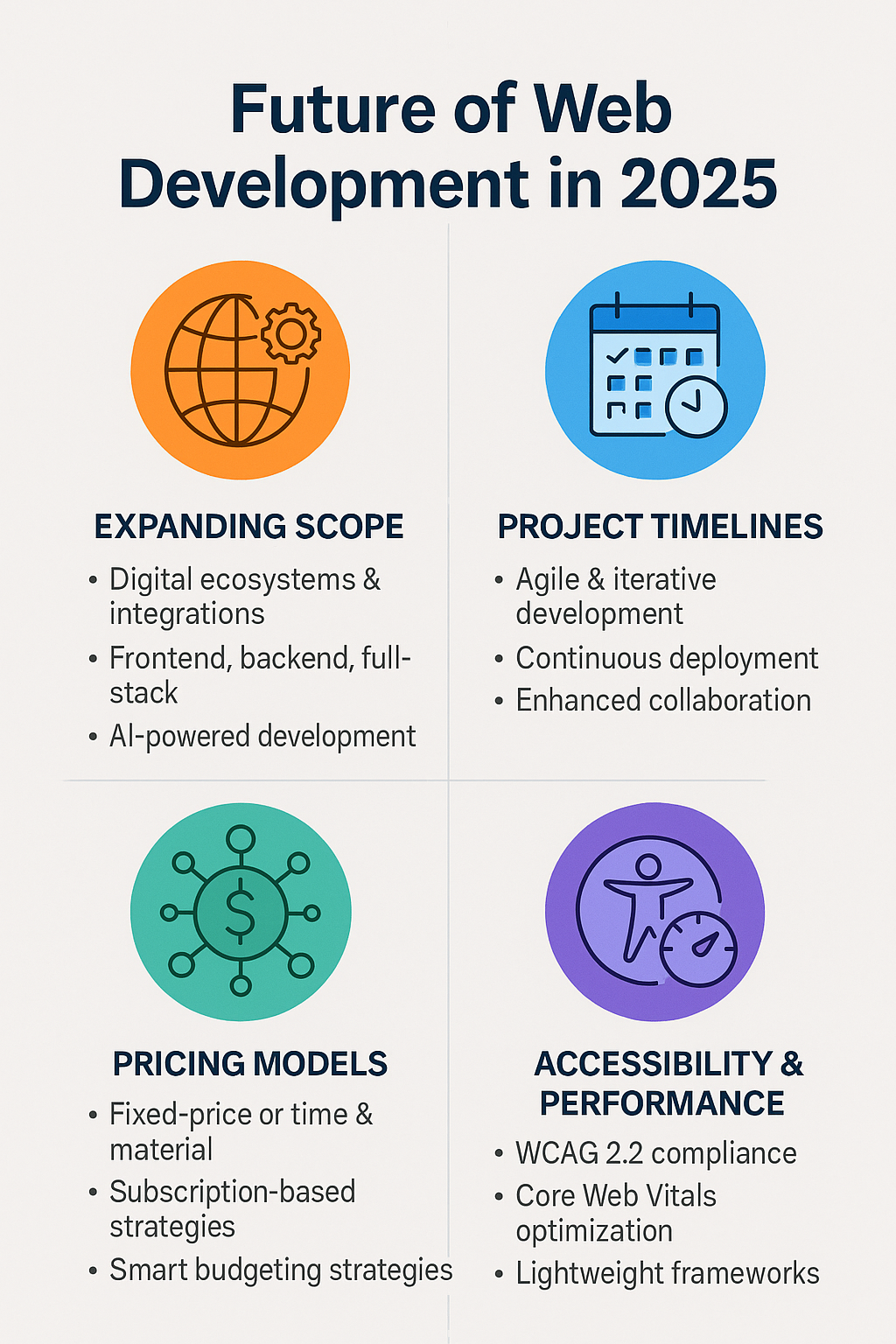
The modern web environment requires robust frameworks that handle heavy data loads without sacrificing speed. Front-end performance is frequently accelerated by modern frameworks like Next.js, Astro, and SvelteKit, which render pages efficiently and improve user interaction metrics. On the server side, Node.js, Python, and Laravel continue to support backend development, offering infrastructure for handling databases, user authentication, and third-party integrations.
Separating content management from presentation layers has also become standard practice. Headless CMS solutions such as Strapi, Sanity, and Contentful allow content teams to update information rapidly while developers maintain control over the underlying code structure. This decoupling can help applications remain flexible as organizations grow and add new features.
Accessibility and Performance Standards
Delivering a usable digital product requires attention to recognized technical benchmarks. WCAG 2.2 became a W3C Recommendation on October 5, 2023, adding success criteria related to accessible authentication, target size, focus visibility, and redundant-entry prevention. Developers use these guidelines to help websites accommodate users with visual, auditory, or motor impairments. Organizations can review the W3C WCAG overview and the documented WCAG 2.2 changes directly.
WCAG 2.2 is not a universally applicable legal requirement for every website. WCAG 2.0, 2.1, and 2.2 remain active standards, while the applicable legal obligations depend on jurisdiction, sector, and contract. Teams should therefore identify the requirements relevant to each project rather than treating one version as a blanket rule.
Beyond accessibility, performance metrics remain measurable rather than subjective. Google’s Core Web Vitals guidance defines good targets as an LCP within 2.5 seconds, INP under 200 milliseconds, and CLS below 0.1. Teams can review the Google Core Web Vitals documentation and use tools such as Search Console to measure, debug, and continuously optimize performance after launch.
Automated testing tools play an important role in maintaining these standards throughout the project lifecycle. Engineers may use performance and testing tools for automated checks, bug detection, and optimization. These systems provide practical feedback during development, but they should support—not replace—human review of accessibility, usability, and functional behavior.
Project Timelines and Methodologies
Managing modern web development projects requires structured workflows that adapt to changing business needs. Agile methodologies, MVP releases, and continuous deployment are common approaches for modern web projects. Instead of waiting months for a monolithic launch, teams can build and release core features incrementally, gathering user feedback early and refining the product through iterative updates.
To keep these complex workflows organized, development teams rely heavily on collaborative platforms. Tools like Slack, Notion, and Figma streamline communication, documentation, and design handoffs. This transparency reduces friction between clients and developers, ensuring that everyone stays aligned on project milestones and deliverables.
AI Integration in Development Workflows
Artificial intelligence has altered how engineers write code, test software, and manage deployment pipelines. AI-powered assistance can help developers draft boilerplate code, write unit tests, and troubleshoot syntax errors quickly.
However, automation is not a replacement for human oversight. While generative AI can accelerate output, engineers must carefully review AI-generated code to verify security, accessibility, and functional behavior. A peer-reviewed ACM study examined whether generative-AI-created websites conformed to WCAG 2.2, reinforcing the need to evaluate generated output rather than trust it automatically. Related research on generative accessibility tools, such as the University of California, Irvine accessibility study, also supports using AI as a testing aid rather than proof of complete conformance.
Investment Categories and Pricing Models
Budgeting for a website requires understanding the scope of work and the pricing structures used by professional agencies. Pricing models for web development typically include Fixed-Price, Time & Materials, and Retainer or Subscription options. Each model offers distinct advantages depending on whether project requirements are strictly defined or expected to evolve over time.
Basic or informational websites typically cost between $3,000 and $15,000 and take 4 to 8 weeks to build. These projects usually suit small businesses that need a clean, responsive online brochure with up to ten core pages.
E-commerce platforms generally cost $25,000 to $150,000+ with estimated timelines of 3 to 5 months. These builds require secure payment gateways, inventory management systems, and high-performance architecture to handle transactional data safely.
Custom web applications or SaaS solutions range from $40,000 to $200,000+ requiring 3 to 9+ months of dedicated engineering work. These complex platforms feature unique user logic, database structures, and API integrations that demand deep technical execution and ongoing maintenance.
Hourly rates for specialized development talent typically range from $100 to $200+ per hour, while ongoing retainer agreements often span $500 to $2,500+ per month depending on the level of support and feature updates required.
Frequently Asked Questions (FAQ)
Why Do Basic Websites Cost Less Than Custom SaaS Applications?
Basic informational websites rely on standard templates and established content management systems that require minimal custom programming. Custom software and SaaS platforms demand bespoke database architecture, complex user permission systems, and rigorous security protocols that require significantly more engineering hours.
How Long Does a Typical E-Commerce Build Take?
An e-commerce platform usually takes between 3 and 5 months to design, develop, and launch. This timeline accounts for integrating secure payment processors, configuring product catalogs, setting up shipping rules, and conducting thorough accessibility and performance testing.
Are Accessibility Standards Legally Required for All Websites?
No single WCAG version is legally required for every website in every jurisdiction. WCAG 2.2 is a current W3C Recommendation, but applicable legal requirements depend on factors such as location, sector, contract, and the type of service being delivered. Teams should identify the rules that apply to a specific project while using WCAG as a practical accessibility framework.
What Pricing Model Works Best for Ongoing Website Maintenance?
Retainer or subscription models work best for ongoing maintenance. These agreements ensure that development teams are consistently available to apply security patches, monitor performance metrics, and implement quick wins or feature enhancements as the business grows.
Can AI Tools Fully Build a Compliant Website Without Human Developers?
No, AI tools can accelerate code generation and testing, but they cannot guarantee complete compliance with accessibility or security standards. Human oversight remains essential to review code, verify visual layouts, and evaluate whether the digital product meets applicable functional and legal requirements.
Looking Ahead: Securing Your Digital Future
Keeping pace with digital trends requires launching a modern site and performing continuous attention, security updates, and performance tuning. Protecting digital infrastructure against emerging threats is a priority for any development partner. The NIST Cybersecurity and Privacy program highlights software and supply-chain cybersecurity, identity and access management, and practical security applications as important areas of focus.
W3C’s 2025–2028 strategic objectives also identify accessibility, internationalization, privacy, and security as social responsibilities of Web standards work. These concerns should be considered alongside design, infrastructure, and delivery goals rather than treated as optional additions.
When you establish a partnership with an experienced agency, you gain access to structured processes that protect your investment over the long haul. Instead of treating your website as a one-time project, leading teams focus on building flexible systems that adapt as your market shifts. Whether you are launching a lean MVP to test a new product idea or scaling a large e-commerce portal, clear communication and disciplined execution will determine your success.
Take a close look at your current digital assets. Identify where your performance lags, review your accessibility conformance, and determine whether your underlying tech stack still supports your business goals. When you are ready to elevate your web presence, partner with a team that values practical solutions, transparent pricing, and rigorous technical standards.
Ready to build a high-performing digital platform that supports real business growth? Contact your chosen development team to discuss your project scope and determine how to turn your web development vision into a reliable, scalable reality.
Looking for implementation support? Visit our web development services page for the full service overview.
About the Author

Brian Keary
Founder & Lead Developer
Brian is the founder of BKThemes with over 20 years of experience in web development. He specializes in WordPress, Shopify, and SEO optimization. A proud alumnus of the University of Wisconsin-Green Bay, Brian has been creating exceptional digital solutions since 2003.
Expertise
Writing since 2003