You've got a WordPress site that earns money, and two things keep you up at night: the day it gets hacked, and the day your rankings quietly slide because your backlink profile is a mess. So you start looking for an agency. Within an hour you've got five pitches in your inbox, three of them promise "guaranteed page one rankings," and one offers "500 high-authority backlinks for $299." My gut reaction to that last one is the same every time: run.
I've spent years watching businesses hand over admin access and monthly retainers to agencies that couldn't explain what they actually do. This guide is the checklist I wish every store owner had before signing. We'll cover how to vet security work, how to spot link-building scams, what to ask on the sales call, and the exact red flags that should end the conversation.
Who This Is For
This guide is for business owners and developers who already have a WordPress site generating revenue and now need outside help with security and backlinks. You understand your site well enough to know it matters. You don't have time to become a security engineer or an SEO specialist yourself.
You'll get the most from this if you're:
- Running an e-commerce store on WordPress or WooCommerce and worried about downtime, card data, or customer trust.
- Managing a content site whose traffic depends on rankings you can't afford to lose.
- A developer or agency subcontracting security and link work and needing a way to vet your own vendors.
- Scaling a multi-site operation where one compromised install could take down several storefronts at once.
Who This Is NOT For
This article won't help you if you're looking for the cheapest possible option and nothing else. If your only criterion is price, every section here will feel like friction. It's also not for you if you want someone to promise overnight rankings, or if you're running a brand-new site with no content and no traffic yet. Fix the fundamentals first. Security and links amplify a real business; they can't manufacture one.
If you're on a hosted platform like BigCommerce and only need marketing help, some of this still applies, but the WordPress-specific security questions won't. Know which problem you're actually solving before you shop.
Why Most People Get This Decision Wrong

Most people choose an agency for the wrong reason: they pick the one that made them feel confident fastest. That's a trap, because confidence is cheap to fake. A slick deck and a bold guarantee cost nothing to produce.
Here's the pattern I see. A business gets hacked, or rankings drop, and panic sets in. Panic makes you want certainty. The agency that offers the most certainty wins the contract, even though the most certain promises are usually the least honest. Google is blunt about this: no one can guarantee a top position in its search results, so any provider promising first place is telling you something about their ethics, not their skill. You can read Google's own explanation of why nobody can guarantee search rankings.
The same logic applies to security. No agency can make your site unhackable. What they can do is reduce risk, monitor for problems, and recover fast when something breaks. Choosing well means learning to tell those two claims apart.
What Should a WordPress Security Agency Actually Do?
A real WordPress security agency maintains, monitors, and can restore your site, rather than promising it will never be breached. That's the whole job in one sentence. Everything else is detail.
When you evaluate a provider, ask them to walk you through their process against these pillars:
- Ongoing maintenance: Updates to WordPress core, plugins, and themes. WordPress treats keeping components current, and choosing ones that still receive updates, as a core security practice, as outlined in the official WordPress security documentation.
- Monitoring: Watching logs and alerts for suspicious activity so problems surface early instead of after a customer complains.
- Backup and recovery: A tested process for restoring both site files and the database, rather than a promise that backups exist.
- Access control & 2FA: Limiting who can log in and what each account can do, and enforcing two-factor authentication for added security.
- Firewall and server hardening: Implementing rules and configurations at the server level to block malicious traffic and reduce attack surfaces.
- Incident response: A clear plan for what happens in the first hour after a breach.
If their answer is a plugin or tool without a clear process for monitoring, backups, access control, and incident response, that's a red flag. Security is about the combination of tools, procedures, and expertise, not just installing software.
The Backup Question That Separates Pros From Pretenders
Ask one question and listen carefully: "When did you last restore a site from backup, and how long did it take?" A full WordPress recovery typically needs both the site files and the database, and a provider who can't tell you how often backups run or whether restoration is ever tested is guessing. The WordPress guide to backing up your site explains why both pieces matter.
Untested backups are a rumor, not a safety net. I've seen agencies proudly report "daily backups" while never once attempting a restore. The day it counts, that's when you find out the backup was corrupt or incomplete. Not testing can also introduce a hack into the restored site if the backup contains malicious code.
Why Access Control Is a Security Test in Disguise
Watch how much access an agency asks for. WordPress roles carry different capabilities, and a provider who demands full administrator rights on day one is either careless or overreaching. The WordPress documentation on roles and capabilities shows how to grant only what a task requires. (Wordpress security for 2025)
Giving an agency full administrator rights is giving them access to the banking information of your site. The only reason an agency should need full rights is if the task genuinely requires it. Otherwise, insist on the principle of least privilege.
A competent security partner will ask for the minimum and explain why. If they can't articulate which permissions they need and for how long, that's your answer.
How Do You Spot a Bad Backlink Agency?
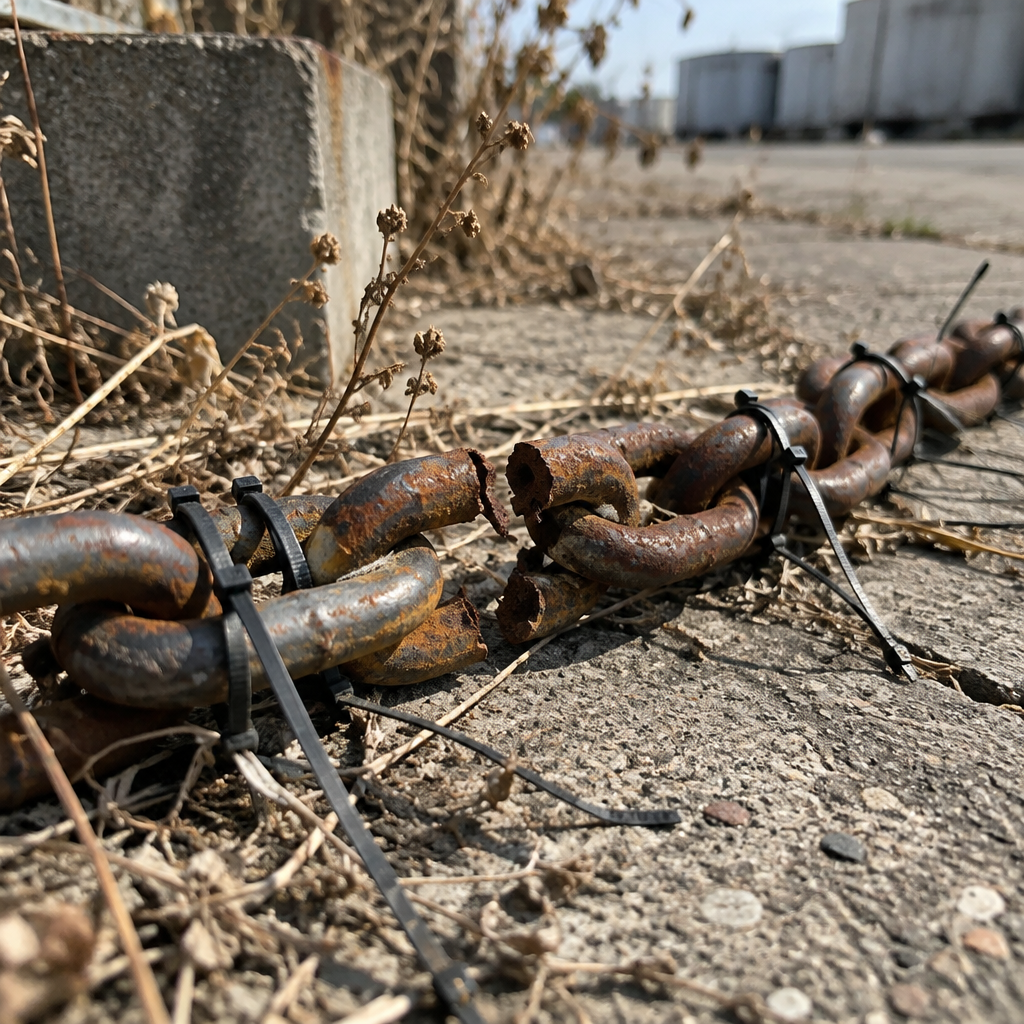
You spot a bad backlink agency by its promises, not its portfolio. Bulk links, automated links, and guaranteed rankings are the fingerprints of link spam. Google explicitly lists automated link creation, paid links meant to manipulate rankings, and excessive link exchanges as link spam tactics that can hurt you.
Here's the uncomfortable truth: bad backlinks don't just waste money. They can actively drag your site down. The agency collects its fee, you inherit the risk.
The Red Flags I'd Walk Away From
- "Guaranteed #1 rankings." Impossible to promise, as Google itself states.
- "500 links for $299." Volume at that price means automated or low-quality placements.
- No link report. If they won't show you exactly where links live, assume the worst.
- Private Blog Networks (PBNs). Networks of fake sites built only to host links. Fragile and risky.
- Link exchanges at scale. Trading links endlessly looks manipulative, not editorial.
- No explanation of anchor text. Good anchor text is descriptive and relevant to both pages, as Google's guidance on crawlable links describes.
This last one is the most important because anchor text directly affects how Google interprets the relevance and context of the link. Mismanaged anchor text can make even a high-quality link look manipulative.
What Legitimate Link Building Looks Like
Honest link building is slow and a little boring, which is exactly why scammers avoid it. It looks like earning mentions through useful content, digital PR, and genuine relationships. When money changes hands for a placement, the link should carry the right qualification. Google recommends rel="sponsored" for paid links, with nofollow still acceptable, per its guide to qualifying outbound links.
Ask for a link-by-link report and actually read it. Check relevance, anchor text, and whether the linking site has real traffic and a real audience. A link from a genuine industry publication beats fifty links from sites that exist only to sell placements.
If they continually talk about domain authority as the main metric, be cautious. Domain authority is a third-party metric, not a Google ranking factor, and it can be easily manipulated. Focus instead on relevance, traffic, and the quality of the linking site.
Security vs. Backlinks: A Side-by-Side Comparison
Security and backlinks are different jobs with different failure modes, and you should evaluate providers differently for each. Here's how they compare.
| Factor | Security Agency | Backlink Agency |
|---|---|---|
| Core promise | Reduce risk, monitor, recover | Earn relevant, editorial links |
| Honest timeline | Ongoing, immediate hardening | Months before visible impact |
| Red flag | "We'll make you unhackable" | "Guaranteed #1 rankings" |
| Key deliverable | Maintenance logs, backup tests, incident plan | Link-by-link report with context |
| Access needed | Limited, role-based | None to your site (ideally) |
| How to measure success | Uptime, clean scans, fast recovery | Referral traffic, ranking trends, link quality |
| Biggest risk if wrong | Breach, data loss, downtime | Penalty, wasted budget, lost trust |
Notice that a good backlink agency often needs no access to your site at all. If a link provider is demanding admin credentials, ask why. There's rarely a good reason.
What Questions Should You Ask on the Sales Call?

Ask about process, reporting, references, and limits, and listen for specifics rather than adjectives. Google recommends interviewing SEO providers, checking references, and asking what work they'll do, how success is measured, and how they'll communicate changes, as covered in Google's guidance on choosing an SEO provider.
Bring this list to every call:
- "Show me a recent link report." Real agencies have them ready.
- "How do you measure success?" Vague answers ("more visibility") mean vague work.
- "Can I talk to two current clients?" Then actually call them.
- "What access do you need, and why?" Least privilege is the right answer.
- "What happens if my site gets hacked under your watch?" Listen for a process, not a shrug.
- "How do you report changes?" You want documentation, not surprises.
- "What won't you do?" Good agencies have boundaries. Scammers don't.
That last question is my favorite. An agency that can tell you what it refuses to do has thought about ethics. One that says yes to everything is selling you a lottery ticket.
How Do You Verify Claims Before Signing?
You verify by checking references, reading reports, and testing small before committing big. Trust is earned through evidence, not enthusiasm.
Run a Small Paid Pilot First
Never hand over a year-long retainer on the strength of a pitch. Start with a scoped pilot: one month of security maintenance, or a batch of ten links. Judge the work, the reporting, and the communication. If the pilot feels shaky, the retainer will feel worse.
Audit the Links Yourself
Pull the link report and spot-check five entries. Open each linking page. Does it look like a real publication with real readers? Is the anchor text natural? Is the surrounding content relevant to your business? If three of five fail, the whole batch is suspect.
Confirm the Security Baseline
Ask the agency to document your current state before they change anything. A simple before-and-after snapshot of updates, backups, and user roles tells you whether they're actually working or just invoicing.
How Do You Compare Two Agencies Fairly?

Compare agencies on process, transparency, and references, not on price alone or the polish of their pitch. Two providers can quote the same monthly fee and deliver wildly different value.
Score each candidate on a simple grid:
| Criterion | What "Good" Looks Like | Weight |
|---|---|---|
| Process clarity | Step-by-step, written, repeatable | High |
| Reporting | Regular, detailed, link-by-link | High |
| References | Reachable, relevant to your niche | High |
| Access discipline | Minimum necessary permissions | Medium |
| Communication | Named contact, clear cadence | Medium |
| Price | Fits budget, justified by scope | Medium |
| Guarantees | Realistic, no magic promises | High |
A provider that scores well on process and references but is a little pricier usually beats a cheap one with a foggy process. You're buying judgment, and judgment is what you're paying for.
Mistakes to Avoid
These are the errors I see repeated most often, and each one costs real money.
- Choosing on price alone. The cheapest security is the one that fails when you need it. The cheapest links are the ones that get you penalized.
- Granting full admin access immediately. Start with limited roles and expand only as needed.
- Skipping the reference call. A five-minute conversation with a current client can save you a year of regret.
- Believing ranking guarantees. No one can promise a top spot, so treat the promise as a warning sign.
- Ignoring the backup test. Ask for proof of a restore, rather than a backup schedule.
- Accepting bulk link packages. Automated or mass-produced links are link spam, full stop.
- Forgetting to document everything. Keep every report, contract, and access change in one place.
A Practical Checklist Before You Sign
Use this as your final gate. If you can't tick most of these boxes, don't sign yet.
- The agency explained its security process in writing.
- Maintenance covers WordPress core, plugins, and themes.
- Backup and restore process is documented and tested.
- Access is limited to the minimum required roles.
- You have two reachable references in a similar niche.
- The link report is link-by-link, with context and anchor text.
- Paid links are properly qualified with
rel="sponsored"ornofollow. - No guaranteed rankings, no bulk link packages.
- Reporting cadence and named contact are agreed in writing.
- You've run a small paid pilot before committing long-term.
That checklist is your seatbelt. It won't prevent every bad outcome, but it filters out most of the predators before they get your credentials.
Key Takeaways
- Security is about risk reduction, not invincibility. Choose an agency that maintains, monitors, and can restore, not one that promises perfection.
- Backup testing matters more than backup schedules. Ask when a restore was last performed and how long it took.
- Guaranteed rankings are a red flag. No provider can promise a top spot in search results.
- Bulk and automated links are link spam. Reject volume-based packages and demand a link-by-link report.
- Least privilege protects you. Grant only the access the work requires, and document every change.
- Pilot before you commit. A small paid test reveals more than any pitch deck.
Conclusion
Choosing an agency for WordPress security and backlinks comes down to one habit: demand evidence instead of promises. Ask for the link report, the backup test, the references, and the process. The right partner will welcome those questions because they've got nothing to hide. The wrong one will get defensive, dodge, or promise you the moon.
You don't need to be a security engineer or an SEO expert to make a smart choice. You need a checklist, a little patience, and the willingness to walk away from a pitch that feels too good. Your site earns money because people trust it. Protect that trust with vendors who earn yours the same way, one verified claim at a time.
Frequently Asked Questions
Can one agency handle both WordPress security and backlinks?
Sometimes, but evaluate the two skill sets separately. Security is a technical, maintenance-heavy discipline. Backlinks are a marketing and relationship discipline. A firm that does both well will have distinct teams and distinct reporting for each. If one person claims to be an expert in both, ask for proof of each separately.
How much should I expect to pay for WordPress security maintenance?
Pricing varies widely by site size, traffic, and scope. Rather than anchoring on a number, compare quotes against deliverables: updates, monitoring, backup frequency, restore testing, and incident response. A cheaper plan that skips restore testing is not actually cheaper. Ask each provider to itemize what the fee covers so you can compare apples to apples.
Is it ever okay to buy backlinks?
Paid placements exist, but they must be qualified correctly. Google recommends rel="sponsored" for paid links, with nofollow still acceptable. The problem isn't money changing hands; it's links designed to manipulate rankings without disclosure. If an agency can't explain how it qualifies paid links, that's a reason to keep looking.
How long before backlinks show results?
Expect months, not weeks. Link building compounds slowly, and ranking shifts often lag well behind the work. Any agency quoting a fast, guaranteed timeline is overselling. Judge progress by link quality, relevance, and referral traffic trends rather than a single ranking snapshot.
What should I do if my site gets hacked under an agency's watch?
Activate your incident response plan immediately: contain the breach, restore from a tested backup, and change all credentials. Then review the agency's monitoring logs to understand what happened. A good provider will have a documented response process and will walk you through it. If they don't, that gap is itself the finding.
Can I verify an agency's claims without technical knowledge?
Yes. Ask for a link-by-link report and spot-check a few entries yourself. Call references and ask specific questions about communication and results. Request proof of a backup restore. None of these require technical expertise, just a willingness to ask and verify before you sign.
One final note on timing: security and link work should never be an afterthought squeezed into a busy quarter. Build a review cadence into the contract—quarterly security audits, monthly link reports, an annual restore drill—so accountability doesn't fade once the onboarding excitement wears off. The best agencies will welcome that rhythm because it protects their reputation as much as yours. If a provider resists scheduled reviews or treats reporting as a favor rather than an obligation, you've learned something valuable before the first invoice arrives. Choose the partner who makes verification easy, because that ease is the clearest sign they have nothing to hide—and that your site, your rankings, and your reputation are in careful hands. (Essential Plugins for WP: SEO, Security, Performance, Growth)
About the Author

Brian Keary
Founder & Lead Developer
Brian is the founder of BKThemes with over 20 years of experience in web development. He specializes in WordPress, Shopify, and SEO optimization. A proud alumnus of the University of Wisconsin-Green Bay, Brian has been creating exceptional digital solutions since 2003.
Expertise
Writing since 2003