Did you know that nearly 46% of all Google searches now have a local intent, meaning users are hunting for businesses right in their own backyard? This staggering statistic highlights why ignoring your local footprint is essentially leaving money on the table. In the competitive digital landscape of 2026, ranking globally is a vanity metric, while ranking locally is a survival strategy. When you master the power of geo targeted seo local businesses, you stop shouting into the void and start whispering directly to the customers who are ready to pull out their wallets. It is not just about keywords anymore; it is about establishing a digital presence that feels as familiar as the corner bakery.
Key takeaways
- Local search is not a secondary effort; it is a primary revenue driver for businesses with a physical service area.
- NAP consistency is non-negotiable; if your address is wrong, your rankings will plummet.
- Technical SEO, specifically structured data and site speed, provides the foundation for all your content efforts.
- Authentic engagement, such as managing reviews, is just as important as technical optimization for building local trust.
- Targeted content that addresses regional pain points will always outperform generic, keyword-stuffed pages.
Who should use geo-targeted SEO?
This guide is for small to medium-sized business owners who are tired of paying for ads that bring in clicks from halfway across the globe. If you operate a brick-and-mortar storefront, a regional service-based business, or a boutique agency, this is your roadmap to dominance. It is also perfect for marketing managers who need to prove ROI to stakeholders by focusing on high-intent traffic rather than broad, hollow vanity metrics. Whether you are a plumber in Portland or a consultant in Cairo, if your revenue depends on where your customers live, you belong here.
When is geo-targeted SEO not appropriate?
This strategy is not for global e-commerce giants aiming for international brand awareness on a massive scale. If your business model relies entirely on selling digital products to a worldwide audience without any regard for physical location, geo-targeting will feel like a straightjacket. It is also not for those looking for a "get rich quick" scheme that ignores the hard work of building local trust. If you are not willing to optimize your Google Business Profile or engage with your local community, this approach will simply gather dust.
Understanding the local search ecosystem
The secret sauce of modern search engine optimization lies in understanding that Google prioritizes relevance above all else. When a user searches for a service "near me," the search engine is essentially acting as a digital concierge, filtering out the noise to find the most trustworthy option within a specific radius. This is where the power of geo targeted seo local businesses truly shines, as it aligns your website's architecture with the geographic intent of your audience. If you want to see how this translates into real-world growth, look at a recent case study software development company to see how regional focus can transform a stagnant lead pipeline into a rushing river of opportunities. Your website is not just a digital brochure; it is your virtual storefront, and it needs to be optimized for the specific neighborhood you serve.
What Are the Most Critical Local SEO Mistakes to Avoid?
The single biggest mistake businesses make with local SEO is treating it as a one-time setup rather than an ongoing process, leading to neglected profiles and inconsistent location data. Local search engines prioritize active, trustworthy businesses, so set-it-and-forget-it strategies quickly fall behind active competitors.
| Common Local SEO Pitfall | Why It Harms Rankings | How to Fix It |
|---|---|---|
| Neglecting Google Business Profile (GBP) | Inactive profiles drop out of the Google Maps "Local 3-Pack." | Update photos regularly, post weekly updates, and keep operating hours accurate. |
| Inconsistent NAP (Name, Address, Phone) | Confuses search engine crawlers and lowers local authority trust scores. | Audit directories (Yelp, Apple Maps, Facebook) to ensure exact character-for-character consistency. |
| Ignoring or Mishandling Customer Reviews | Fewer reviews lower conversion rates and hurt search rankings. | Proactively ask customers for reviews and respond professionally to all feedback—both positive and negative. |
| Duplicate Location Pages | Copy-pasting the same website text for different target cities triggers search engine spam filters. | Write unique, location-specific content (local projects, testimonials, team details) for every service area page. |
| Ignoring Mobile Optimization | Over 80% of local "near me" searches occur on mobile devices; slow mobile sites lose visitors instantly. | Ensure fast page load speeds, click-to-call buttons, and responsive designs. |
- Manual Data Sync across Multiple Platforms: Relying on manual updates for business hours, location details, and contact info leads to human error and data fragmentation across platforms.
- Why It Harms Rankings: Conflicting Name, Address, and Phone (NAP) details or incorrect holiday hours confuse search engines and damage consumer trust. When directory citations mismatch your primary profile, Google's algorithm penalizes your local authority.
- How to Fix It: Implement automated synchronization via the Google Business Profile API. Connecting your centralized database or POS system directly to the API allows programmatic updates for regular hours, special holiday schedules, and location details to push instantly across your profile network, completely eliminating manual NAP discrepancies.
Furthermore, ignoring the role of structured data in semantic seo is like trying to build a house without a blueprint; you might get the walls up, but the structure will eventually collapse under the weight of search algorithm updates. Do not assume that just because you have a website, people will find you. You must provide the search engines with a clear, unambiguous map to your front door. The facts stand that 30% of new businesses fail within the first two years, and that number jumps to 50% by year five. Source: Commerce Institute, 2026.
Why Should You Avoid Neglecting Keyword Tracking?
Failing to monitor your keyword rankings can lead to missed opportunities and wasted efforts. Local SEO is dynamic, and search engine algorithms frequently update, which can cause your rankings to fluctuate. Without tracking, you won't know which keywords are driving traffic and conversions, making it difficult to adjust your strategy effectively.
Actionable steps:
- Use a local rank tracker to monitor your keyword performance in different geographic areas.
- Set up alerts for significant ranking changes to respond quickly.
- Regularly review and update your target keywords based on search trends and business priorities.
Actionable checklist for local dominance
To start winning your local market, you need to execute a series of precise, repeatable steps that signal your authority to both users and bots. Use this checklist to audit your current status and identify the gaps in your local strategy:
- Claim and verify your Google Business Profile with accurate, up-to-date information.
- Audit your NAP across all platforms to ensure every digit and character matches perfectly.
- Implement local schema markup to help Google understand your service area and operating hours.
- Create location-specific landing pages that provide genuine value, not just lists of neighborhoods.
- Encourage authentic customer reviews and respond to them professionally, even the negative ones.
- Build local citations by getting listed in reputable chamber of commerce directories or industry-specific local boards.
- Optimize your mobile site speed because local searches happen on the go, often on shaky cellular connections.
- Monitor your rankings using a local rank tracker to see how you perform in different zip codes. Here is an entry for the Actionable checklist for local dominance section:
- Implement LocalBusiness Schema using JSON-LD: Embed structured data markup in JSON-LD format directly in your website's
<head>tag to provide search engine crawlers with machine-readable geographic details.- Address (
PostalAddress): DefinestreetAddress,addressLocality,addressRegion,postalCode, andaddressCountrycharacter-for-character matching your Google Business Profile. - Geo-Coordinates (
GeoCoordinates): Explicitly list exactlatitudeandlongitudecoordinates to eliminate any geographical ambiguity for local maps indexing. - Opening Hours (
openingHoursSpecification): Detail standard and special business hours using theOpeningHoursSpecificationschema block (definingdayOfWeek,opens, andclosestimes) to ensure accurate operating status across local search results.
- Address (
Comparing local vs global SEO strategies
Choosing between local and global SEO is like choosing between a sniper rifle and a shotgun. One requires extreme precision and focus, while the other is meant to cover as much ground as possible.
| Feature | Local SEO | Global SEO |
|---|---|---|
| Primary Goal | Foot traffic and local leads | Brand awareness and volume |
| Target Audience | People within a specific radius | Anyone with internet access |
| Key Ranking Factor | Proximity and Google Business Profile | Domain authority and content depth |
| Competition | Local competitors | Global industry leaders |
| Conversion Rate | Typically much higher | Usually lower due to broader intent |
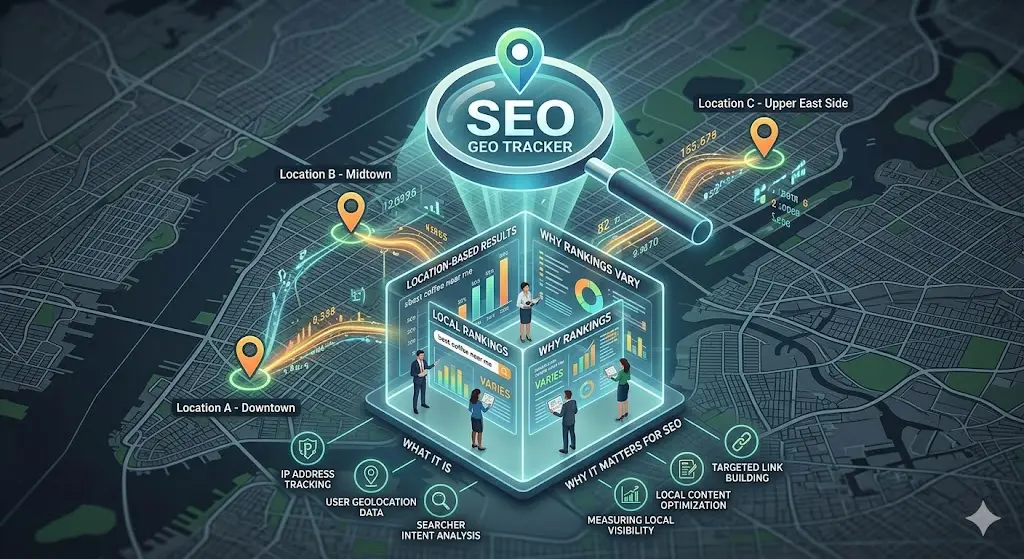
- Dynamic Geotargeting Radius: Local search algorithms do not evaluate rankings statically across a city; instead, localized SERP features dynamically recalculate search results based on user proximity, Wi-Fi location data, cell tower tri-angulation, and IP geofencing.
- How Proximity Alters Results: A user searching for a service in the south side of a metro area will see a completely different Local Pack and map pin result than a user searching five miles away on the north side, even when using the exact same query without geographic modifiers.
- Strategic Implication: While global SEO targets broad keyword volume across unlimited distances, local SEO success requires hyper-targeted geo-relevance within a defined operating radius. Optimizing for micro-locations, neighborhood landmarks, and zip codes helps preserve rank authority as user proximity shifts across service boundaries.
Why Does Localized Content Still Drive Search Rankings?
Even with all the technical wizardry of schema and geo-targeting, content remains the heartbeat of your digital presence. You cannot just slap a city name on a page and call it a day; you must create content that speaks to the specific needs, cultural nuances, and regional challenges of your local customers. Are there specific local regulations that impact your service? Is there a regional idiom or specific community event that your customers care about? When you write content that solves a real problem for a neighbor, you are not just getting a click; you are building a relationship that will last for years.
How Does Mobile Optimization Affect Local Search Rankings?
A website that is not mobile-friendly in 2026 loses most of its visitors, suffers from very low search engine rankings, and fails to reach customers. Search engines use mobile-first indexing, meaning they judge your site by how it works on a phone before anything else. Local searchers are usually walking down the street or sitting in their cars, desperate for a quick solution to a pressing problem. If your site takes more than three seconds to load, they will bounce. You should look into how to do a performance optimization to ensure your technical foundation is rock solid. Remember, Google uses mobile-first indexing, meaning they look at your mobile site to determine how you rank on both desktop and mobile devices. If your mobile experience is clunky, your desktop rankings will suffer too.
How Does Social Media Influence Local SEO?
An active social media presence supports local authority and trust by reinforcing brand legitimacy, driving referral traffic, and contributing to third-party corroboration, even though Google states that social metrics like likes or followers are not direct ranking factors.
How Social Media Influences Local Trust and Authority
- Third-Party Corroboration: Social profiles act as independent digital properties that validate a business's real-world identity, name, address, and phone number (NAP) consistency across the web.
- Referral Traffic and Engagement: Active social channels drive direct visitors to a business website, increasing user sessions, page views, and overall brand engagement.
- Brand Prominence: Consistent social activity helps build local awareness and customer sentiment, which indirectly feeds into how search systems and AI evaluate overall business prominence.
- Direct Customer Signals: Platforms like Google Business Profile and social networks allow businesses to showcase real-time updates, reviews, and community interactions that build consumer trust.
To explore more comprehensive breakdowns of local search factors, you can review guides such as The 21 Authority Signals Google Looks For.
What Are the Indirect Benefits for Local SEO?
The indirect benefits for Local SEO come from digital activities that don't directly change algorithm scores but create a better user experience, stronger brand trust, and broader digital footprint, which eventually force search systems to recognize your local authority.
While direct signals include things like your physical proximity, keyword matching, and primary categories, the indirect benefits are what help you sustain rankings and outpace competitors over time.
1. Robust Brand Mention and Citation Ecosystems
When digital PR, local sponsorships, or community events generate buzz, people talk about your business online.
- The Indirect Benefit: Unlinked brand mentions (where a local blog or news site names your business but doesn't link to you) are crawled by search engines. Google associates these natural mentions with your business entity, increasing your local prominence score.
2. High-Quality Website Traffic and "User Signals"
Investing in email marketing, localized social media campaigns, or highly targeted paid ads brings qualified local visitors to your site.
- The Indirect Benefit: When local users visit your site, spend time reading your content, and look at your contact page, it sends positive behavioral signals to search engines. High dwell time and low bounce rates signify that your business provides a trustworthy, relevant destination for local searchers.
3. Review Volume and Positive Sentiment Loop
Providing an exceptional customer experience, training staff to deliver great service, and using seamless post-purchase communication naturally encourages feedback.
- The Indirect Benefit: Happy customers leave detailed, keyword-rich reviews on Google, Yelp, and Facebook. This steady influx of positive sentiment and specific localized keywords (e.g., "best transmission repair in [City]") signals to Google's algorithm that you are a highly trusted community staple.
4. Zero-Trust Cybersecurity and Site Integrity
As discussed with security architectures, implementing strong identity verification and access controls protects your business behind the scenes.
- The Indirect Benefit: By ensuring your website is never compromised by malware and your listing credentials are never hijacked, you maintain a 100% clean track record of uptime, fast loading speeds, and verified data consistency. This prevents catastrophic drops in visibility caused by security penalties or defaced listings.
5. Media Richness and Visual Engagement
Taking high-quality, original photos of your local team, physical storefront, and completed projects to use across your marketing assets.
- The Indirect Benefit: Uploading these original images to your website and Google Business Profile increases user engagement. Profiles with strong, authentic visual content see significantly higher request-directions and click-through rates (CTR) compared to listings relying on stock photos.
How Does Semantic Search Affect Local SEO?
Search engines have evolved from simple keyword matchers into sophisticated entities that understand the intent behind the query. This is why the role of structured data in semantic seo is so critical in the current landscape. You need to tell the search engine exactly what your business does, who you serve, and where you are located using standardized machine-readable code. When you provide this clarity, you enable search engines to display your information in rich snippets, which can significantly increase your click-through rate. It is the difference between being a plain blue link and being a featured result that commands attention on the page.
Frequently Asked Questions (FAQ)
What is the biggest mistake businesses make with local SEO?
The most common mistake is failing to maintain consistent NAP data across the web. If your phone number or address differs even slightly across directories, you confuse the search engines and lose their trust.
How long does it take to see results from geo-targeted SEO?
While every market is different, most businesses begin to see noticeable improvements within three to six months. It takes time for search engines to crawl your updates and for your local authority to build up in the eyes of the algorithm.
Does social media impact local search rankings?
While social media signals are not a direct ranking factor in the same way backlinks are, they play a massive role in local brand awareness. Active social media accounts can drive traffic to your site and generate the kind of local buzz that encourages others to link to you.
Should I create a separate page for every city I serve?
You should only create separate pages if you provide unique, valuable content for each location. Simply copying and pasting the same page and swapping out the city name is considered spammy behavior and can result in penalties.
How do I handle negative reviews for my local business?
Do not ignore them or get defensive. Respond promptly, professionally, and publicly to show potential customers that you care about your reputation and are willing to resolve issues. This transparency often earns you more trust than a perfect five-star rating ever could.
Conclusion
The journey to local search dominance is a marathon, not a sprint. By focusing on the fundamentals of geo-targeted SEO, you position your business to be the go-to solution for the people who matter most: your neighbors. It requires patience, a bit of technical elbow grease, and a genuine desire to serve your community. Whether you are adjusting your schema or refining your local content, every small action compounds over time to create a formidable digital presence. Stop waiting for the world to find you and start making sure your community knows exactly where to look. The tools are at your disposal, the strategy is clear, and the opportunity to claim your local market is waiting for you right now.
About the Author

Brian Keary
Founder & Lead Developer
Brian is the founder of BKThemes with over 20 years of experience in web development. He specializes in WordPress, Shopify, and SEO optimization. A proud alumnus of the University of Wisconsin-Green Bay, Brian has been creating exceptional digital solutions since 2003.
Expertise
Writing since 2003