Fix the foundational optimization gaps costing you customers—no technical expertise required
Learn which on-page SEO elements actually move the needle for small business websites. This guide shows you how to audit pages, fix common mistakes, and build a sustainable optimization routine in 90 days. Check out our on-page SEO playbook for the in-depth look at on-page seo for small business
TL;DR
- Fix technical basics first - Page speed and mobile friendliness affect both rankings and user behavior. 53% of mobile visitors leave if pages take over 3 seconds to load.
- Optimize title tags and meta descriptions on every page - These elements directly impact search visibility and click-through rates. 70% of small business homepages lack clear CTAs, representing a major missed opportunity.
- Match content to search intent - Understand what users actually want when they search your target keywords. Informational, transactional, and navigational queries require different content approaches.
- Build strategic internal links - Connect related pages with descriptive anchor text to help search engines understand site structure and distribute authority to important pages.
- Start with one audit today - Run your homepage through Google PageSpeed Insights, fix one issue this week, then expand to your top 5 pages. Small improvements compound over time.
What This Guide Covers
This guide delivers a practical framework for on-page SEO when you lack dedicated marketing staff, big budgets, or technical expertise. You will learn exactly which optimization elements move the needle for small business owners and which ones waste precious time.
By the end, you will understand how to audit your current pages, fix the most common mistakes, and build a sustainable optimization routine. We focus exclusively on what you can control directly on your website, not link building, social media, or paid advertising.
If you manage a website with fewer than 50 pages and need measurable traffic improvements within 90 days, this guide is for you.
Why On-Page SEO Demands Your Attention Now
21% of small businesses report that low website traffic is their primary challenge. Meanwhile, small business marketers rank SEO marketing as one of the most difficult channels to leverage. The gap between knowing SEO matters and executing it effectively creates a competitive opening.
Here is the reality: most small business websites fail at the basics. 70% of small business homepages lack a clear call-to-action. 17% of small business websites fail mobile-friendly requirements. These are not advanced technical problems. They are foundational gaps that cost you customers, daily.
Every day your site loads slowly, lacks proper title tags, or confuses visitors with poor structure, you lose potential revenue to competitors who have fixed these issues. The cost of inaction compounds. Search engines reward consistency and quality over time, meaning delays today extend your timeline to results.
Core Concepts You Need First
What On-Page SEO Actually Means
On-page SEO refers to optimization techniques applied directly to your website's pages. This includes content, HTML elements, site architecture, and user experience factors. Unlike off-page SEO (backlinks, social signals), you control every on-page element completely.
The goal is straightforward: help search engines understand your content and help visitors find what they need quickly. When both happen, rankings improve.
Search Intent Drives Everything
Search intent describes what users actually want when they type a query. Someone searching "best cupcakes in Chicago" wants to buy cupcakes locally. Someone searching "how to make cupcakes" wants instructions. Your page must match the intent behind your target keywords, or rankings will not follow, regardless of other optimization efforts.
The Crawlability Foundation
Search engines send automated programs (crawlers) to read your pages. If crawlers cannot access, read, or understand your content, optimization efforts fail. A crawlable website uses clean code, logical structure, and fast loading times. Think of crawlability as the foundation beneath every other SEO technique.
The Resource-Efficient SEO Framework
This guide follows a five-stage framework designed for small business owners managing competing priorities. Each stage builds on the previous one, creating compounding returns over time.
- Stage 1: Technical Foundation ensures search engines can access and understand your site.
- Stage 2: Content Optimization aligns your pages with what users actually search for.
- Stage 3: User Experience Signals reduces friction that causes visitors to leave.
- Stage 4: Internal Architecture distributes authority across your important pages.
- Stage 5: Measurement and Iteration tracks progress and identifies next priorities.
You do not need to complete all stages before seeing results. Each stage delivers independent value while preparing you for the next.
Step-by-Step Implementation
Step 1: Establish Your Technical Foundation
Objective: Ensure search engines can crawl, index, and render every important page on your site.
Start with website speed. 53% of mobile site visits are abandoned if pages take longer than 3 seconds to load. Test your current speed using Google PageSpeed Insights (free). Focus on the Core Web Vitals metrics: Largest Contentful Paint (loading), First Input Delay (interactivity), and Cumulative Layout Shift (visual stability).
Common speed fixes include compressing images, enabling browser caching, and minimizing code. If your site runs on WordPress or Shopify, platform-specific caching plugins handle most technical work automatically.
Next, verify mobile friendlines. 57% of internet users say they will not recommend a business with a poorly designed mobile website. Google's Mobile-Friendly Test tool identifies specific problems. Responsive design (layouts that adapt to screen size) is now mandatory, not optional.
Anti-patterns to avoid: Installing multiple caching plugins simultaneously (they conflict). Ignoring mobile testing because "most customers use desktop" (Google indexes mobile versions first). Assuming your developer already handled this.
Success indicators: PageSpeed Insights score above 50 on mobile. Zero errors in Mobile-Friendly Test. Google Search Console shows no crawl errors for important pages.
Step 2: Optimize Your Critical Page Elements
Objective: Align title tags, meta descriptions, and headers with target keywords and user intent.
Title tags appear in search results as the clickable headline. They directly influence both rankings and click-through rates. Each page needs a unique title tag under 60 characters that includes your primary keyword near the beginning. Format example: "Primary Keyword | Brand Name" or "Primary Keyword: Specific Benefit."
Meta descriptions do not directly affect rankings, but heavily influence clicks. Write 150 to 160-character descriptions that summarize page value and include a clear reason to click. Think of meta descriptions as free advertising space in search results.
Header tags (H1, H2, H3) structure your content for both readers and crawlers. Use one H1 per page containing your primary keyword. Use H2s for major sections and H3s for subsections. This hierarchy helps search engines understand content relationships and helps users scan.
For deeper guidance on keyword optimization within your content, focus on natural placement rather than forced repetition. Search engines now understand context and synonyms.
Anti-patterns to avoid: Duplicate title tags across multiple pages. Keyword stuffing (repeating terms unnaturally). Missing meta descriptions entirely (search engines will auto-generate poor ones).
Success indicators: Every page has a unique title and meta description. Primary keyword appears in title, H1, and first paragraph. No truncated titles in search results.
Step 3: Create Content That Serves User Intent
Objective: Produce quality content that answers specific questions and satisfies the reason behind searches.
Before writing or revising any page, identify the search intent behind your target keywords. Informational intent seeks answers ("how to," "what is"). Transactional intent seeks to buy ("best," "buy," "near me"). Navigational intent seeks specific sites or pages. Match your content format to the dominant intent.
38% of people leave websites with unattractive content or layout. Content readability matters as much as information quality. Use short paragraphs (2 to 3 sentences maximum). Break up text with subheadings every 200 to 300 words. Include bulleted lists for scannable information.
Long-tail keywords (specific, multi-word phrases) often convert better than broad terms because they signal clearer intent. "Wedding photographer Chicago downtown" converts better than "photographer" because the searcher knows exactly what they want.
If you have not started a blog, consider why your business needs one for SEO and traffic growth. Blogs let you target informational keywords that attract potential customers earlier in their buying journey.
Anti-patterns to avoid: Writing for search engines instead of humans. Publishing thin content (under 300 words) for important topics. Ignoring what competitors rank for the same keywords.
Success indicators: Average time on page exceeds 2 minutes. Bounce rate below 60%. Content directly answers the implied question behind target keywords.
Step 4: Build Strategic Internal Links
Objective: Distribute page authority and guide visitors through logical content pathways.
Internal linking strategy connects your pages in ways that help both users and search engines. Every page should link to related content using descriptive anchor text (the clickable words). Avoid generic phrases like "click here" or "learn more."
Your site architecture should follow a logical hierarchy. Homepage links to main category pages. Category pages link to specific service or product pages. Blog posts link to relevant service pages and other related posts. This structure helps crawlers understand which pages matter most.
Identify your most important pages (services, products, key landing pages, saas funnel) and ensure they receive internal links from multiple other pages. More internal links signal higher importance to search engines.
For advanced approaches to semantic internal linking and content clusters, consider grouping related content around central "pillar" pages that cover broad topics comprehensively.
Anti-patterns to avoid: Orphan pages (pages with no internal links pointing to them). Excessive links on single pages (dilutes value). Broken internal links (damage crawlability and user experience).
Success indicators: Every important page receives at least 3 internal links. No orphan pages in site audit. Clear navigation path from homepage to any page in 3 clicks or fewer.
Step 5: Implement User Experience Signals
Objective: Reduce friction points that cause visitors to leave before converting.
Remember that 70% of small business homepages lack a clear call-to-action. Every page needs a purpose and a clear next step for visitors. Service pages need contact or quote request buttons. Blog posts need related content suggestions or newsletter signups. Product pages need obvious purchase paths.
User-friendly URLs help both humans and search engines understand page content. Use lowercase letters, hyphens between words, and descriptive terms. Good: "/services/website-design-chicago". Bad: "/page?id=4523&cat=2".
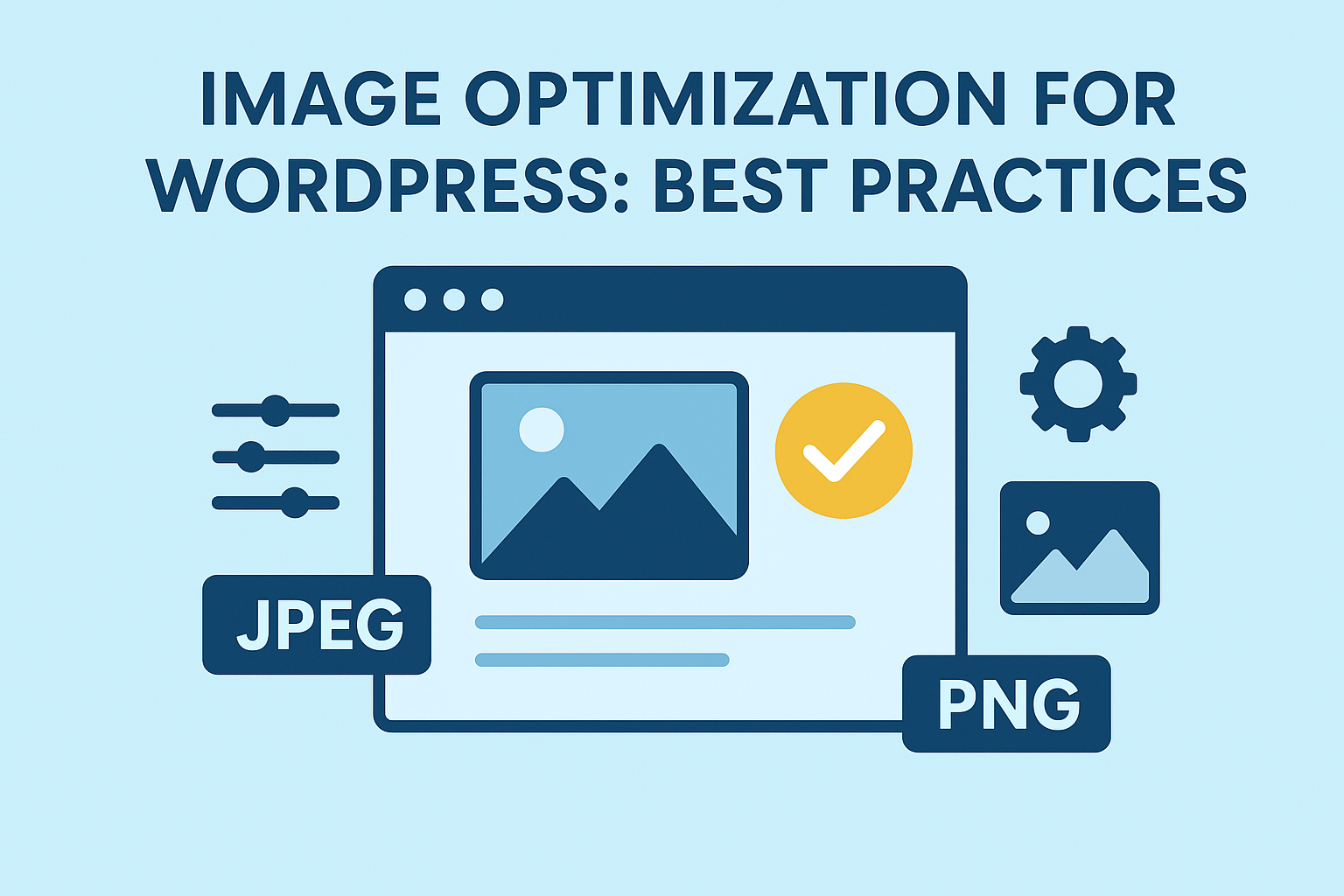
Image SEO often gets overlooked, but it contributes to overall page optimization. Compress images to reduce file size without visible quality loss. Add descriptive alt text that explains what the image shows (also required for accessibility). Use descriptive file names before uploading.
Structured data (schema markup) helps search engines understand your content type and can enable rich results like star ratings, FAQ dropdowns, or event details in search results. Local businesses benefit especially from the LocalBusiness schema.
Anti-patterns to avoid: Multiple competing CTAs that confuse visitors. Auto-playing videos or intrusive pop-ups. Missing alt text on important images.
Success indicators: Clear CTA visible above the fold on every page. All images have descriptive alt text. URLs are readable and keyword-relevant.
Real-World Application
Consider how foundational SEO optimization transformed one small business. A bakery optimized its on-page elements, including Google My Business profile and local keywords like "best cupcakes in Chicago." These are basic techniques often overlooked. Within six months, organic traffic increased by 200%, and monthly revenue grew by 25% from new local search customers.
The bakery did not build hundreds of backlinks or run paid campaigns. They fixed title tags, added location-specific keywords, improved page speed, and ensured mobile visitors could navigate easily. Foundational work, executed consistently.
For businesses needing free design resources to improve visual content, professional-quality images and graphics support both user experience and engagement metrics without budget strain.
Common Mistakes That Derail Progress
Optimizing for rankings instead of conversions. Traffic without action wastes effort. Always connect optimization work to business outcomes like leads, sales, or signups.
Chasing algorithm updates instead of fundamentals. Search engines change constantly, but core principles (relevant content, fast loading, good user experience) remain stable. Focus there first.
Expecting immediate results. SEO compounds over time. Most sites see meaningful movement in 3 to 6 months. Impatience leads to abandoning strategies before they mature.
Neglecting existing content. Updating and improving current pages often delivers faster results than creating new ones. Audit before you add.
Ignoring local optimization. For businesses serving geographic areas, local SEO elements (Google Business Profile, local keywords, NAP consistency) often outperform general optimization.
There are 7 SEO fixes small businesses often miss when optimizing their websites for mobile users, and addressing these can significantly improve both user experience and search rankings.
Your Next Move
Start with a single audit. Run your homepage through Google PageSpeed Insights and Mobile-Friendly Test today. Document the specific issues identified. Fix one issue this week.
Then move to your top 3 to 5 most important pages (usually homepage, main service pages, contact page). Apply the title tag and meta description guidelines. Add clear CTAs where missing.
Treat this guide as a reference, not a checklist to complete once. Revisit monthly as you publish new content or notice traffic changes. On-page SEO is maintenance, not a project with an end date.
Small improvements compound. A 10% traffic increase this month, maintained and built upon, becomes transformative over a year. Start where you are. Use what you have. Move forward consistently.
For a full end-to-end system you can apply across your site, use our on-page SEO service.
Frequently Asked Questions
About the Author

Brian Keary
Founder & Lead Developer
Brian is the founder of BKThemes with over 20 years of experience in web development. He specializes in WordPress, Shopify, and SEO optimization. A proud alumnus of the University of Wisconsin-Green Bay, Brian has been creating exceptional digital solutions since 2003.
Expertise
Writing since 2003