
An effective Shopify shipping strategy balances customer expectations for fast, low-cost delivery against actual carrier fulfillment expenses. New store owners must choose between free shipping thresholds, flat rate tiers, and real-time carrier-calculated rates to protect profit margins and minimize cart abandonment. This guide covers how to set up carrier accounts, calculate dimensional weight, and configure checkout shipping profiles.
How Do You Calculate Shipping Costs for a New Store?
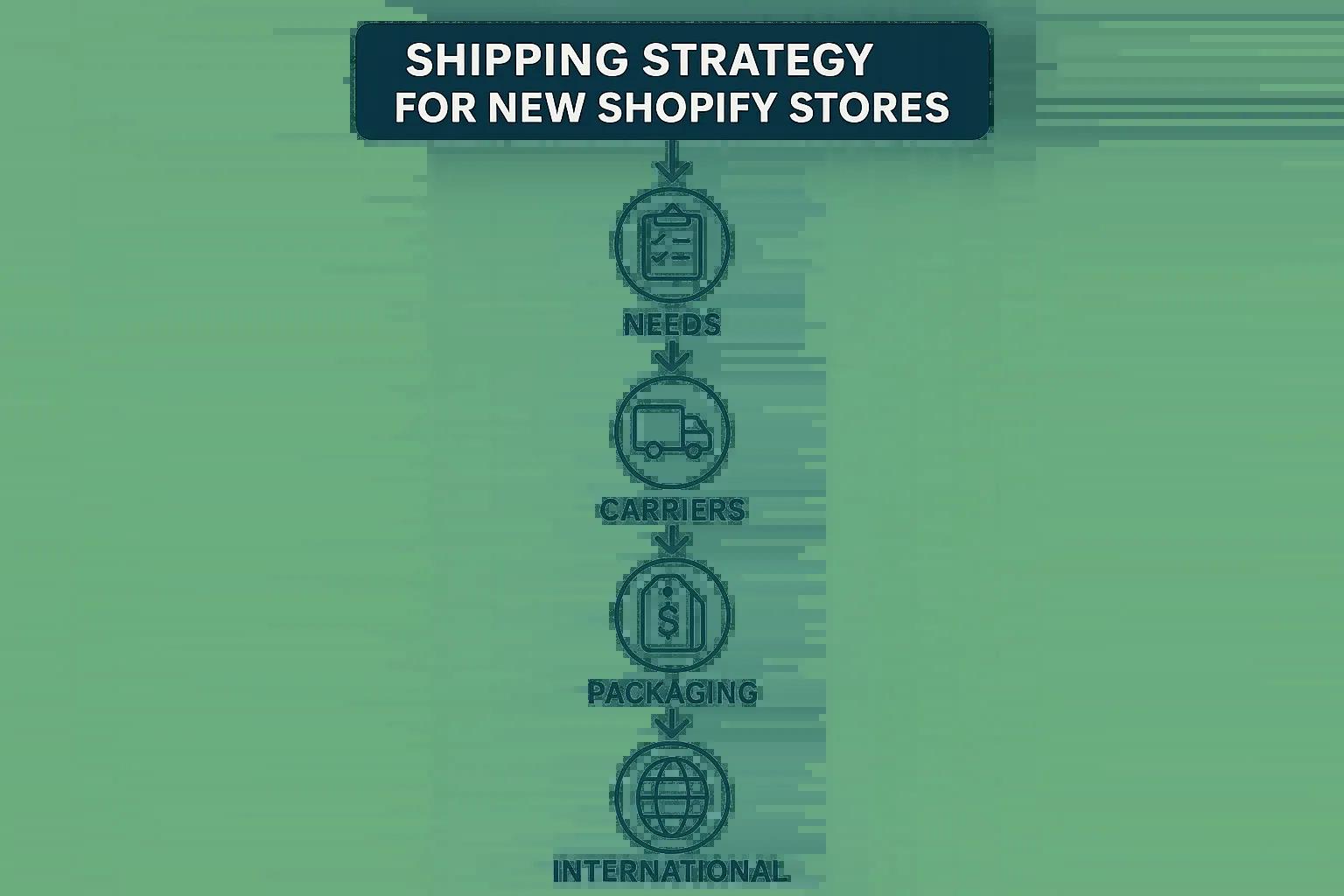
Before you can craft an effective strategy, you must understand the fundamentals: what you're shipping, where it's going, and how much it truly costs. Product weight, dimensions, and fragility are critical factors. The destination, whether domestic or international, dramatically impacts transit times and pricing. Every penny counts for a new Shopify store, so meticulous calculation is key.
Choosing the right carrier is paramount. Each major carrier offers a variety of services tailored to different needs regarding speed, cost, and reliability. Here's a quick comparison:
Carrier Typical Strengths Considerations for New Stores USPS (United States Postal Service) Cost-effective for lighter packages, flat-rate options, and extensive residential delivery.Great for small, lightweight items. Priority Mail can be competitive. FedEx Reliable for heavier/larger items, strong tracking, and good for business-to-business (B2B). Often pricier for small packages, but it offers robust services and discounts for volume. Excellent tracking, strong for ground shipping, good for larger shipments.Similar to FedEx, often competitive for mid-to-heavy packages, extensive network. DHL Express Unparalleled for international shipping speed and reliability. Best for international expedited shipments; typically more expensive for domestic. Don't just pick one carrier; many successful Shopify stores use a mix of carriers to optimize for different package types and destinations. Always negotiate rates if you anticipate significant volume, or leverage discounted rates through Shopify Shipping.
Pricing Strategies: Free Shipping vs. Flat Rate vs. Real-Time Rates
How you present shipping costs to your customers significantly impacts conversion rates. There are three primary strategies:
1. Free Shipping
Often the most enticing option for customers, free shipping can dramatically reduce cart abandonment. The key is to bake the shipping cost into your product prices or offer it above a certain order value. This makes it a marketing tool rather than a pure cost.
- Pros: Increases conversions, higher average order value (AOV) when used with minimums, strong competitive advantage.
- Cons: Can erode profit margins if not calculated carefully, might require higher product prices.
2. Flat Rate Shipping
Simple and predictable, flat rate shipping charges a single, fixed fee regardless of order size or weight (within a defined zone). It works best if your products have similar sizes and weights, making average shipping costs easy to calculate.
- Pros: Transparent for customers, easy to set up, predictable costs for you.
- Cons: Can overcharge nearby customers or undercharge distant ones, potentially leading to lost sales or reduced profits.
3. Real-Time Carrier Rates (Calculated Shipping)
This method charges customers the exact amount the carrier quotes based on the package's weight, dimensions, and destination. Shopify integrates with major carriers to provide these rates at checkout.
- Pros: Most accurate pricing for customers, you don't overpay or underpay.
- Cons: Can be a "sticker shock" for customers, potentially increasing cart abandonment, especially for heavy items.
Many stores use a hybrid approach, offering free shipping over a threshold, flat rates for smaller orders, and real-time rates for large or international shipments.
Customizing Regional Rates with Shopify Shipping Profiles
To execute flat-rate, calculated, or free shipping strategies effectively without hurting your margins, you must account for geographical destination differences using Shopify Shipping Profiles.
- Setting Up Location-Specific Shipping Zones: Within your Shopify admin (Settings > Shipping and delivery), you can set up distinct shipping zones based on countries, states, or regional provinces. This allows you to set lower flat rates or lower free-shipping thresholds for domestic orders while charging higher tiered rates for distant or international locations.
- Product-Specific Rules: Shipping profiles let you group specific items together. If you sell both lightweight apparel and heavy home decor, you can create custom rules so heavy items automatically trigger higher rates or specific carrier options at checkout.
- Fulfillment Location Control: If you ship from multiple warehouses, retail locations, or print-on-demand partners, shipping profiles automatically route orders to calculate rates based on the specific location fulfilling the item.
- Optimizing Conversion Rates: Defining accurate location zones prevents "rate shock" at checkout for local customers while ensuring your business doesn't absorb unexpected, high long-distance shipping fees.
What Packaging and Fulfillment Materials Do You Need?
Your packaging is often the first physical interaction a customer has with your brand. Make it count!
- Protective Packaging: Use appropriate materials (bubble wrap, packing peanuts, air pillows) to ensure products arrive undamaged.
- Branding: Custom boxes, branded tissue paper, or a personalized note can elevate the unboxing experience.
- Eco-friendly Options: Consider biodegradable peanuts, recycled cardboard, or compostable mailers to appeal to environmentally conscious customers.
- Efficiency: Standardize your packaging where possible to speed up the packing process.
"In e-commerce, the unboxing experience is an extension of your brand story. It's not just about getting the product there; it's about the delight when it arrives."
Understanding Dimensional Weight (DIM Weight)
Beyond actual physical weight, shipping carriers calculate postage costs using Dimensional Weight (DIM Weight)—a pricing technique that accounts for the amount of space a package occupies on a delivery truck or aircraft.
- Actual Weight vs. Dimensional Weight:
- Actual Weight: The exact weight of your packed box when placed on a scale.
- Dimensional Weight: A calculated value derived from the package's cubic size using the formula:
- How Carriers Bill Your Shipments: Major carriers (USPS, FedEx, UPS, DHL) compare the actual scale weight against the calculated dimensional weight and bill you for whichever number is greater (the billable weight).
- The Cost of Oversized Packaging: Shipping lightweight items in unnecessarily large boxes filled with void-fill material triggers high DIM weight charges. For example, a 1 lb coat shipped in a large box can be billed as a 12 lb or 15 lb package by the carrier.
- Strategies to Reduce DIM Weight Costs:
- Right-Size Your Boxes: Keep box dimensions as close to your product’s actual boundaries as possible.
- Use Poly Mailers or Padded Envelopes: For non-fragile items like apparel or soft goods, flexible mailers eliminate empty cubic space and dramatically reduce DIM weight penalties.
- Standardize Packaging Inventory: Stock a curated selection of box sizes tailored to your most common product combinations rather than relying on a few large "one-size-fits-all" shipping boxes.
Automation & Technology: Streamlining Your Shipping Process
Manual shipping processes are inefficient and prone to error. Leverage technology to automate tasks, save time, and reduce costs. Shopify's app store offers a plethora of tools for shipping and fulfillment.
- Label Printing: Generate and print shipping labels in bulk.
- Order Tracking: Automatically update customers with tracking information.
- Rate Comparison: Find the best rates across multiple carriers.
- Inventory Management: Sync stock levels across sales channels.
Look into integrations with popular shipping solutions like ShipStation, ShippingEasy, or even Shopify's built-in shipping features. These tools can significantly reduce the administrative burden, freeing you up to focus on growing your business. For an in-depth look at optimizing your store, consider our guide on Shopify SEO Optimization.
How Do You Handle International Customs, Duties, and HS Codes?
Opening your store to international customers can unlock massive growth, but it comes with its own set of complexities:
- Customs and Duties: Customers are typically responsible for these fees. Be transparent about this on your product pages and checkout process to avoid unpleasant surprises. Using Incoterms can clarify responsibilities for both parties.
- Documentation: Commercial invoices, customs declarations, and other forms are required. Ensure they are filled out accurately to prevent delays.
- Restricted Items: Be aware of what can and cannot be shipped to certain countries.
- HS Codes: Harmonized System (HS) codes classify your products for customs, speeding up the process and ensuring correct duties are applied. You can find more information on exporting basics from the International Trade Administration.
While challenging, international shipping can significantly expand your market reach. Tools like DHL Express specialize in efficient global delivery and can simplify many of these processes.
Understanding DDP vs. DDU (Delivered Duty Paid vs. Unpaid)
When expanding into global markets, clear customs communication prevents abandoned packages at international borders. The core difference between DDP and DDU dictates who bears the financial and administrative responsibility for customs fees and import taxes.
- DDU (Delivered Duty Unpaid) / DAP (Delivered at Place):
- How It Works: The merchant covers international freight costs, but the end customer is responsible for paying all import duties, taxes, and local customs brokerage fees upon the package's arrival in their destination country.
- Customer Experience Risks: Customers are often surprised by unexpected invoice notices from local postal services or customs offices before their package can be delivered. This "duty shock" frequently leads to refused deliveries, long shipping delays, and costly returned shipments.
- DDP (Delivered Duty Paid):
- How It Works: Import duties, taxes, and clearance fees are calculated and collected directly from the customer at checkout. The merchant (or shipping carrier on your behalf) pays these fees upfront to customs authorities.
- Conversion Benefits: DDP provides total cost transparency at checkout. Packages pass smoothly through international customs without requiring action or additional payment from the recipient, delivering a seamless, localized unboxing experience.
- Which Model to Choose for Your Shopify Store:
- Use DDP as your standard international strategy whenever possible—especially when selling through Shopify Markets or carriers like DHL Express—to eliminate surprise fees, protect brand trust, and improve global conversion rates.
- If using DDU, explicitly display a banner or checkout notification informing international shoppers that local customs taxes and import duties are not included in the order total and must be settled upon delivery.
Optimizing for Customer Experience
Excellent shipping isn't just about delivery; it's about the entire post-purchase journey. Keep your customers informed and delighted:
- Clear Shipping Policy: Make your policy easily accessible on your website. Include information on shipping times, costs, returns, and international considerations.
- Proactive Communication: Send automated emails for order confirmation, shipping confirmation (with tracking), and delivery updates.
- Easy Returns: A hassle-free return policy builds trust. Provide clear instructions and options for return labels.
- Customer Service: Be responsive to shipping-related inquiries. Fast, empathetic support can turn a potential issue into a positive experience. Check out these ecommerce customer service tips for more insights.
Frequently Asked Questions About Shipping for New Shopify Stores
How do I calculate shipping costs accurately?
Start by weighing and measuring all your products. Then, get quotes from multiple carriers based on typical destinations and package sizes. Don't forget to factor in packaging material costs and a small buffer for unexpected fees. Shopify Shipping can help by providing discounted rates directly within your admin.
Should I offer free shipping?
Free shipping is a powerful conversion tool, but only if you can afford it. Consider offering free shipping on orders over a certain threshold, which encourages customers to buy more, or build a small shipping cost into your product prices. Analyze your margins carefully before committing.
What's the best way to handle returns?
A clear and generous return policy is crucial for building customer trust. Offer a reasonable return window, make the process straightforward (e.g., provide pre-paid return labels), and process refunds promptly. Many shipping apps also offer return management features.
How can I make my shipping more eco-friendly?
Explore options like recycled or biodegradable packaging materials, optimize package sizes to reduce wasted space, and consider carbon-neutral shipping programs offered by some carriers or third-party services. Inform your customers about your efforts to build brand affinity.
What is the cheapest shipping method for new Shopify stores?
The cheapest shipping method often depends on your product size, weight, and destination. Generally, using carrier-calculated rates through Shopify Shipping can provide discounted rates. For small, lightweight items, USPS First Class or regional carriers may offer the lowest cost. Always compare rates and consider the trade-off between cost and delivery speed to ensure customer satisfaction.
How do you offer free shipping without losing profit?
Offering free shipping without eroding your margins requires strategic planning. You can set a minimum order value for free shipping, ensuring that the increased average order size offsets the shipping cost. Alternatively, you can incorporate a portion of the shipping cost into your product prices. Another approach is to use free shipping as a promotional tool for specific products or during limited-time campaigns, balancing customer appeal with profitability.
Conclusion: Your Shipping Strategy is Your Competitive Edge
For new Shopify stores, shipping is far more than just getting a product from point A to point B. It's an integral part of your brand experience, a key factor in customer satisfaction, and a powerful lever for sustainable growth. By meticulously planning your pricing, streamlining your fulfillment, leveraging technology, and prioritizing customer communication, you can transform your shipping from a necessary expense into a significant competitive advantage.
Invest the time now to craft an effective shipping strategy, and watch your new Shopify store not just ship products, but ship success.
About the Author

Brian Keary
Founder & Lead Developer
Brian is the founder of BKThemes with over 20 years of experience in web development. He specializes in WordPress, Shopify, and SEO optimization. A proud alumnus of the University of Wisconsin-Green Bay, Brian has been creating exceptional digital solutions since 2003.
Expertise
Writing since 2003