Web Design

LLM Mentions vs Traditional SEO — Which Strategy Drives Better Results?

Digital marketing moves fast. Choosing the right SEO approach can make or break your visibility online. In this piece, we compare LLM mentions with traditional SEO—how each works, where they help most, and what to expect for rankings and engagement.

By jm1CotMAha
January 15, 2026
16 min read
LLM Mentions vs Traditional SEO — Which Strategy Drives Better Results?

Digital marketing moves fast. Choosing the right SEO approach can make or break your visibility online. In this piece, we compare LLM mentions with traditional SEO—how each works, where they help most, and what to expect for rankings and engagement. You’ll learn how large language models (LLMs) produce mentions, why those references matter when published, and how to weigh both strategies for the best return. If your team is focused on sharpening their online presence, this guide lays out the practical differences and when to use each approach.

What Are LLM Mentions and How Do They Influence SEO?

LLM mentions happen when a large language model references a brand, product, or service in the content it creates. On their own, these mentions don’t change rankings — but when that content is published, indexed, and shared, mentions can boost brand visibility and perceived authority. LLMs pick up on context and intent, which helps them produce references that match user queries; when those outputs are used strategically, they can improve relevance and user engagement—two signals that matter for SEO.

How Do Large Language Models Generate Mentions?

LLMs generate mentions by learning language patterns from vast datasets and predicting the most relevant phrasing for a given prompt. When a user asks about a topic, the model may include brand or product names that fit the context. Behind the scenes, algorithms prioritize semantic relevance and user intent, so the mention feels natural and useful. The SEO impact depends on whether the generated content is published, linked, and promoted—unpublished outputs don’t influence search results.

AI-driven content is shifting how brands connect with audiences and how we optimize for search.

AI-Driven Content Creation for SEO Optimization Examines how AI has reshaped content production and audience engagement, and the implications for SEO. Enhancing marketing and brand communication with AI-driven content creation, S Raut, 2025

Why Are LLM Mentions Important for Modern SEO?

LLM mentions matter because they help produce context-rich content that matches user intent. Search engines increasingly value content that understands query context, not just keyword density. When LLM-generated mentions appear in published material, they can raise brand relevance and engagement—both of which help visibility. In competitive categories, the ability to produce timely, context-aware references is a real advantage.

How Does Traditional SEO Compare to LLM-Based Strategies?

Traditional SEO covers time-tested tactics designed to improve search visibility: keyword research, page optimization, and link acquisition. Those methods remain reliable, but LLMs introduce new ways to create context-driven content and surface brand mentions. Rather than replacing traditional SEO, LLMs offer complementary tools that can speed content production and help match evolving search intent.

What Are the Core Techniques of Traditional SEO?

Person reviewing keywords and analytics for traditional SEO

The core techniques of traditional SEO include: blog

  1. Keyword Research: Finding the phrases your audience actually searches for.
  2. On-Page Optimization: Structuring content and meta elements so pages are easy for search engines to understand.
  3. Link Building: Earning backlinks from trusted sites to increase domain authority and rankings.

What Are the Key Differences Between LLM Mentions and Traditional SEO?

Here’s a quick comparison to highlight how the two approaches differ and where they overlap.

ApproachMethodOutcomeAdaptability
LLM MentionsContextual content generationGreater brand visibility once publishedHighly responsive to user intent
Traditional SEOKeyword-focused optimizationImproved search rankingsSlower to react to trends

Traditional SEO still relies on planned keyword strategies, while LLM mentions let you respond quickly to changes in user behavior—so long as the generated content is published and promoted effectively.

What Are the Latest AI Trends Impacting SEO in 2024?

Futuristic interface showing AI trends and SEO data

Heading into 2024, expect AI-driven content generation, stronger personalization in search results, and greater emphasis on voice and conversational queries. These trends push content creators to focus on context, usefulness, and user intent more than ever.

As generative AI becomes common, keeping content quality and a consistent brand voice is both a challenge and an opportunity.

Generative AI Content in SEO: Quality & Brand Challenges Summarizes the rising use of AI in SEO and the need to protect content quality and brand identity amid rapid automation. Transforming SEO in the Era of Generative AI: Challenges, Opportunities, and Future Prospects, V Vajrobol, 2024

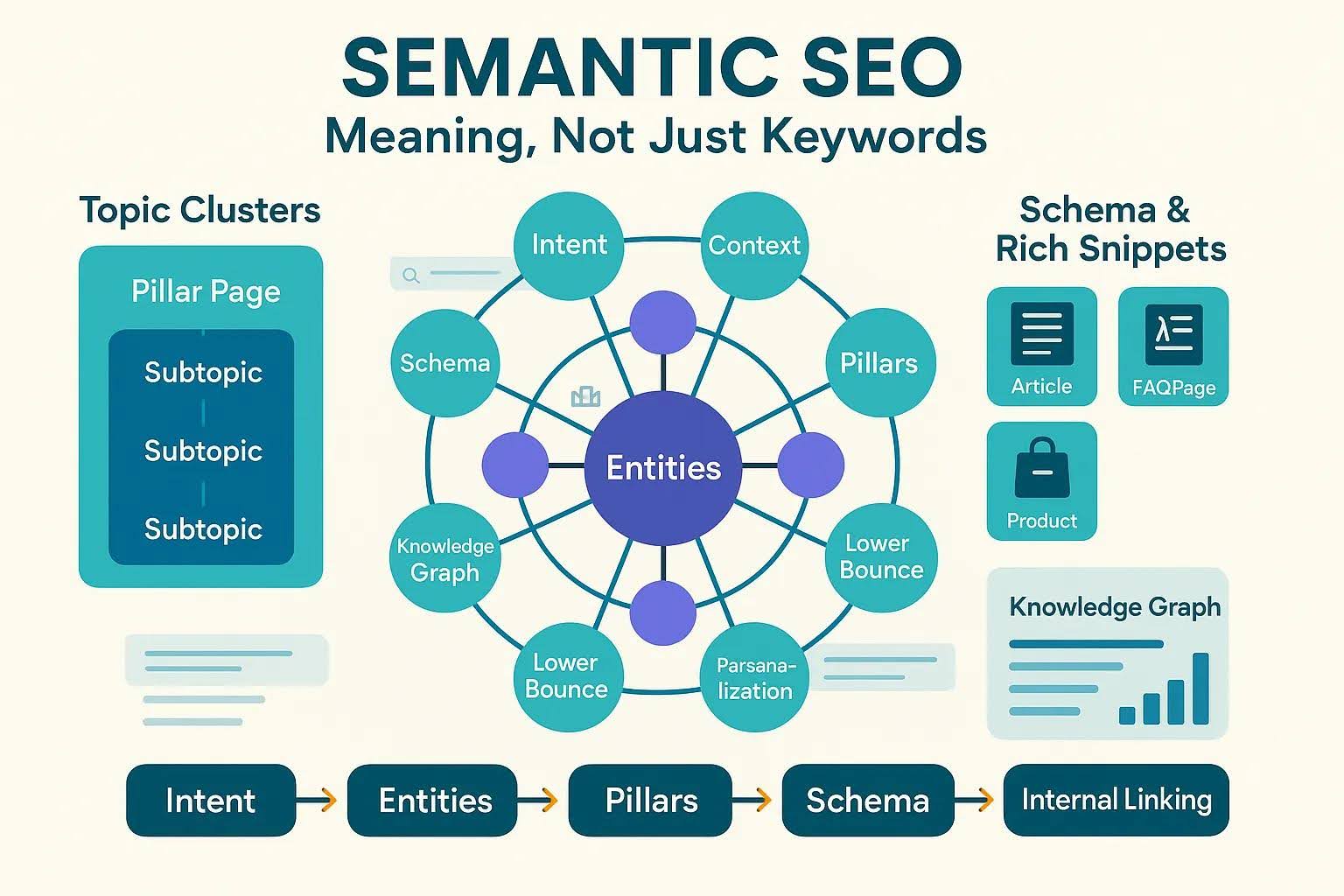
How Is AI Changing Semantic SEO Strategies?

AI is sharpening semantic SEO by helping teams understand intent and context at scale. Instead of targeting single keywords, semantic strategies look at concepts and related queries—AI speeds this work, enabling content that answers broader user needs and improves relevance in search.

What Role Does Entity-Based SEO Optimization Play?

Entity-based SEO centers on the relationships between people, places, products, and concepts mentioned in content. That structure helps search engines map meaning and deliver more accurate results. Using entity signals in your content improves indexing and gives you better chances to appear for nuanced, intent-driven queries.

How Will Google SGE Impact SEO Practices?

Google’s Search Generative Experience (SGE) changes how search results are assembled, favoring concise, context-aware answers. That raises the bar for content quality and relevance: pages must do more than match keywords—they must address user intent clearly and usefully.

What Is Google SGE and Its Effect on Search Results?

SGE uses advanced AI to create more personalized, context-aware search responses. For publishers and brands, this means focusing on depth, clarity, and user signals—content that doesn’t meet those expectations risks losing visibility as search interfaces evolve. blog

The rise of AI-powered search underscores the importance of entity-based strategies and content designed to satisfy intent, not just keywords.

AI-Powered Search Reshaping SEO & Entity-Based Strategies Reviews how AI-driven answer engines change SEO, including impacts like lower click-through rates and the growing need for entity-aware optimization. The Impact of AI-Powered Search on SEO: The Emergence of Answer Engine Optimization

How Should SEO Strategies Adapt to Google SGE?

To adapt, prioritize high-quality, context-rich content that answers real user questions. Combine LLM mentions to strengthen brand relevance with traditional on-page and link-building tactics. Track engagement metrics and refine content for intent—those steps will matter more in an SGE-driven landscape.

Which SEO Approach Yields Better ROI: LLM Mentions or Traditional SEO?

Comparing ROI means looking at traffic, engagement, and conversions over time. LLM mentions can accelerate content production and relevance, while traditional SEO builds lasting authority. The best returns usually come from a blended approach tailored to your goals and audience.

What Metrics Measure Success in LLM Mentions SEO?

Measure LLM-driven efforts using: services.

  1. Engagement Metrics: Time on page, scroll depth, and interactions with LLM-influenced content.
  2. Conversion Rates: The share of visitors who take desired actions after engaging with that content.
  3. Traffic Analysis: Changes in organic and referred traffic once LLM-generated content is published and promoted.

How Does Traditional SEO Performance Compare?

Traditional SEO is tracked with similar KPIs :

  1. Traffic Generation: Volume of organic visits driven by keyword and content efforts.
  2. Lead Conversion: How effectively SEO turns visitors into leads or customers.
  3. Long-Term Benefits: Sustained visibility and authority from ongoing SEO work.

Both approaches matter: LLM mentions can boost short- to mid-term relevance when used wisely, while traditional SEO builds the durable foundation that supports long-term growth.

How Can Businesses Integrate LLM Mentions with Traditional SEO?

Combining LLM mentions with classic SEO creates a fuller strategy: use LLMs to generate context-rich drafts and ideas, then apply SEO best practices to publish, optimize, and promote that content.

What Are Effective Semantic SEO Strategies Combining Both Approaches?

Effective combined strategies include: service.s

  1. Content Optimization: Use LLMs to draft context-aware content, then refine for accuracy, structure, and SEO.
  2. Keyword Strategies: Map keywords and topics so LLM outputs align with search intent and ranking goals.
  3. User Engagement: Design content to encourage clicks, time on page, and conversions across both methods.

How to Monitor and Optimize Combined SEO Efforts?

Monitor performance with analytics and iterate:

  1. Analytics Tools: Use platforms that track traffic, engagement, and conversion trends across content types.
  2. Performance Metric: Regularly review KPIs to spot what’s working and what needs adjustment.
  3. Continuous Improvement: Update content and tactics based on data to keep improving results.
StrategyMechanismBenefitImpact Level
LLM MentionsContextual content generationGreater brand visibility when publishedHigh
Traditional SEOKeyword-focused optimizationBetter search rankingsMedium
Semantic SEOEntity-based optimizationImproved indexing and relevanceHigh

Frequently Asked Questions

Conclusion

The smartest SEO plans blend the speed and contextual strength of LLM mentions with the durability of traditional SEO. Use LLMs to generate timely, intent-focused content, then apply SEO fundamentals—optimization, linking, and measurement—to turn visibility into lasting results. Ready to refine your strategy? Explore our resources to get started.

📧 Stay Updated

Get the latest web development tips and insights delivered to your inbox.

☕ Support Our Work

Enjoyed this article? Buy us a coffee to keep the content coming!

Buy me a coffee

About the Author

Brian Keary

Brian Keary

Founder & Lead Developer

Brian is the founder of BKThemes with over 20 years of experience in web development. He specializes in WordPress, Shopify, and SEO optimization. A proud alumnus of the University of Wisconsin-Green Bay, Brian has been creating exceptional digital solutions since 2003.

Expertise

WordPress DevelopmentShopify DevelopmentSEO OptimizationE-commerceWeb Performance

Writing since 2003

Tags

#LLM Mentions#search#blog#mentions#conversational queries

Share this article

Related Articles

Enjoyed this article?

Subscribe to our newsletter for more insights on web development and SEO.

Let's Work Together

Use the form to the right to contact us. We look forward to learning more about you, your organization, and how we can help you achieve even greater success.

Trusted Partner

BKThemes 5-stars on DesignRush
Contact Form