Did you know that Google now processes over 8.5 billion searches every single day in 2026? That's an astronomical number, and it highlights the sheer volume of information people are seeking. But how does Google, or any search engine for that matter, actually understand what users are looking for, especially when queries become more complex and conversational? The answer lies in a fundamental shift in how search engines interpret content: semantic SEO. It’s not just about stuffing keywords anymore; it’s about crafting content that mirrors human language and intent.
For years, the SEO landscape felt like a game of keyword chess. We’d meticulously research terms, sprinkle them strategically throughout our articles, and hope for the best. While this approach certainly had its place, search engines, particularly Google, have evolved dramatically. They've moved beyond simple keyword matching to grasp the meaning and context behind a user's query. This is where semantic SEO steps onto the stage, a powerful evolution that prioritizes user intent and the relationships between concepts. It’s about making your content so clear, so contextually rich, that a search engine can practically read your mind – or rather, understand the user’s mind.
This guide will demystify semantic SEO, breaking down its core principles and showing you why it's no longer a fringe strategy but a cornerstone of modern search engine optimization. We'll explore how search engines understand language, how to create content that resonates with this understanding, and how to future-proof your website against the relentless march of AI-driven search.
Who this is for
This guide is for anyone involved in creating or managing online content who wants their website to rank higher and attract more relevant organic traffic. This includes:
- Content creators and copywriters: If you write blog posts, website copy, or product descriptions, understanding semantic SEO will help you craft more effective and discoverable content.
- SEO professionals and digital marketers: This is essential knowledge for developing and implementing successful SEO strategies in 2026.
- Website owners and small business operators: If you manage your own website, grasping semantic SEO principles will empower you to improve your site's visibility and connect with potential customers.
- Web designers and developers: While often focused on the technical aspects, understanding how content is interpreted semantically can inform better site structure and user experience design.
- Anyone curious about the future of search: If you're intrigued by how search engines are becoming smarter and more human-like, this topic will be fascinating.
Who this is NOT for
While semantic SEO is broadly applicable, this guide might not be the best fit if you:
- Are solely focused on outdated black-hat SEO tactics. Semantic SEO is a white-hat, long-term strategy.
- Are looking for a quick-fix keyword stuffing guide. This approach is about depth and meaning, not superficial optimization.
- Have absolutely no interest in improving your website's organic search performance.
- Are only concerned with paid advertising or social media promotion without any regard for organic search visibility.
SEO that moves rankings
Want help turning SEO traffic into leads, not just pretty reports?
This post is in SEO, so here’s the most relevant next step if you want help applying it.
We build practical SEO systems around content, technical fixes, internal links, and conversion intent so rankings actually help the business.
- Technical SEO, on-page improvements, and content strategy
- Local SEO, link building, and entity-focused optimization
- Clear execution instead of vague SEO theater
The Evolution: From Keywords to Concepts
Remember the early days of the internet? Finding information was a bit like rummaging through a dusty library with a very limited card catalog. You typed in a specific word, and the search engine returned pages that contained that exact word. If you misspelled it, or used a synonym, you were often out of luck. This was the era of keyword-based search. Websites optimized by repeating their target keywords as many times as possible, sometimes to the point of absurdity. This led to a poor user experience, with pages filled with unnatural text that was difficult to read.
Search engines quickly realized this wasn't a sustainable or helpful way to deliver results. Users wanted answers, not just pages with matching words. This realization spurred the development of more sophisticated algorithms. Google's introduction of the Hummingbird update in 2013 was a significant milestone, marking a clear shift towards understanding the meaning behind search queries. Hummingbird wasn't about penalizing old SEO; it was about rewarding a new approach – one that focused on the conversational nature of language and the intent behind a search.
This shift paved the way for semantic search. Instead of just looking for keywords, search engines began to analyze:
- The context of words: How are words used together? Does "apple" refer to the fruit or the company?
- Synonyms and related terms: Understanding that "car," "automobile," and "vehicle" can often refer to the same thing.
- User intent: Is the user looking to buy something, learn something, or find a specific location?
- Entities: Recognizing that "Paris" is a city, the capital of France, and a popular tourist destination.
This evolution means that simply optimizing for a single keyword phrase is no longer sufficient. You need to optimize for the topic and the intent behind that topic. Think of it like this: instead of just learning the word "dog," you're learning about "canines," "puppies," "breeds," "training," "walking," and "dog parks." Semantic SEO is about building a rich, interconnected web of knowledge around your core topics.
What Exactly IS Semantic SEO?
At its heart, semantic SEO is the practice of optimizing your website and content to help search engines understand the meaning and context of your information, not just the keywords it contains. It’s about aligning your content with how users search and how search engines interpret information. It’s a move from strings to things, from literal matches to conceptual understanding.
Search engines use sophisticated Natural Language Processing (NLP) and machine learning to decipher user queries. Semantic SEO aims to feed these engines the contextual clues they need to make accurate connections. This involves understanding:
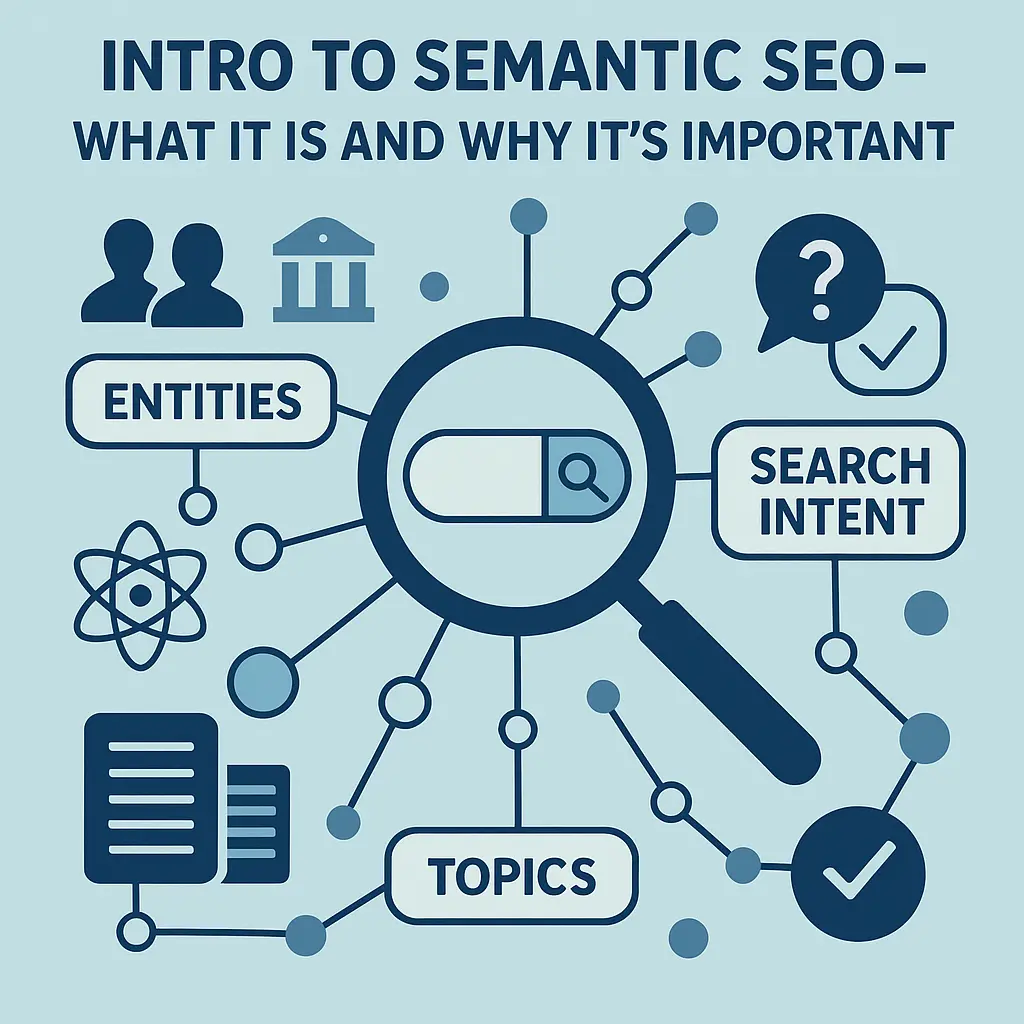
- Entities: These are real-world objects, people, places, or concepts that search engines can identify and understand. For example, "Eiffel Tower" is an entity. Semantic SEO involves clearly defining entities on your page and linking them to related concepts.
- Intent: What is the user really trying to achieve with their search? Are they looking for information (informational intent), trying to navigate to a specific site (navigational intent), looking to complete a transaction (transactional intent), or comparing options before a purchase (commercial intent)?
- Relationships: How do different concepts relate to each other? If you're writing about "organic gardening," semantic SEO means also covering related topics like "composting," "natural pest control," "soil health," and "non-GMO seeds."
Google's Knowledge Graph is a prime example of semantic search in action. When you search for a famous person, the Knowledge Graph often displays a box with their biography, birthdate, notable works, and related individuals. This information isn't just pulled from a single page; it's synthesized from Google's understanding of various entities and their relationships. Semantic SEO aims to provide search engines with the structured data they need to build similar connections for your content.
This approach moves beyond simple on-page optimization. It encompasses:
- Content structure: Using headings, subheadings, and clear paragraphing to logically organize information.
- Topical authority: Creating comprehensive content clusters that cover a subject in depth.
- Schema markup: Implementing structured data that explicitly tells search engines what your content is about.
- User experience (UX): Ensuring your site is easy to navigate and provides valuable information, which is a strong signal of relevance.
Ultimately, semantic SEO is about making your content so clear, so contextually rich, and so aligned with user intent that search engines can easily understand its value and relevance. It's about speaking the search engine's evolving language.
Why is Semantic SEO Crucial in 2026?
The digital landscape is constantly shifting, and 2026 is no exception. Several factors make semantic SEO not just beneficial, but absolutely essential for survival and success:
- The Rise of Conversational Search and Voice Search: People are increasingly using voice assistants like Siri, Alexa, and Google Assistant. These interactions are naturally more conversational and question-based. For example, instead of typing "best pizza NYC," a user might ask, "What's the best place to get a New York-style pizza near me?" Semantic SEO helps your content answer these natural language questions effectively. Search engines need to understand the nuances of these spoken queries to deliver the right results.
- AI-Powered Search Evolution: Technologies like Google's MUM (Multitask Unified Model) and advancements in large language models (LLMs) are enabling search engines to understand information more deeply and across different modalities (text, images, video). They can connect concepts that were previously disparate. Content optimized semantically provides the rich context these AI systems need to make accurate connections and rank your pages. This is a significant leap from just matching keywords.
- Focus on User Intent: Google's primary goal is to provide users with the most relevant and helpful results. By focusing on semantic SEO, you're inherently aligning your content with user intent. When your content comprehensively addresses the underlying need behind a search query, it signals high relevance to search engines, leading to better rankings and higher click-through rates. Understanding why someone is searching is paramount.
- Topical Authority and E-E-A-T: Google's emphasis on Expertise, Experience, Authoritativeness, and Trustworthiness (E-E-A-T) is deeply intertwined with semantic SEO. Building topical authority – becoming the go-to resource for a specific subject – requires demonstrating deep knowledge and covering a topic comprehensively. Semantic SEO practices, like creating content clusters and linking related concepts, directly support the development of this authority. It shows search engines you're not just a one-hit wonder but a knowledgeable source.
- Rich Results and Featured Snippets: Semantic SEO practices, particularly the use of structured data (schema markup) and clear content organization, significantly increase your chances of appearing in rich results, such as featured snippets, answer boxes, and knowledge panels. These prominent positions capture user attention and drive significant traffic. For instance, a well-structured FAQ section on your page, marked up with schema, is more likely to be pulled into a featured snippet.
- Combating Information Overload: The internet is awash with content. Semantic SEO helps your content stand out by being more meaningful and contextually relevant. Instead of getting lost in the noise of keyword-optimized but shallow articles, your semantically rich content can rise to the top because it provides genuine value and answers the user's underlying question. It's about quality and depth over sheer quantity.
In essence, semantic SEO is the bridge between human language and machine understanding. As search engines become more intelligent, the websites that speak this "semantic language" fluently will be the ones that succeed. Ignoring it means falling behind in an increasingly sophisticated search environment.
Key Components of Semantic SEO
Implementing semantic SEO isn't a single action; it's a holistic approach that touches various aspects of your website and content strategy. Here are the core components:
1. Understanding User Intent
This is the bedrock of semantic SEO. Before you create any content, you must ask: What problem is the user trying to solve? What question are they asking? What do they want to achieve?
- Informational Intent: Users are seeking knowledge or answers. (e.g., "how to bake sourdough bread," "what is semantic SEO")
- Navigational Intent: Users want to find a specific website or page. (e.g., "Facebook login," "Amazon homepage")
- Transactional Intent: Users intend to make a purchase or complete an action. (e.g., "buy iPhone 15," "book flight to London")
- Commercial Investigation Intent: Users are researching before a potential purchase. (e.g., "best running shoes 2026," "Shopify vs. BigCommerce comparison")
Your content must directly address the primary intent behind the search queries you're targeting.
2. Topical Authority and Content Hubs
Instead of focusing on isolated keywords, semantic SEO emphasizes building authority around broader topics. This is often achieved through content hubs or topic clusters.
- Pillar Page: A comprehensive, long-form piece of content covering a broad topic in depth.
- Cluster Content: Multiple shorter articles or pages that delve into specific sub-topics related to the pillar page.
- Internal Linking: Strategically linking cluster content back to the pillar page, and vice versa, creating a strong internal network that signals topical relevance to search engines.
For example, a pillar page on "E-commerce Platforms" could link to cluster content about "Shopify Store Speed Optimization," "BigCommerce Benefits," or "Custom vs. Template WordPress: Benefits, Costs, SEO, & More". This structure demonstrates comprehensive expertise.
3. Entities and Knowledge Graphs
Search engines are building vast knowledge graphs that connect real-world entities. Semantic SEO involves optimizing your content to clearly define and relate these entities.
- Identify Key Entities: Recognize the main people, places, organizations, concepts, and products relevant to your content.
- Provide Context: Clearly explain what these entities are and how they relate to your topic.
- Use Synonyms and Related Terms: Incorporate variations and related concepts naturally within your text. For instance, if discussing "smartphones," also mention "mobile devices," "handheld tech," and specific brands or models.
- Structured Data (Schema Markup): This is crucial. Schema markup is code you add to your website that explicitly tells search engines about the entities on your page and their properties. This helps search engines understand your content more precisely and increases the likelihood of rich results.
4. Natural Language and Readability
Semantic search engines are designed to understand language as humans use it. This means your content should be:
- Written for humans first: Avoid keyword stuffing and unnatural phrasing. Focus on clarity, engagement, and providing value.
- Conversational: Use language that reflects natural speech patterns, especially for voice search optimization.
- Well-structured: Employ clear headings (H1, H2, H3), bullet points, and concise paragraphs to make content easy to scan and digest. This structure also helps search engines parse the information effectively.
- Comprehensive: Cover the topic thoroughly, answering potential follow-up questions users might have.
5. Search Engine Understanding Tools
Leverage tools that help you understand how search engines interpret queries and topics.
- Google Search Console: Provides insights into how Google sees your site, including search queries that trigger your pages.
- AnswerThePublic, AlsoAsked: Tools that reveal the questions people are actually asking around a specific topic.
- Semrush, Ahrefs: Comprehensive SEO suites offering topic research, keyword gap analysis, and content optimization features that support semantic strategies. The 100 Best Free SEO Tools for 2026 list can be a great starting point for exploring options.
By integrating these components, you move beyond optimizing individual keywords to optimizing entire topics and concepts, making your website a valuable and understandable resource for both users and search engines.
Actionable Steps for Implementing Semantic SEO
Ready to put semantic SEO into practice? Here’s a checklist to get you started:
Content Strategy & Creation
- [ ] Define Your Core Topics: Identify the main subject areas your website covers. What are you an authority on?
- [ ] Conduct Thorough Intent Research: For each core topic, understand the different types of user intent (informational, navigational, transactional, commercial). Use tools like AnswerThePublic to find specific questions.
- [ ] Map Out Content Hubs: Plan your pillar pages and supporting cluster content. Identify gaps in your existing content.
- [ ] Prioritize Comprehensive Content: Aim to create the best, most complete resource on a given sub-topic. Answer all related questions.
- [ ] Write Naturally: Focus on clear, engaging language that addresses the user's need directly. Avoid jargon unless it's clearly defined.
- [ ] Use Synonyms and Related Terms: Weave in variations of your core terms and related concepts naturally throughout the content.
- [ ] Incorporate Entities: Clearly identify and explain key entities relevant to your topic.
- [ ] Optimize for Readability: Use short sentences, clear headings, bullet points, and whitespace.
On-Page Optimization
- [ ] Use Semantic HTML: Employ H1 for the main title, H2s for main sections, H3s for sub-sections, etc. Use
<strong>for emphasis and<em>for strong importance. - [ ] Optimize Title Tags and Meta Descriptions: Ensure they accurately reflect the content's core topic and intent, using natural language.
- [ ] Implement Internal Linking: Link relevant cluster content to pillar pages and vice versa. Link to other relevant, authoritative pages on your site. Consider linking to resources like Speed and seo how i optimized my shopify store and boosted traffic where relevant.
- [ ] Optimize Image Alt Text: Describe images accurately, including relevant entities and context.
Technical SEO for Semantics
- [ ] Implement Schema Markup: Use relevant schema types (e.g., Article, FAQPage, Organization, Product) to provide explicit context to search engines. This is a cornerstone of semantic understanding.
- [ ] Ensure Mobile-Friendliness: A seamless experience across devices is crucial for user satisfaction and search rankings.
- [ ] Improve Site Speed: Faster loading times are essential for user experience and are a ranking factor. Check out Powerful shopify store my top five speed hacks for actionable tips.
- [ ] Maintain a Logical Site Structure: Ensure your website hierarchy is clear and intuitive for both users and search engine crawlers.
Monitoring and Refinement
- [ ] Use Google Search Console: Monitor search queries, identify opportunities, and track performance.
- [ ] Track Rankings for Topic Clusters: Don't just track single keywords; monitor your performance for broader topic areas.
- [ ] Analyze User Behavior: Use analytics to understand how users interact with your content. Are they staying engaged? Are they finding answers?
- [ ] Stay Updated: The field of SEO and AI is constantly evolving. Keep learning about new search engine updates and best practices.
This structured approach will help you build a website that is not only discoverable but also deeply understood and valued by search engines and users alike. Remember the 7 Successful Semantic SEO Examples To Drive Ranking Gains for inspiration.
Semantic SEO vs. Traditional SEO: A Comparison
The distinction between semantic SEO and what we might call "traditional" or "keyword-focused" SEO is important. While semantic SEO builds upon the foundations laid by traditional SEO, it represents a significant evolution in approach and effectiveness.
| Feature | Traditional SEO (Keyword-Focused) | Semantic SEO (Meaning-Focused) |
|---|---|---|
| Primary Goal | Rank for specific keyword phrases. | Rank for topics and satisfy user intent comprehensively. |
| Focus | Keyword density, exact match keywords. | Entities, context, relationships, user intent, topical authority. |
| Content Style | Often repetitive, keyword-stuffed, potentially unnatural. | Natural language, conversational, user-centric, in-depth. |
| Understanding | Relies on matching strings of text. | Understands meaning, context, and relationships between concepts. |
| Key Techniques | Keyword research, on-page keyword placement, meta tag optimization. | Topic clusters, entity optimization, schema markup, NLP, user intent analysis. |
| Search Engine AI | Less relevant; focuses on direct matches. | Leverages and aligns with AI understanding (NLP, ML). |
| Voice Search | Poorly suited; struggles with natural language questions. | Highly effective; designed for conversational queries. |
| Long-Term Value | Diminishing returns; vulnerable to algorithm updates. | High; builds authority, relevance, and user loyalty. |
| Example Query | "buy red running shoes" | "What are the best running shoes for marathon training in 2026?" |
Traditional SEO was effective when search engines were simpler. Semantic SEO is the necessary evolution for today's sophisticated search landscape. It's about understanding the why behind the search, not just the what. Ignoring this shift is akin to using a flip phone in a smartphone era – it might still make calls, but it’s missing out on a world of functionality and relevance. Many SEO professionals still fall into common traps, making it crucial to be aware of Top 10 SEO Mistakes Web Designers Still Make in late 2025.
Mistakes to Avoid in Semantic SEO
While the principles of semantic SEO are straightforward, there are pitfalls that can hinder your progress. Avoiding these common mistakes is key to success:
- Mistake 1: Still Focusing Solely on Keywords: The biggest error is treating semantic SEO as just another layer on top of old keyword tactics. You must shift your mindset from "keyword optimization" to "topic optimization" and "intent satisfaction." While keywords are still relevant as signals, they are no longer the sole drivers.
- Mistake 2: Neglecting User Intent: Creating content that you think is relevant without deeply understanding what the user is searching for is a recipe for failure. Always start with user intent. Ask: "What problem does this searcher need solved?"
- Mistake 3: Ignoring Schema Markup: This is like speaking a foreign language to search engines. Schema markup is your explicit way of telling them precisely what your content is about. Failing to implement it means leaving valuable context on the table.
- Mistake 4: Creating Thin or Superficial Content: Semantic SEO demands depth and comprehensiveness. Publishing short, shallow articles that barely scratch the surface of a topic won't build topical authority. Search engines want to serve the most authoritative and complete answers.
- Mistake 5: Poor Internal Linking: While you need to link, random or non-existent internal linking doesn't help search engines understand context. Strategic internal linking within content hubs is crucial for demonstrating topical relevance and distributing link equity.
- Mistake 6: Over-Optimization and Keyword Stuffing: Ironically, trying too hard to incorporate related terms or entities without natural flow can backfire. Content should read naturally for humans first. Search engines are smart enough to detect unnatural patterns.
- Mistake 7: Not Adapting to Voice Search: If your content isn't structured to answer natural language questions and conversational queries, you're missing a huge and growing segment of search traffic.
- Mistake 8: Forgetting About E-E-A-T: Semantic SEO supports E-E-A-T by enabling you to build comprehensive topical authority. However, you still need to demonstrate genuine expertise, experience, authoritativeness, and trustworthiness in your content and on your site. This includes author bios, citations, and clear contact information.
By being mindful of these common errors, you can navigate the path to effective semantic SEO with greater confidence and achieve better, more sustainable results.
The Future is Semantic
Semantic SEO is not a fleeting trend; it's the direction search is heading. As search engines become more intelligent, capable of understanding nuance, context, and even emotion, the websites that thrive will be those that mirror this understanding. They will be the ones that provide clear, comprehensive, and contextually rich answers to user queries.
Embracing semantic SEO means investing in content that truly serves your audience. It means building topical authority and becoming a trusted resource. It requires a shift from tactical keyword manipulation to strategic, user-focused content creation. While it demands more effort upfront, the rewards – improved rankings, higher quality traffic, and greater user engagement – are substantial and enduring.
By focusing on user intent, structuring your content logically, leveraging entities, and implementing technical enhancements like schema markup, you position your website for success not just today, but for the future of search. The journey might seem complex, but the principles are clear: understand your audience, provide comprehensive value, and speak the language of meaning.
Key Takeaways
- Semantic SEO focuses on meaning and context, not just keywords. Search engines now understand language more like humans do.
- User intent is paramount. Understanding why someone is searching is the first step.
- Topical authority is built through comprehensive content hubs. Create pillar pages and supporting cluster content.
- Entities are real-world things search engines understand. Optimize your content to clearly define them.
- Schema markup provides explicit context to search engines. It's crucial for rich results and precise understanding.
- Natural language and readability are key. Write for humans first, using conversational tone and clear structure.
- Voice search and AI advancements make semantic SEO essential. Adapt to conversational queries and deeper AI understanding.
- Avoid common mistakes like keyword-only focus and neglecting intent.
FAQs About Semantic SEO
What is the main difference between semantic SEO and traditional SEO?
The core distinction lies in their focus. Traditional SEO primarily revolved around identifying and strategically placing specific keywords within content. Semantic SEO, conversely, prioritizes understanding the meaning, context, and intent behind search queries and user searches. It's about optimizing for topics and concepts rather than just isolated keywords, leveraging relationships between words and entities to provide a more holistic and relevant experience for both users and search engines.
How does voice search impact semantic SEO?
Voice search significantly amplifies the importance of semantic SEO because voice queries are inherently more conversational and natural-sounding. Users often ask full questions rather than typing short phrases. Semantic SEO strategies, which focus on understanding natural language, user intent, and providing comprehensive answers, are perfectly aligned with optimizing for voice search. Content structured to answer questions directly and using related conversational terms will perform better in voice search results.
What are "entities" in the context of semantic SEO?
Entities are real-world objects, people, places, organizations, concepts, or abstract ideas that search engines can identify and understand. Examples include "Eiffel Tower," "Albert Einstein," "New York City," or "Artificial Intelligence." In semantic SEO, optimizing for entities involves clearly defining these entities within your content, providing context about them, and establishing their relationships with other concepts. This helps search engines build a more accurate map of your content's subject matter.
Is schema markup essential for semantic SEO?
Yes, schema markup is a critically important component of semantic SEO. It's a form of structured data that you add to your website's code to explicitly tell search engines what your content is about. By defining entities, their properties, and the relationships between them in a machine-readable format, schema markup helps search engines understand your content more precisely and significantly increases your chances of appearing in rich search results like featured snippets and knowledge panels.
How can I measure the success of my semantic SEO efforts?
Measuring semantic SEO success involves looking beyond simple keyword rankings. Key metrics include:
- Improvements in rankings for topic clusters: Are you ranking higher for broader subject areas?
- Increased visibility in rich results: Track featured snippets, answer boxes, and knowledge panel appearances.
- Higher organic traffic: Is your overall organic traffic growing, particularly for content targeting broader topics?
- Improved user engagement metrics: Look at metrics like lower bounce rates, longer time on page, and higher click-through rates (CTR) from search results, indicating users find your content relevant.
- Growth in branded search queries: As you build authority, more users may search for your brand directly.
- Performance data in Google Search Console: Analyze the queries triggering your site and how well you're satisfying them.
Conclusion
The world of search is no longer confined to simple keyword matching. In 2026, search engines are sophisticated interpreters of meaning, context, and intent. Semantic SEO is the key to unlocking visibility in this evolving landscape. By shifting your focus from stuffing keywords to crafting comprehensive, contextually rich content that directly addresses user needs, you align your website with the very intelligence that powers modern search. It’s about building authority, demonstrating expertise, and creating a truly valuable resource for your audience. Implementing semantic SEO principles isn't just a tactic; it's a fundamental strategy for sustainable online success, ensuring your content resonates deeply with both users and the increasingly smart algorithms that connect them. Start thinking semantically today, and build a stronger, more future-proof online presence.
Looking for implementation support? Visit our web development services page for the full service overview.
📧 Want to Stay Updated?
Get the latest web development tips and insights delivered to your inbox.
🚀 What Services do you Offer?
About the Author

Brian Keary
Founder & Lead Developer
Brian is the founder of BKThemes with over 20 years of experience in web development. He specializes in WordPress, Shopify, and SEO optimization. A proud alumnus of the University of Wisconsin-Green Bay, Brian has been creating exceptional digital solutions since 2003.
Expertise
Writing since 2003