What Is Click-Through Rate (CTR)?
Click-through rates, or CTR, is the percentage of users who click on your link after seeing it. It's calculated simply:
CTR = (Clicks ÷ Impressions) × 100
So, if your page shows up in Google search 1,000 times and gets 100 clicks, your CTR is 10%.
CTR is one of the most important performance metrics for SEO and digital marketing. It tells search engines and advertisers whether users find your content relevant. A higher CTR typically means your title and description are compelling and aligned with what people are searching for.
Why Does CTR Matter for SEO Success?
CTR isn’t just a metric—it’s a signal to search engines.
When users frequently click on your link, it tells Google that your content matches user intent. Over time, this could help you:
- Rank higher in organic results
- Drive more traffic without increasing ad spend
- Outperform competitors, even if they’re above you in search listings
According to Google’s internal reports, if a lower-ranked result gets more clicks than higher ones, the algorithm can adjust rankings accordingly.
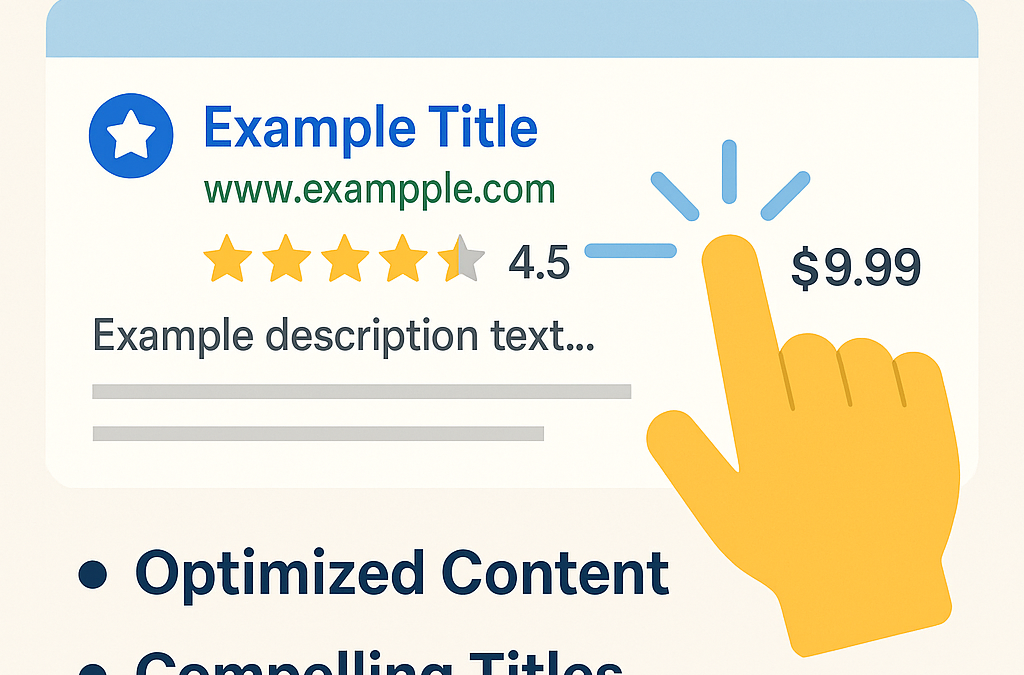
Significantly, the implementation of rich results—such as star ratings, pricing, or images—can increase click-through rates by up to 30%, according to research conducted by Moz and Search Engine Journal.
SEO that moves rankings
Want help turning SEO traffic into leads, not just pretty reports?
This post is in SEO, so here’s the most relevant next step if you want help applying it.
We build practical SEO systems around content, technical fixes, internal links, and conversion intent so rankings actually help the business.
- Technical SEO, on-page improvements, and content strategy
- Local SEO, link building, and entity-focused optimization
- Clear execution instead of vague SEO theater
What are Some Common Reasons for Low CTR?
If your CTR is underperforming, here’s why that might be happening:
- Bland meta titles that don’t evoke curiosity or relevance
- Weak or generic meta descriptions that fail to provide value
- No structured data, so your breadcrumb schema snippets look boring compared to competitors
- Unoptimized URLs that are long or filled with random characters
- Non-responsive mobile layouts, making clicks harder
Luckily, all these issues are fixable.
How do you Write Optimized Content that Increases CTR?
Writing SEO content that gets clicks is part art, part science. Here’s how to make it work:
How Can I Use Emotional Triggers?
People are wired to react emotionally. Use words that spark curiosity, urgency, or trust. For example:
- 'Don’t Miss This…'
- 'Here’s What You’re Missing…'
- 'Secrets to…'
How Should I Structure Content for Scannability?
Use bullets, numbers, and bolded text to make your content digestible.
Which Power Words Should I Add?
Power words like “Proven,” “Effective,” “Ultimate,” and “Free” boost engagement and trust. Sprinkle them naturally in your headlines and descriptions.
Do Compelling Meta Titles and Descriptions Matter?
Your meta title is your first (and sometimes only) shot to grab attention in the SERPs.
What Are the Best Practices for Titles?
- Keep it under 60 characters
- Include your primary keyword early
- Use brackets or parentheses to highlight [2025 Guide] or (Free Checklist)
How Do I Write Meta Descriptions That Get Clicks?
These should:
- Include a clear benefit
- Mention data or results (e.g., "Boost traffic by 30%")
- End with a call to action (e.g., “Read more to learn how”)
How Can I Use Structured Data to Create Rich Snippets?
Rich snippets add extra information to your search result—like star ratings, reviews, or prices. These elements stand out in a crowded SERP.
What Do I Need to Implement Structured Data?
You need to Implement Schema.org markup using tools like:
- Google’s Structured Data Markup Helper
- Yoast SEO plugin (for WordPress)
- RankMath (for advanced customization)
Rich results improve visibility and trust, giving users more reasons to click.
Should I Enhance CTR with Review Stars, Price & Availability?
Adding ratings, prices, and product availability through schema can make your listing pop.
For eCommerce or service businesses, these snippets:
- Build instant credibility
- Attract more qualified clicks
- Communicate value without users needing to visit your site
Google's guidelines require you to accurately reflect real data. Don't fake reviews—this can lead to penalties.
How Can I Boost CTR Through Engaging Headlines?
Your headline isn’t just a formality—it’s your hook.
What Are Some Proven Headline Formulas?
- “X Ways To [Achieve a Goal] Fast”
- “How To [Solve Problem] Like a Pro”
- “Why [Topic] Is the Key to [Benefit]”
Always test headlines using tools like CoSchedule Headline Analyzer or Sharethrough.
How Can I Improve Mobile CTR?
Mobile search is now dominant. But many sites still optimize for desktop first.
How Can I Win on Mobile?
- Use short, punchy titles
- Keep meta descriptions under 120 characters
- Ensure site loads fast and is easy to scroll
Don’t forget Google uses mobile-first indexing. If your mobile experience is clunky, your rankings and CTR suffer.
How Can I Optimize URLs for Better Click-Through Rates?
A clean, readable URL inspires more confidence.
What Are the Best Practices for URLs?
- Include the focus keyword
- Avoid unnecessary parameters or numbers
- Keep it under 75 characters
Compare these two:
example.com/blog?id=12756example.com/SEO
Which one would you click?
How Can I Use Visual Optimization in Search Snippets?
Visuals like favicons, images, or video thumbnails give your result a personal touch.
Ensure:
- Your favicon is custom and recognizable
- If you use video, enable video schema markup
- Blog images have alt text with relevant keywords
Even small visual tweaks can elevate your CTR.
How Do I A/B Test Headlines and Meta Data?
If you’re unsure which title or description works best—test it!
Use tools like:
- Google Optimize
- SplitSignal by Semrush
- Surfer SEO’s Content Editor (for predictive CTR)
Track metrics like:
- Impressions
- Clicks
- Average CTR
- Bounce Rate
Then iterate.
How Can I Leverage Social Proof to Improve CTR?
Consumers trust consumers. Use:
- Real customer reviews
- Ratings and testimonials
- Trust badges (SSL, BBB Accredited)
Social proof works like a magnet in the SERPs. The more people see others trust you, the more likely they are to click.
How Do Timing and Seasonal Trends Affect CTR?
CTR fluctuates throughout the year. During holidays or peak seasons, adjust your titles to reflect relevance.
For example:
- "Best SEO Tools for Black Friday 2025"
- "Top CTR Hacks for Q4 Campaigns"
Stay ahead by planning content calendars around seasonal trends.
CTR and Bounce Rate: What’s the Link?
A high CTR means people are interested. But if they bounce immediately, it’s a red flag.
Google wants to see engagement after the click—so make sure your:
- Content matches expectations
- Load speed is fast
- Above-the-fold area is optimized
CTR + low bounce rate = a winning combo for SEO rankings.
How Do I Track CTR Metrics and Analyze Results?
You can’t improve what you don’t measure.
Tools to Use:
- Google Search Console (CTR by query, page, and country)
- Google Analytics (engagement metrics)
- Hotjar or Crazy Egg (click maps, user flow)
Check trends monthly and document what’s working.
What Are Some Real Case Studies of Sites That Doubled Their CTR?
Case Study #1: An E-commerce Store
CTR jumped from 2.8% to 6.4% after:
- Adding review schema
- Shortening meta titles
- Using numbers in headlines
Case Study #2: A Marketing Blog
Increased CTR by 45% in 60 days by:
- Testing emotional words in titles
- Highlighting benefits in descriptions
- Updating old content for freshness
Frequently Asked Questions About CTR
Q1: What is a good CTR for SEO?
A: Anything between 3% to 5% is considered good, but it varies by industry.
Q2: Does a high CTR guarantee better rankings?
A: Not by itself, but it can signal relevance and improve rankings over time.
Q3: How do I know which pages have low CTR?
A: Use Google Search Console to identify underperforming pages and keywords.
Q4: Can CTR be improved overnight?
A: Small tweaks can yield quick wins, but sustainable improvement takes consistency.
Q5: Should I focus more on CTR or bounce rate?
A: Focus on both. High CTR brings traffic; low bounce rate ensures they stay.
Q6: What’s the fastest way to boost CTR?
A: Improve your title tag, add structured data, and highlight benefits in your meta description.
Conclusion: Making CTR a Priority in Your SEO Strategy
Click-through rate is not just a vanity metric—it’s a strategic lever for traffic, rankings, and conversions. With so much competition on the search page, standing out is no longer optional.
By applying the techniques in this guide—from rich snippets to emotional headlines—you’ll not only attract more eyes but also convert impressions into real visitors. And remember: you don’t need a higher budget—just smarter optimization.
📧 Want to Stay Updated?
Get the latest web development tips and insights delivered to your inbox.
🚀 What Services do you Offer?
About the Author

Brian Keary
Founder & Lead Developer
Brian is the founder of BKThemes with over 20 years of experience in web development. He specializes in WordPress, Shopify, and SEO optimization. A proud alumnus of the University of Wisconsin-Green Bay, Brian has been creating exceptional digital solutions since 2003.
Expertise
Writing since 2003