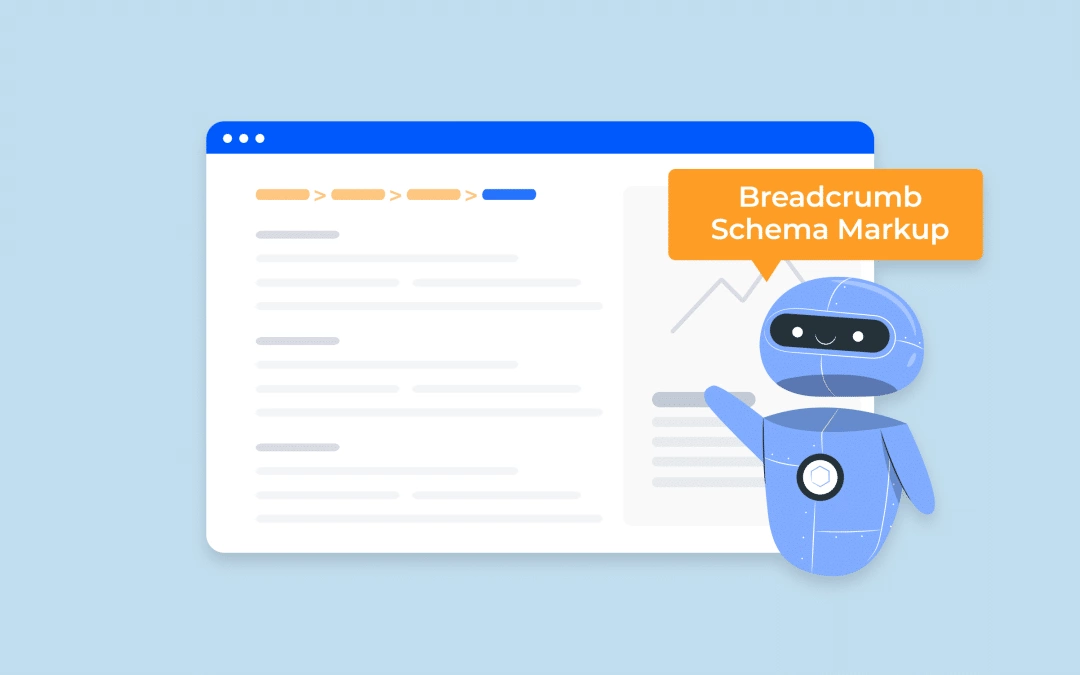
Breadcrumb schema is a form of structured data markup that tells search engines how your content is hierarchically structured. It helps display navigational breadcrumbs in search results—those clickable links you see under a result's title in Google. This not only improves user experience but also supports better crawling, indexing, and internal linking. Since 2003, the way we navigate the web has evolved, and today, providing a clear path for both users and search bots is a critical part of a solid SEO foundation.
Why breadcrumb schema matters for your site architecture
At BKThemes, we often emphasize that technical SEO is about helping machines understand your content as well as humans do. Breadcrumb lists provide a logical path from the homepage to the current page. By using the BreadcrumbList markup from Schema.org, you define this hierarchy explicitly.
When search engines crawl your site, they look for clues that define how pages relate to one another. Breadcrumbs act as a map. Without this schema, search engines have to infer your site structure, which can lead to errors. When you use proper markup, you reduce the workload on search bots, which can lead to better crawl efficiency. This is especially important for large e-commerce platforms or content-heavy sites where deep nesting can make it difficult for bots to find every page.
The role of position property in your markup
A common technical hurdle is the position property. This property defines the order of navigation items in your breadcrumb trail. If you have a sequence like "Home > Services > Web Design," the position values should be 1, 2, and 3 respectively.
Correct ordering is vital. If your schema markup lists items in a random order or skips numbers, Google may ignore your structured data entirely. This failure means you miss out on the chance to display rich results. We recommend that you always start your position counts at 1 and ensure they increment sequentially. Furthermore, your schema should always match the breadcrumbs visible on your page UI. If the visual breadcrumb on the screen differs from the hidden schema, you risk a mismatch that can confuse search engines and potentially lead to a loss of rich result eligibility.
SEO that moves rankings
Want help turning SEO traffic into leads, not just pretty reports?
This post is in SEO, so here’s the most relevant next step if you want help applying it.
We build practical SEO systems around content, technical fixes, internal links, and conversion intent so rankings actually help the business.
- Technical SEO, on-page improvements, and content strategy
- Local SEO, link building, and entity-focused optimization
- Clear execution instead of vague SEO theater
Does breadcrumb schema provide a direct ranking boost?
It is important to be practical about what structured data can and cannot do. Implementing breadcrumb schema does not provide a direct ranking benefit in the way that high-quality backlinks or relevant content might. However, it does provide significant indirect advantages.
By enabling rich results, your listing takes up more vertical space in the search engine results page. This increased visibility often leads to a higher click-through rate (CTR). A better CTR sends positive signals to search algorithms, which can indirectly influence your ranking over time. For businesses like National Waste, which rely on service-based navigation, having clear, clickable paths directly in search results helps potential customers find the exact solution they need faster. This efficiency is a core component of modern search engine optimization.
Implementation best practices for developers
For many site owners, especially those using platforms like WordPress, the technical heavy lifting is often handled by plugins. Tools like Rank Math or Yoast are excellent for automating the generation of BreadcrumbList JSON-LD. However, automation does not mean you can ignore the setup.
- Always validate your markup using the Google Rich Results Test.
- Ensure your breadcrumbs appear on all major pages, including category, sub-category, and product pages.
- Keep the breadcrumb text concise and descriptive to improve readability for users.
- Avoid keyword stuffing in your breadcrumb titles; keep them user-focused.
When you implement these best practices, you are building a more robust site structure. Whether you are managing a small blog or a complex Shopify store, the principle remains the same. You want to ensure that every page is reachable and that its place in your site hierarchy is clear to both users and crawlers.
How does breadcrumb schema affect internal link equity?
Internal linking is the backbone of your site authority. Breadcrumbs naturally create a path of internal links that pass authority from your homepage down to your deepest landing pages. When you add schema markup to these links, you are essentially "labeling" these pathways for search engines.
This structured approach helps distribute link equity more effectively. Because the schema explicitly defines the relationship between the parent and child pages, search engines can better understand which pages are pillars and which are sub-topics. This is a practical way to support your site’s overall SEO foundation without having to manually restructure your entire database.
What is the primary purpose of breadcrumb schema?
The main goal is to improve how search engines display your site hierarchy in results and to make your site easier for bots to crawl. By using the BreadcrumbList schema, you provide a clear, machine-readable path that mirrors your user-facing navigation.
Does incorrect position order hurt my rankings?
Incorrect ordering, such as skipping numbers or having a mismatch between the schema and the visible page, can cause Google to ignore your markup. If Google ignores your schema, you lose the opportunity for rich results, which can negatively impact your CTR and overall search visibility.
Should I use breadcrumb schema on every page?
You should implement it on all pages where a hierarchical path exists. This includes category pages, product pages, and service pages. It is not necessary for single, top-level pages that do not belong to a specific category, but for most professional websites, it is a standard best practice.
How can I check if my schema is working correctly?
Use the Google Rich Results Test tool. Simply enter the URL of a page that has breadcrumbs, and the tool will tell you if the markup is valid, if there are any errors, and if it is eligible for rich result display.
Do I need a plugin to manage breadcrumb schema?
While you can code schema manually using JSON-LD, using a plugin like Rank Math or Yoast is highly recommended for CMS users. These tools ensure that your schema is updated automatically whenever you change your site structure, which prevents common errors and saves time.
How does this impact user experience?
Beyond the technical benefits, breadcrumbs provide a "you are here" signpost for users. This helps visitors navigate back to higher-level categories without using the back button. A positive user experience is a major factor in modern search, as seen in research from institutions like the University of Wisconsin-Green Bay, where site architecture studies emphasize the importance of clear navigational cues.
By focusing on these details, you ensure that your site remains competitive. Breadcrumb schema is a small but powerful part of your overall strategy, providing the clarity that search engines crave. For more insights on refining your site structure, visit BKThemes.
Looking for implementation support? Visit our web development services page for the full service overview.
📧 Want to Stay Updated?
Get the latest web development tips and insights delivered to your inbox.
🚀 What Services do you Offer?
About the Author

Brian Keary
Founder & Lead Developer
Brian is the founder of BKThemes with over 20 years of experience in web development. He specializes in WordPress, Shopify, and SEO optimization. A proud alumnus of the University of Wisconsin-Green Bay, Brian has been creating exceptional digital solutions since 2003.
Expertise
Writing since 2003