
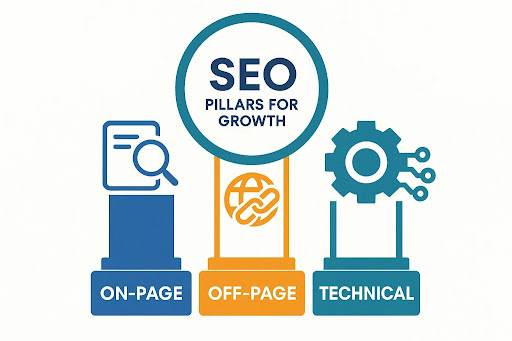
Roughly 68% of all online experiences begin with a search engine query, making the ability to rank effectively a non-negotiable skill for any digital business owner. If you have ever felt like you are shouting into a vast digital void, you are certainly not alone. Understanding the mechanics of search engine optimization is like learning to read the currents of a river; once you grasp the flow, you stop fighting the water and start using it to propel your progress forward. In this guide, we will break down the complex world of search visibility into manageable, actionable steps that actually move the needle of SEO for your brand.
Key Takeaways
- SEO is a long-term investment in your brand's digital visibility and authority.
- Prioritize user intent by answering questions clearly and comprehensively.
- Technical health and site speed are non-negotiable foundations for ranking.
- Quality content that earns natural links beats spammy tactics every time.
- Always monitor your performance through search consoles to make data-driven decisions.
- Stay updated on AI search trends to ensure your content remains relevant for modern queries.
Watch the companion video: How to do SEO (step-by-step)
If you prefer a visual walkthrough, watch our companion tutorial that breaks down the same process in a practical, step-by-step format.
Watch now: How to do SEO (step-by-step video)
Who this is for
This guide is designed for small business owners, startup founders, and content creators who are tired of guessing why their site traffic is flatlining. If you manage your own digital storefront or blog and want to understand the foundational pillars of visibility without needing a degree in computer science, you are in the right place. It is perfect for those who want to transition from "posting and praying" to a strategy rooted in data, intent, and user experience. Whether you are building a brand from scratch or trying to salvage a site that has lost its way, these principles remain the bedrock of modern digital success.
Who this is NOT for
If you are looking for "get rich quick" schemes, black-hat shortcuts, or ways to trick algorithms, you will not find them here. This guide is not for people who want to buy cheap backlinks, engage in keyword stuffing, or ignore the fundamental human element of their audience. We focus on sustainable, long-term growth that survives updates, not temporary hacks that leave your domain penalized or de-indexed. If you prefer paying for instant traffic over building organic authority, you might find the slow, steady process of professional search engine optimization frustrating.
The foundation of search engine optimization
Search engine optimization is the strategic process of refining your website’s structure, content, and authority to ensure search engines can easily find, crawl, and rank your pages for relevant queries. Think of your website as a physical shop in a bustling city; if the signs are unclear, the doors are locked, and the aisles are messy, customers will simply walk past your store. Your primary goal is to signal to Google and other engines that your content provides a direct, high-quality answer to what a user is looking for. When you learn how to perform SEO, you are essentially teaching the search engine how to trust your expertise.
Mistakes to avoid
The most common error I see in 2026 is focusing entirely on vanity metrics like keyword density rather than the actual user journey. Many designers still fall for outdated traps, which is why it is vital to review the top 10 seo mistakes web designers still make in late 2025 to avoid sabotaging your own progress. Never assume that just because you have a beautiful design, people will naturally find you. Another massive mistake is ignoring technical performance; if your site takes more than three seconds to load, you are essentially paying for visitors who will leave before they even see your products. Do not neglect the mobile experience, as most of your traffic will originate from handheld devices where navigation must be effortless.
Technical SEO and site performance
Technical SEO is the backbone of your site's health, ensuring that crawlers can index your pages without running into broken links or security errors. A fast-loading site is not just a luxury; it is a fundamental requirement for ranking in modern search environments. You should prioritize speed wins how to optimize your shopify store for lightning fast speed because Google explicitly uses page speed as a ranking factor for mobile and desktop results. By cleaning up your code and compressing large assets, you create a seamless experience that encourages users to stay longer, which in turn signals to search engines that your site is a high-value destination.
Content strategy and keyword research
Content is the bridge between your business goals and the needs of your target audience. Instead of chasing high-volume keywords with impossible competition, focus on "long-tail" phrases that represent specific questions your customers are asking. When you write, aim to solve a problem rather than just fill a page with text. Use your keywords naturally, placing them in your headings and the first hundred words of your copy, but prioritize clarity above all else. Remember that you are writing for humans first; if a sentence feels robotic or stuffed with terms, the reader will bounce, and that negative engagement signal will hurt your rankings far more than a missing keyword ever would.
Learn what long-tail keywords are and how to effectively incorporate them into your content strategy to attract highly targeted traffic. Explore our guide on long-tail keywords to gain a competitive edge in search rankings.
Optimizing for the AI era
Ranking in AI-driven search results requires a shift in how you structure your information. Because AI models summarize content to provide direct answers, your site must be authoritative, concise, and structured with clear semantic markup. You need to focus on how to rank in ai search: 10 strategies to dominate seo to ensure your brand remains a primary source of information. This means using structured data, clear headings, and answering common questions directly within your paragraphs. When you provide the exact answer an AI is looking for, you increase the likelihood of being cited as a trusted source in generated search summaries.
How to execute an SEO audit
An SEO audit is a systematic review of your website's performance and structure. You should begin by checking for crawl errors in your search console, identifying which pages are not being indexed, and fixing broken internal links. Look for pages with high bounce rates and ask yourself if the content actually matches the intent of the search query that brought the user there. Use this checklist to keep your audit on track:
- Verify your SSL certificate is active and secure.
- Check that your XML sitemap is submitted to search engines.
- Audit your meta titles and descriptions for length and relevance.
- Ensure your images have descriptive alt-text for accessibility.
- Review your internal linking structure to ensure important pages have enough "link juice."
Comparing SEO approaches
| Feature | Template-Based SEO | Custom Development SEO |
|---|---|---|
| Initial Setup | Quick and easy | Time-consuming |
| Performance | Often bloated | Highly optimized |
| Flexibility | Limited | Infinite |
| Long-term Cost | Low upfront | Higher investment |
When deciding on your platform, it is helpful to understand the differences between custom vs. template to ensure you are not locked into a system that hinders your growth. A template might be great for starting, but as you scale, you may find that custom solutions offer better control over your technical SEO. Read 7 best SEO strategies for businesses starting out to learn more.
What is the most important factor in SEO?
The most important factor is user intent. Search engines are constantly refining their algorithms to better understand what a user is truly looking for when they type a query. If your content provides the most helpful, accurate, and relevant answer to that user's question, you will eventually rank. All the technical optimization in the world cannot save a site that provides low-quality or irrelevant content. Focus on being the best resource for your specific niche, and the rankings will naturally follow.
How long does SEO take to show results?
SEO is a marathon, not a sprint, and typically requires three to six months to show significant movement. Because search engines need time to crawl, index, and re-evaluate your site after changes are made, you should not expect overnight success. If you are in a highly competitive industry, it may take even longer to build the necessary domain authority to crack the first page. Patience is a virtue here; stay consistent with your content quality and technical maintenance, and avoid making drastic changes every week just because you do not see immediate spikes in traffic. Read 10 Proven Strategies to Skyrocket Your Website's Ranking to learn more about indexing.
Do I need to pay for SEO tools?
You do not strictly need expensive tools to get started, but they certainly make the process more efficient. Free options like Google Search Console and Google Analytics provide the vast majority of the data you need to identify issues and track progress. As your site grows, you might consider paid platforms that offer deeper competitive analysis, backlink monitoring, and keyword tracking. However, never mistake having a subscription to an expensive tool for actually doing the work of creating great content and fixing your site's structure.
What is the role of backlinks in 2026?
Backlinks remain a powerful signal of authority, but their quality matters far more than their quantity. A single link from a reputable, niche-relevant publication is worth more than a thousand links from low-quality, spammy directories. In 2026, search engines are better than ever at identifying manufactured link-building tactics. Focus your efforts on creating "linkable assets"—high-quality guides, original research, or useful tools—that people naturally want to share and cite. If you are a local business, remember that local citations how to use them to boost local seo can provide a significant advantage by establishing your presence in your specific community.
How do I optimize for mobile users?
Mobile optimization is no longer optional; it is the default way search engines evaluate your site. Use a responsive design that automatically adjusts to various screen sizes, ensuring that text is readable and buttons are easy to tap. Eliminate intrusive pop-ups that block the content, and ensure your navigation menu is intuitive for touchscreens. Test your site across different devices and browsers to catch any layout issues that might frustrate a mobile visitor. If your mobile experience is clunky, users will leave, and your search rankings will suffer as a result.
Learning SEO Can Be Confusing
Why not let us show you how?
Get started with our carefully crafted beginner-friendly SEO package designed to boost your site's visibility and performance. We will explain the process step-by-step to ensure you understand how each element contributes to your overall SEO strategy.
Explore Our Starter SEO PackageConclusion
Mastering the art of search engine optimization is less about tricking an algorithm and more about building a better experience for the people who visit your site. By focusing on site speed, high-quality content, and clear technical architecture, you create a digital environment that search engines are happy to recommend. Remember that every change you make should ultimately serve the user, not just the crawler. As you move forward, keep experimenting, keep measuring your results, and stay committed to providing value. If you keep your eyes on the long-term goal and avoid the shortcuts that lead to penalties, you will find that the organic traffic you earn is the most sustainable asset your business will ever own.
FAQ
What is the first step in starting SEO?
The first step is setting up your Google Search Console account. This free tool gives you direct insights into how Google sees your site, which keywords are driving traffic, and whether there are any technical errors preventing you from ranking.
Can I do SEO myself or do I need to hire an agency?
You can absolutely do it yourself if you have the time and the willingness to learn. Many small business owners manage their own SEO successfully by sticking to the fundamentals of content creation and technical maintenance. Agencies are helpful if you have a budget and want to accelerate your growth or lack the time to manage it consistently.
Does social media impact my search rankings?
Social media does not directly count as a ranking factor in the same way that backlinks or content relevance do. However, social media can increase your brand visibility and drive traffic, which can lead to more people finding your site and potentially linking to it. It is an indirect, yet powerful, catalyst for your overall digital presence.
How often should I update my website content?
You should update your content whenever new, relevant information becomes available or if you notice your rankings slipping for a specific page. There is no set schedule, but keeping your information current and accurate helps maintain your authority and keeps users engaged.
What should I do if my site traffic drops suddenly?
First, check Google Search Console to see if you have received a manual action or if there is a site-wide crawl issue. If not, look at your recent changes, check for major algorithm updates, and verify if any of your top-performing pages have lost their rankings due to new, more relevant content from competitors.
Related Resources
About the Author

Brian Keary
Founder & Lead Developer
Brian is the founder of BKThemes with over 20 years of experience in web development. He specializes in WordPress, Shopify, and SEO optimization. A proud alumnus of the University of Wisconsin-Green Bay, Brian has been creating exceptional digital solutions since 2003.
Expertise
Writing since 2003