
Web Development

How to Choose the Right Web Development Company — Key Factors to Guide Your Decision

Picking the right web development partner means more than price—it's about reducing cost over time, boosting efficiency, staying compliant, and scaling with your business.

By jm1CotMAha
December 15, 2025
11 min read
How to Choose the Right Web Development Company — Key Factors to Guide Your Decision

Picking the right web development partner means more than price—it's about reducing cost over time, boosting efficiency, staying compliant, and scaling with your business. This guide walks through the criteria that matter most: experience and portfolio, technical stack, communication and project management, pricing and ROI, post-launch maintenance and security, and approaches tailored for multi-location organizations. Because proposals can vary widely in scope and outcomes, we include practical checklists, comparison tables, and concise summaries to help you compare vendors objectively. Read on to learn how to read portfolios for measurable results, which technologies matter for future-ready builds, how to set communication SLAs, how to evaluate pricing against long-term value, and which maintenance and compliance services are essential for multi-branch operations.

What Are the Key Experience and Portfolio Criteria for Selecting a Web Development Agency?

Person reviewing a web development portfolio with a checklist

Portfolio quality is about experience, measurable outcomes, and industry relevance—signals that help you predict delivery speed and post-launch impact. A focused portfolio shows the vendor can turn goals into business results through repeatable processes, thereby shortening discovery and reducing revisions. Reviewing case studies helps you spot whether a company consistently improves conversion, accelerates time-to-launch, and handles the integrations you need. Below you'll find a compact checklist, a comparison table for typical project types, and practical vendor questions to validate claims and make apples-to-apples comparisons.

When judging experience, prioritize industry relevance, project scale, and measurable results over polished visuals alone. Sector knowledge shortens requirements gathering because the vendor already understands common integrations, compliance needs, and user expectations—fewer surprises, faster time-to-value. The list below highlights five quick portfolio checks to apply when reviewing case studies and proposals.

A concise checklist for portfolio review:

  1. Clear metrics showing conversion or revenue uplift.
  2. Recent projects using the technologies you plan to adopt.
  3. Integration examples that mirror your needs (APIs, payments, CRM).
  4. Case studies with before/after metrics and delivery timelines.
  5. Client references or verifiable testimonials for similar scopes.

Use this checklist to rapidly filter vendors. The section that follows compares typical project types and the attributes to weigh when prioritizing proposals.

Portfolio comparison overview: the table below contrasts common project types by the attributes that demonstrate relevance and measurable outcomes. Use it to decide which case studies to request in full.

Project TypeKey AttributeMeasurable Value
E-commerce migrationConversion improvements% uplift in sales; cart-abandonment reduction
Custom web appScalability & integrationsAPI response SLAs; concurrent-user support
CMS redesignEditorial efficiencyReduced publish time; content reuse rate
Headless / e‑commerce hybridPerformance & flexibilityFaster page loads; improved developer velocity
Multisite/portalGovernance & localizationSites managed; rollout time per location

This comparison clarifies what to look for in each portfolio item and helps shape vendor interview questions. After shortlisting, use targeted questions to confirm whether the vendor’s processes produced those outcomes.

Why Is Industry-Specific Experience Crucial When Hiring a Web Design Company?

Industry knowledge reduces discovery time and rework because vendors can reuse proven patterns, components, and compliance checklists. A partner experienced in your sector understands typical integrations and regulatory constraints, anticipates user expectations, and can recommend platform-specific optimizations—cutting needless iterations and lowering cost. For example, an e‑commerce specialist will spot checkout friction and suggest proven fixes that lift conversion. That domain familiarity also improves testing predictability and resource planning.

Sector experience influences UX choices and architecture trade‑offs: accessibility, data rules, and regulatory needs change decisions. Firms with relevant background scope timelines and maintenance requirements more accurately. The next subsection explains how to evaluate portfolios and client stories to verify claimed sector experience and measurable outcomes.

How to Evaluate a Web Development Company’s Portfolio and Client Success Stories?

Focus on metrics, recency, and technical fit to separate marketing from measurable impact. Ask for before‑and‑after metrics—conversion rates, load time improvements, revenue per visitor—and request references from projects of similar size. Confirm platforms, third‑party integrations, and whether the vendor provided documentation and handover support. When portfolio items include clear results, you can estimate likely ROI and prioritize vendors that demonstrate repeatable, evidence‑based processes.

Here are concise vendor questions that surface meaningful evidence from portfolios:

  1. Which KPIs improved and by how much over what timeframe?
  2. What technology stack and hosting strategy were chosen—and why?
  3. Tell us one significant challenge from the project and how it was resolved.
  4. Were security, compliance, and post‑launch maintenance responsibilities documented?

These questions reveal whether a vendor’s portfolio reflects repeatable, measurable work and prepare you for the technical evaluation in the next major section.

Which Technical Skills and Technology Stacks Should You Look for in a Web Development Partner?

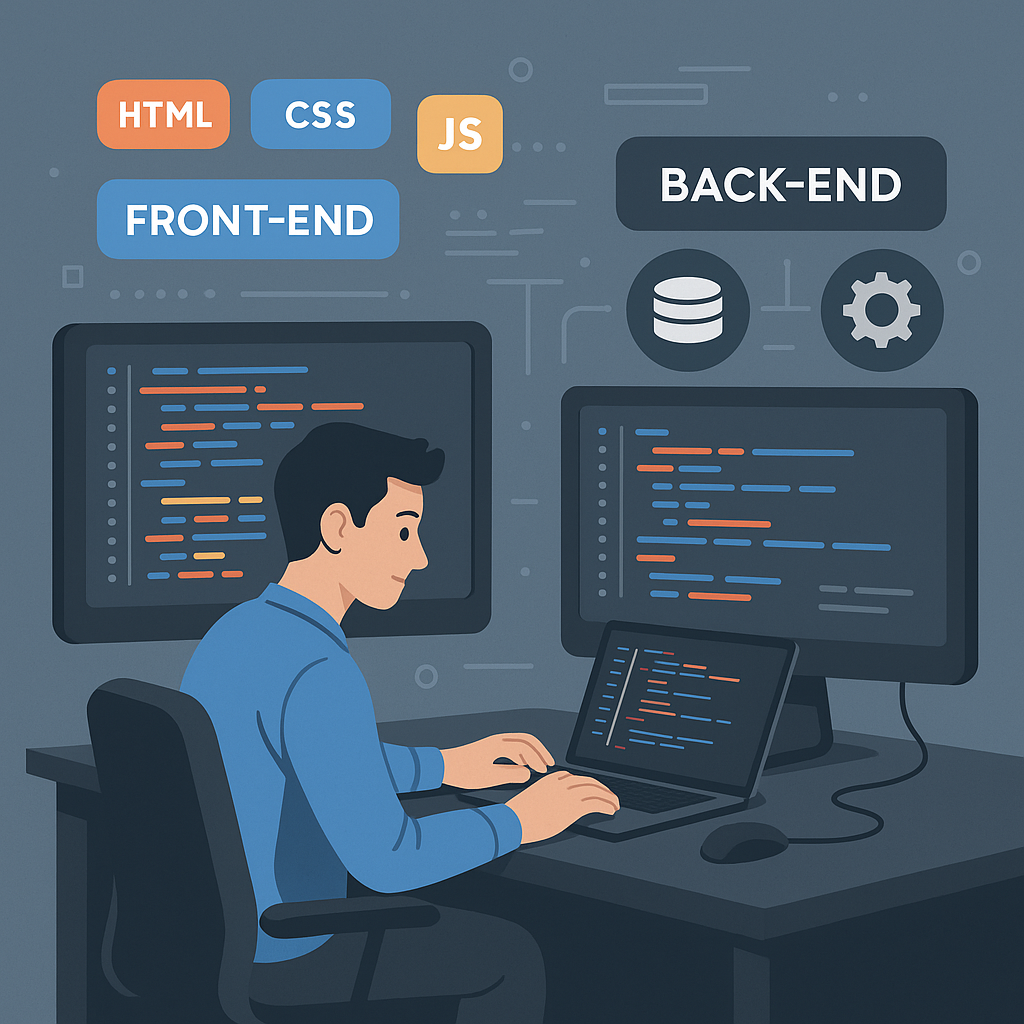
Choosing a tech stack means balancing performance, scalability, developer ecosystem, and e‑commerce needs so your site supports growth and integrates cleanly with existing systems. Look for front‑end framework expertise for fast interactive experiences, back‑end skills for reliable APIs, and CMS/platform knowledge for efficient content and commerce operations. Developers should show competency in performance tuning, responsive design, API‑first patterns, and security best practices—these directly affect conversion and maintainability. Below are the modern technologies to watch and how technical skill shapes e‑commerce and custom development choices.

Modern technologies that matter:

  • React & Next.js — for high‑performance interactive front ends with SSR/SSG benefits.
  • WordPress — flexible CMS capabilities and multisite management.
  • Shopify — fast, extensible e‑commerce with strong ecosystem support.
  • Flutter — cross‑platform mobile experiences integrated with web back ends.

These stacks balance developer productivity and business outcomes. The next subsection explains when SSR/SSG and headless architectures are the right fit for scalability and future‑proofing.

What Modern Web Technologies Are Essential for Scalable and Future-Proof Websites?

Future‑proof sites often use server‑side rendering (SSR) or static‑site generation (SSG) to improve first‑paint speed and SEO, combined with client‑side hydration for interactivity. Headless CMS decouples content from presentation, allowing content to power multiple channels and faster redesigns without rebuilding business logic. PWAs and performance‑focused frameworks reduce load times and boost engagement metrics that drive conversion. Hosting on edge networks or managed platforms further improves global reliability and latency

These choices reduce technical debt and make iterative improvements simpler, lowering long‑term ownership costs. Understanding SSR/SSG trade‑offs and headless benefits prepares you to evaluate vendor recommendations for architecture in the e‑commerce and custom build sections.

How Does Technical Expertise Impact E-commerce and Custom Web Development?

Technical skillset shapes checkout UX, integration complexity, and how promotions or regional pricing are handled—all of which affect conversion and operating cost. Platform experts can optimize payment flows, caching, and personalization to lift average order value and cut cart abandonment. Custom stacks offer unique differentiation but need clear maintenance and handover documentation to avoid rising costs. Vendors should show both platform experience and the ability to deliver secure, maintainable custom code that ties into analytics and CRM systems.

Prioritize teams that can explain trade‑offs between managed e‑commerce platforms and custom builds, and who can show examples of technical changes tied to measurable improvements. The next major area covers how communication and project management make sure that expertise is delivered on time and on budget.

How Do Communication and Project Management Influence Your Choice of a Web Development Company?

Clear communication and disciplined project management limit scope creep, shorten timelines, and increase predictability by aligning stakeholders on milestones, responsibilities, and escalation paths. Good vendors provide a regular update cadence, a single point of contact, and transparent issue tracking so you always know progress against deliverables. Methodology—Agile or Waterfall—affects how changes are handled and how often you see working increments; pick the approach that matches your risk tolerance and how stable your requirements are. Below are best practices and a checklist to help set expectations and evaluate vendor processes.

Best practices include documented kickoff outputs, scheduled demos, and a shared issue tracker to capture scope changes. Reporting should identify owners, open risks, and progress against milestones. Collaboration tools—issue trackers, shared design files, and messaging channels—help speed approvals and reduce rework. The next subsection lists concrete standards you can require from vendors for consistent communication.

Practical communication standards to request:

  1. Weekly progress demos with recorded notes and clear action items.
  2. Shared issue tracker for transparent scope and bug tracking.
  3. Design and code review windows with explicit acceptance criteria.
  4. Documented escalation path and a single point of contact.

Adopting these makes proposal comparisons straightforward and helps enforce SLAs during delivery. The following subsection compares Agile and Waterfall methodologies to match methodology to project type.

What Are Best Practices for Effective Client-Developer Communication?

![Team meeting to align client and developer communication best practices]/images/blog/key-factors2.webp)

Start with a clear kickoff that defines goals, KPIs, and success criteria, then follow a steady rhythm of short feedback loops and measurable demos. Use a single decision owner, require written change requests for scope changes, and insist on shared artifacts like design systems and API docs. Regular demos surface issues early and keep stakeholders aligned; retrospectives improve performance over time. These habits reduce ambiguity and help technical work deliver real business results.

Well‑defined communication policies also smooth maintenance handovers and governance, preparing your organization for sustainable operations after launch. The next subsection helps you choose between Agile and Waterfall based on project traits and risk tolerance.

How to Choose Between Agile and Waterfall Methodologies for Your Web Project?

Use Agile when requirements will change, and you want frequent releases and user feedback to shape the product. Agile supports iterative delivery and lowers the risk of building the wrong thing. Choose Waterfall for fixed‑scope projects with stable requirements or when procurement and regulatory needs demand a single predictable delivery. Key factors are scope stability, stakeholder availability for frequent reviews, and whether you prefer incremental releases or a one‑time launch. Make sure your vendor can explain how they manage change control and quality gates under the chosen model.

A methodology decision matrix that maps complexity, requirement clarity, and regulatory constraints to delivery models will help you evaluate vendors on process rigor and responsiveness. Next up: pricing and ROI considerations to balance upfront cost with long‑term value.

What Pricing Models and ROI Considerations Should Guide Your Web Development Company Selection?

Pricing structure affects predictability, flexibility, and incentives. Fixed‑price work gives cost certainty for well‑defined scopes, time‑and‑materials offers flexibility for evolving projects, and retainers support ongoing improvements and prioritized support. Look beyond the initial quote—consider the total cost of ownership: hosting, maintenance, backlog, and technical debt often outweigh the cheapest upfront bid. Below, we compare pricing models and show how to estimate ROI and expected payback for each approach.

Common pricing models and when to use them:

  1. Fixed‑price — best for well‑defined projects where change is limited and predictability matters.
  2. Time & materials — best when requirements will evolve and flexibility is required.
  3. Retainer — best for ongoing product work, prioritized support, and continuous optimization.

These distinctions help match vendors to your procurement needs. The table below summarizes model trade‑offs so you can structure proposals that align incentives.

Pricing comparison overview: the table below uses an Entity | Attribute | Value format to help you weigh predictability, ideal use cases, and cost drivers quickly.

Pricing ModelCharacteristicTypical Value
Fixed-pricePredictabilityBest for a fixed scope with limited change
Time & MaterialsFlexibilityPay by hours; scope adapts with change
RetainerOngoing priorityMonthly fee for continuous work and SLA access
Performance-based hybridIncentivized outcomesFees are partially tied to agreed KPIs

This lays out key trade‑offs and helps you evaluate proposals. After picking a model, estimate ROI by projecting revenue upside and cost savings from faster time‑to‑market or reduced maintenance.

Taking a pragmatic view of web services’ financial impact is essential for confident decisions.

Return on Investment (ROI) for Web Services: A Pragmatic Approach. This paper seeks a realistic, balanced approach to estimating ROI for web services. Even promising technologies need a solid business case before adoption; we highlight likely pitfalls and leave the final decision to readers across technical and business leadership, analysts, architects, project managers, and developers. Return on investment (ROI) and web services, 2002

How to Understand Web Development Cost Structures and Pricing Models?

Break down cost drivers—design complexity, custom integrations, QA, and ongoing maintenance—to compare vendor proposals fairly. Ask for a line‑item estimate separating discovery, design, development, integrations, QA, and post‑launch support so you can see where costs concentrate and where savings are possible. Clarify third‑party licensing, hosting, and monitoring assumptions—these ongoing expenses affect the total cost of ownership. Transparent pricing lets you model ROI and negotiate fixed‑scope versus flexible deliverables more effectively.

With clear cost breakdowns, you can run payback analyses that compare increased conversion or lower operating overhead against development and maintenance spend. The next subsection explains why long‑term value should outweigh the lowest upfront bid.

Why Is Long-Term Value More Important Than Upfront Cost in Web Development?

Long‑term value matters because rushed or poorly architected solutions create technical debt, higher maintenance costs, and missed revenue from slow performance or limited extensibility. Investing in maintainable code, performance engineering, and platform choices that scale usually lowers the total cost of ownership and increases lifetime value. Estimate ROI by comparing projected revenue lifts from UX and speed improvements against ongoing maintenance and enhancement costs to find a realistic payback period. Prioritizing long‑term outcomes reduces rework and keeps the website an asset rather than a liability.

A value‑focused procurement approach encourages vendors to propose measurable KPI targets and to tie fees to deliverables and post‑launch support, aligning incentives for continuous improvement. The next section covers post‑launch services that preserve that value.

Why Is Post-Launch Support, Maintenance, and Security Vital When Choosing a Web Development Agency?

Post‑launch services protect your investment by ensuring uptime, security, and continuous performance tuning so the site continues to deliver results. Expect maintenance to cover backups, security patches, dependency updates, monitoring, and incident response, along with periodic performance and SEO work. For multi‑location businesses, include compliance, role‑based access, and localized data handling in support agreements. The subsections that follow list typical maintenance tasks, recommend SLA elements, and explain how security and compliance add complexity for distributed operations.

Essential maintenance services required:

  • Regular backups and disaster‑recovery testing.
  • Security patching and continuous vulnerability monitoring.
  • Uptime and performance monitoring with alerting.
  • Periodic performance tuning and ongoing SEO support.

These services reduce operational risk and help sustain KPI gains. The next subsection outlines recommended cadence and scope for each maintenance activity.

Post‑launch expectations overview: the table below lists core maintenance activities, recommended frequency, and purpose so you can define SLAs and procurement terms

Maintenance ActivityFrequencyPurpose
Backups & recovery testingDaily/weeklyEnsure recoverability after incidents
Security patches & monitoringContinuousPrevent exploitation of vulnerabilities
Performance auditsMonthly/quarterlyMaintain load times and conversion rates
CMS & plugin updatesWeekly/monthlyReduce compatibility and security risk

Use this table to set SLA metrics and to define monitoring responsibilities when negotiating support. The next subsection explains how security and compliance shift for multi‑location deployments.

What Ongoing Website Maintenance Services Should You Expect?

Ongoing maintenance should cover routine updates, monitoring, backups, and scheduled performance tuning to prevent regressions and security incidents. Vendors should supply a documented maintenance plan with update windows, rollback procedures, and emergency support scope—including response and resolution targets. Optional services such as A/B testing, ongoing SEO, and backlog management support continuous conversion gains and commonly sit under retainer agreements. A clear maintenance scope reduces ambiguity and limits unplanned downtime or reactive fixes.

Maintenance contracts also clarify responsibilities for third‑party updates and integration changes, making costs easier to forecast as your site grows. The next subsection explores how security and compliance add complexity for distributed enterprise and multi‑location architectures . How Does Website Security and Compliance Affect Multi-Location Businesses?

Multi‑location organizations face extra complexity because data residency, role‑based access, and local regulations vary by jurisdiction and require fine‑grained controls. Centralized governance with role‑based permissions, logging, and SSO/SAML minimizes inconsistent controls and unauthorized changes. Map compliance requirements—data residency, privacy rules, accessibility—per location to avoid legal or reputational risks. Technical measures like detailed audit logs, encryption, and multi‑tenant access controls help manage these risks while keeping operations efficient . Addressingg these issues up front during vendor selection ensures the partner can design an architecture that balances centralized governance with necessary local autonomy. The following section focuses on multi‑location strategies that deliver cost savings, speed, and brand consistency.

How Can Multi-Location Businesses Benefit from Tailored Web Development Solutions?

Multi‑location organizations gain consistency and efficiency with centralized CMS strategies, shared component libraries, and templated landing pages that reduce per‑location build costs and speed rollouts. Tailored solutions—multisite networks, localized content models, and central integrations for payments and analytics—lower maintenance overhead and improve governance. Choosing a partner with multi‑branch experience helps enforce brand standards while enabling local promotions and compliance. Below is a strategy comparison and checklist for evaluating vendors that can deliver centralized multi‑location management with measurable cost savings.

StrategyMaintenance OverheadBrand ConsistencyUse Case
Centralized CMS (single site with location segments)LowHighIdeal for tight brand control and unified analytics
Multisite networkModerateHighScales to many locations with shared components
Sub-site model (independent sites per location)HighModerateUseful when locations need autonomy or distinct legal setups

This comparison highlights trade‑offs between governance, cost, and local flexibility so you can choose an architecture that fits your operations. The next subsection outlines cost‑reduction tactics and expected efficiencies.

What Are Cost Reduction and Efficiency Strategies for Multi-Branch Website Management?

Reduce per‑location cost with shared component libraries, templated landing pages, centralized integrations for payments and analytics, and automated deployment pipelines. Reusing design system components and centralized content models shortens time‑to‑publish and reduces QA effort, while automated deployments lower human error and rollback risk. Quantified savings typically include lower per‑site implementation cost and faster promotional rollouts, improving marketing agility and cutting long‑term maintenance budgets. These efficiencies also support consistent analytics and reporting across locations.

To succeed, require vendors to demonstrate multisite governance patterns and provide examples of centralized toolchains that automate routine updates. The next subsection covers governance techniques to preserve brand consistency across locations.

How to Ensure Brand Consistency Across Multiple Locations Through Web Development?

Brand consistency depends on a governance model with a component library, style guide, role‑based content permissions, and approval workflows to control local variations. A design system and component templates ensure consistent visuals and interactions, while localized fields let teams run promotions without breaking brand rules. Approval workflows and staged environments enforce quality checks before content goes live, reducing inconsistent messaging. Combined with centralized analytics and tagging standards, these controls keep your brand intact while enabling local marketing agility.

When evaluating vendors, ask for governance docs and component libraries to confirm they can deliver both control and flexibility for multi‑location operations. The section that follows gives a short example of a provider that fits this profile and ends with a gentle call to action for vendors who can support centralized management, cost reduction, and compliance for distributed businesses.

After you assess technical fit, portfolio evidence, communication practices, pricing, and maintenance, you’ll be ready to shortlist vendors that meet your multi‑location needs. One typical provider profile that matches these criteria is a certified Shopify expert and web development firm offering WordPress themes, Shopify apps, React and Next.js custom work, SEO and link building, white‑label WordPress services, and 24/7 maintenance. Such partners can support centralized management and multisite rollouts for distributed businesses. If you need help comparing proposals or turning requirements into vendor scorecards, look for firms with proven multisite strategies and documented outcomes to ensure predictable cost savings and compliance across locations.

Frequently Asked Questions

Conclusion

Choosing the right web development company shapes long‑term costs, efficiency, and compliance. By focusing on experience, technical fit, and post‑launch support—and by using the checklists and tables in this guide—you can compare vendors more objectively and select a partner that delivers measurable results. Ready to move forward? Start by shortlisting vendors against these criteria or reach out for help converting your requirements into a practical vendor scorecard.

Table of Contents

📧 Stay Updated

Get the latest web development tips and insights delivered to your inbox.

☕ Support Our Work

Enjoyed this article? Buy us a coffee to keep the content coming!

Buy me a coffee

About the Author

Brian Keary

Brian Keary

Founder & Lead Developer

Brian is the founder of BKThemes with over 20 years of experience in web development. He specializes in WordPress, Shopify, and SEO optimization. A proud alumnus of the University of Wisconsin-Green Bay, Brian has been creating exceptional digital solutions since 2003.

Expertise

WordPress DevelopmentShopify DevelopmentSEO OptimizationE-commerceWeb Performance

Writing since 2003

Tags

#portfolio#project types#case studies

Share this article

Related Articles

Enjoyed this article?

Subscribe to our newsletter for more insights on web development and SEO.

Let's Work Together

Use the form to the right to contact us. We look forward to learning more about you, your organization, and how we can help you achieve even greater success.

Trusted Partner

BKThemes 5-stars on DesignRush
Contact Form

We use cookies to enhance your experience

We use cookies and similar technologies to improve your browsing experience, analyze website traffic, and provide personalized content. By clicking "Accept All", you consent to our use of cookies. You can customize your preferences or learn more in our Cookie Policy and Privacy Policy.