
According to industry utilization benchmarks, creative and digital agencies lose roughly twenty percent of their annual billable potential to operational drag and unmanaged workload swings. Most digital agencies reach an invisible ceiling between ten and twenty team members.
Key Takeaways
- Maintain in-house utilization between 70–80% to eliminate delivery bottlenecks and team burnout.
- Convert rigid fixed overhead into variable COGS to insulate baseline margins against client churn.
- Deploy white label partners to validate client demand for platforms like WordPress and Shopify before adding full-time payroll.
- Enforce strict quality assurance gates and standardized handoff systems to protect agency brand integrity.
Sales teams continue to close contracts, but project managers struggle to schedule technical deliverables. Internal staff members begin to work overtime to cover project deficits, and client work suffers from missed deadlines and unaddressed revisions.
Agencies often struggle to scale when delivery capacity fails to keep pace with incoming sales volume. By shifting fulfillment to trusted white label partners, operations teams convert fixed overhead into variable COGS while preventing team burnout. This approach preserves profit margins and allows founders to focus entirely on high-level growth.
Understanding how to construct an agile production model requires a close look at agency finance, team capacity mathematics, and vendor integration. For a deeper dive into these concepts, read The Agency Growth Operating Model: White Label WordPress Development for Scale.
The Operational Mechanics of White Label Delivery
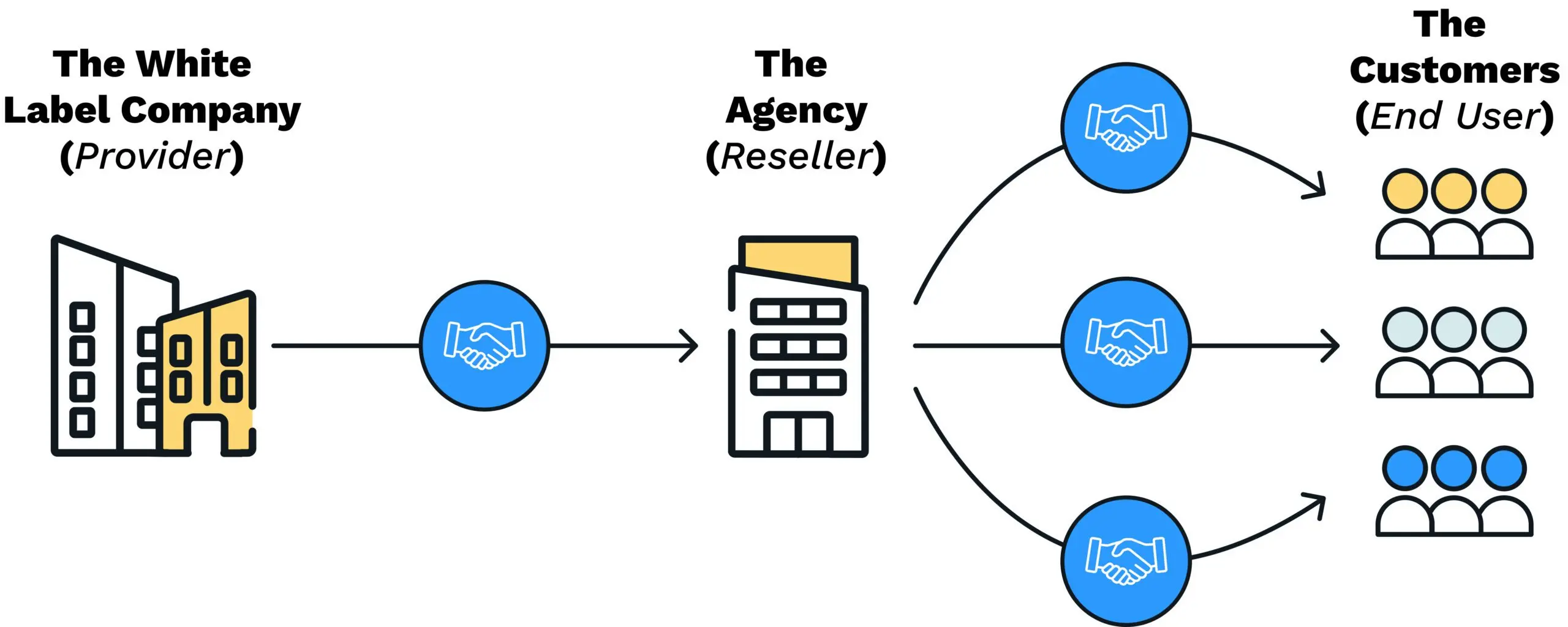
A white label product or service refers to work created by one company that another business rebrands and delivers to end clients under its own banner.
The end customer interacts exclusively with the agency account team, while an external production specialist handles the execution behind the scenes.
This structure differs from traditional freelance delegation in several distinct operational areas:
- The vendor operates under contractual non-disclosure agreements that preserve agency brand equity.
- Deliverables follow standardized agency documentation, code repositories, and brand identity guidelines.
- Project pricing remains structured on fixed wholesale rates rather than unvetted hourly estimates.
- Operational handoffs integrate directly into internal task boards and project ticketing queues.
The client experiences an integrated agency service, while the agency executive team gains complete flexibility over production output.
Identifying the Delivery Capacity Bottleneck
Agency growth stalls when sales intake outpaces production output. When sales pipelines accelerate, founders frequently react by posting job requisitions for salaried personnel.
Hiring full-time employees introduces substantial operational friction. Recruiting developers, designers, and strategists requires weeks of screening, technical vetting, and onboarding before new hires produce billable output.
When internal delivery capacity remains rigid, incoming projects create severe operational bottlenecks. Account teams experience immediate strain across several key metrics:
- Average project turnaround times extend by weeks past agreed deadlines.
- Senior team leads spend billable hours reviewing baseline production errors instead of directing strategy.
- Client revision counts climb due to rushed first drafts produced by overextended staff.
- Internal communication channels fill with urgent scheduling conflicts and resourcing requests.
Salaried payroll represents an inflexible cost. If market demand contracts or two anchor retainers churn simultaneously, that payroll remains fixed on the balance sheet.
The Utilization Formula and Employee Turnover
Operations managers monitor capacity through employee utilization rates. A standard full-time employee supplies roughly 40 hours per week, which equals ~160 hours per month of gross availability.
Subtracting administrative tasks, internal meetings, and professional development leaves a realistic target for billable work.
When agencies attempt to maximize output, they often make the mistake of pushing target utilization above safe operational limits.
- Maintaining a capacity utilization rate above 85 percent on billable work leads to employee burnout, decreased quality, and turnover.
- Operating in the red zone leaves zero buffer time for staff illnesses, personal leave, or unexpected project scope creep.
- Overworked team members produce more bugs, leading to unpaid rework loops that consume additional margins.
- Employee replacement costs often reach fifty percent or more of an employee's annual salary when accounting for recruitment and lost output.
Agencies maintain healthy operational balance by targeting an internal utilization sweet spot of 70 to 80 percent (70–80%).
This buffer provides internal staff with sufficient time for strategy, client communication, and administrative tasks.
Production spillover above this threshold flows directly to an on-demand external partner.
Financial Structuring: Fixed Overhead Versus Variable COGS
The primary financial advantage of using external delivery partners centers on cost accounting.
Salaried team members are recorded as fixed operating expenses on the profit and loss statement. Regardless of whether an agency bills forty hours or zero hours for an employee in a given month, the payroll expense remains static.
Using an external partner shifts production expenses into variable Cost of Goods Sold.
Under a variable COGS financial model, production costs only occur when matched against signed, revenue-generating client contracts.
This structural shift provides critical financial advantages:
- Baseline profitability remains protected during sudden market dips or unexpected client churn without requiring layoffs.
- Gross margins on individual deliverables become predictable because wholesale production costs are locked before client quotes are issued.
- Working capital stays liquid rather than tied up in recruitment fees, software seats, benefits packages, and hardware stipends.
- Management eliminates unallocated bench costs during seasonal dips in client marketing budgets.
Converting production overhead into variable project expenses insulates agency balance sheets from unexpected revenue swings.
Agencies can calculate labor savings and margin improvements using an operational ROI calculator. This tool helps quantify the financial impact of shifting from fixed overhead to variable COGS, enabling data-driven decisions for scaling operations efficiently.
Validating New Service Lines Without Capital Risk
Agency clients frequently request services adjacent to the core agency discipline.
A branding agency is routinely asked for custom web development, while paid search specialists are asked for conversion rate design and landing page builds.
Founders face a difficult choice when these requests emerge: decline profitable business, or hire specialists before consistent demand exists.
Relying on external production partners eliminates this capital risk. Agencies can package and promote new capabilities immediately.
Consider common technical services:
- WordPress custom theme builds and maintenance retainer fulfillment.
- Shopify store builds, third-party application configurations, and checkout modifications.
- Technical website accessibility audits and structured data implementations.
- Headless CMS migrations and modern front-end framework implementations.
Agencies validate real client demand and collect project fees before spending financial reserves on full-time technical specialists.
If client demand for Shopify development proves inconsistent, the agency has committed no long-term balance sheet liabilities.
If demand proves steady and project volume exceeds hundreds of hours per month, leadership can hire internal specialists using proven cash flow.
Managing the Three Stages of Delivery Capacity
Agency capacity management moves through three distinct phases as revenue increases.
Founders must recognize which phase their business occupies to select the appropriate production model.
The Founder Delivery Stage
In early operations, founders and initial partners execute client work directly.
- Billable capacity is capped by the number of working hours the founders can sustain each week.
- Client management, new business generation, and technical delivery compete for the same calendar blocks.
- Service quality remains high, but business growth stops whenever client delivery requires full attention.
The In-House Team Stage
As revenue permits, agencies hire salaried specialists to take over technical execution.
- Fixed overhead increases with each new hire, raising monthly break-even thresholds.
- Project scheduling turns into a balance between overcapacity and underutilized bench time.
- Operational managers face pressure to sell work simply to cover baseline payroll rather than focusing on high-margin projects.
The Hybrid Production Stage
Mature agencies combine a lean internal strategy core with elastic external production partners.
- Internal staff members handle high-level architecture, creative direction, and client relationships.
- Production volume above baseline capacity gets routed to vetted white label specialists.
- The agency maintains steady profit margins across both peak seasons and economic slowdowns.
Selecting and Vetting Production Partners
External partnerships succeed or fail based on the thoroughness of the initial vetting process.
Agency operations teams must evaluate prospective partners on technical competency, operational stability, and communication infrastructure.
Key evaluation criteria include:
- Code standards and clean repository management across open-source platforms like WordPress and proprietary ecosystems like Shopify.
- Strict adherence to pre-agreed service level agreements regarding response times and project milestone delivery.
- Clear disaster recovery, data confidentiality, and intellectual property transfer agreements.
- Documented quality assurance processes that eliminate client-facing bugs before internal handoffs take place.
Operations managers should assign small, paid pilot tasks to prospective vendors before routing critical client deliverables through their pipelines.
A test project provides clear visibility into technical skill, communication speed, and adherence to production schedules.
Building Standard Operating Procedures for External Fulfillment
Integrating an external team into production pipelines requires strict operational systems.
Without documented procedures, handoffs create project confusion and production delays.
Agencies must build documentation covering several operational areas:
- Comprehensive project intake briefs that list scope boundaries, target screen sizes, design assets, and functional prerequisites.
- Standardized task management templates within tools like ClickUp, Asana, or Jira to keep work visible.
- Clear brand guidelines and component design systems that minimize subjective styling decisions.
- Unified version control protocols using platforms like GitHub or GitLab to track code modifications.
When instructions remain unambiguous, external developers complete deliverables accurately without unnecessary review cycles.
Maintaining Quality Control and Brand Firewalls
Agencies protect client relationships by acting as the strategic filter between external technical execution and end-client presentations.
Direct communication between external production teams and end clients must remain strictly regulated or entirely closed.
Operations teams maintain control through structured review checkpoints:
- The internal technical lead conducts a code audit and staging environment review before client presentation.
- The account manager checks deliverables against the original client scope document and functional specification sheet.
- The quality assurance team verifies site speed, responsive layouts across multiple device viewports, and cross-browser stability.
- Client feedback gets consolidated into prioritized action lists rather than scattered notes across multiple emails.
Establishing clear quality gates prevents raw, unreviewed technical work from reaching client stakeholders.
Managing White Label Retainers for Recurring Revenue
One-off web design builds provide cash flow spikes, but ongoing retainers build predictable agency enterprise value.
Agencies scale maintenance, support, and continuous improvement retainers by partnering with external production teams.
Common recurring services delivered through external partners include:
- Monthly plugin updates, core CMS updates, and database maintenance.
- Scheduled technical search engine optimization audits and broken link remediation.
- Security monitoring, uptime tracking, and daily cloud backup management.
- Monthly design change requests and minor content adjustments.
These recurring deliverables require systematic execution rather than bespoke creative strategy.
Routing maintenance tickets to an external support desk frees internal team members to concentrate on high-tier retainers and strategic advisory projects.
Calculating Profit Margins on White Label Projects
Pricing white label services requires an understanding of wholesale costs, internal management time, and end-client value.
Agencies that mark up wholesale labor by an arbitrary percentage often fail to account for internal management drag.
To protect margin targets, operations teams should apply a standard cost allocation formula:
- Identify the total wholesale cost charged by the external production partner.
- Add internal account management and quality assurance time, budgeted at internal hourly cost rates.
- Factor in an operational buffer for revisions, scope verification, and communications overhead.
- Set the client-facing project price to achieve a gross profit margin of fifty to sixty-five percent.
This financial buffer ensures that project management costs do not erode the agency's final net margin.
Preventing Operational Bottlenecks in Production Pipelines
Even with external partners, operations teams encounter delivery friction if management workflows remain disjointed.
Bottlenecks shift from technical development to account management and client communication if clear guidelines are absent.
Operations managers resolve pipeline blockages by implementing structured management practices:
- Limit work-in-progress limits for each account manager to avoid communication paralysis.
- Establish clear turnaround windows for client asset handoffs and feedback submissions.
- Standardize scope change orders so unexpected client requests generate additional revenue and schedule adjustments automatically.
- Hold weekly capacity audits to balance incoming project queues against external vendor capacity.
Keeping production workflows transparent helps operational leads identify delays before project schedules slip.
The Cultural Impact of External Fulfillment on Internal Teams
Agency founders often worry that introducing external production partners will damage internal team culture or cause insecurity among staff.
When implemented with transparent communication, external partnerships improve team morale and retention.
Internal team members benefit directly from elastic support:
- Salaried developers spend less time fixing routine bugs and more time architecting complex custom systems.
- Account managers deliver projects on time, reducing high-stress client escalations and emergency weekend work.
- Strategy teams run customer workshops and creative direction sessions without worrying about baseline execution capacity.
- The agency maintains consistent, predictable work schedules that prevent physical and mental exhaustion.
Framing external partners as an elastic support engine protects internal employees from excessive workloads and administrative stress.
Strategic Agency Growth: Focusing on Sales and Client Strategy
The true value of an elastic delivery model lies in where agency leadership spends its time.
When founders remain trapped managing technical delivery, sales operations and strategic planning get neglected.
By establishing dependable external execution pipelines, leadership shifts focus to high-leverage activities:
- Refining client acquisition processes and closing higher-tier client retainers.
- Developing proprietary frameworks, service methodologies, and intellectual property.
- Deepening senior relationships with key enterprise accounts to increase lifetime value.
- Evaluating strategic mergers, acquisitions, and service expansions across new markets.
Agencies scale by decoupling top-line sales growth from internal payroll expansion.
What Is White Label Fulfillment?
White label fulfillment is an operational model where an external vendor produces technical, creative, or strategic deliverables that an agency rebrands and presents to its clients.
The vendor remains invisible to the end customer, operating under non-disclosure agreements and matching the agency's quality standards.
This model allows agencies to expand their service catalog and delivery capacity without adding permanent internal payroll.
How Does White Label Fulfillment Protect Agency Margins During Market Dips?
Salaried employees represent fixed operational overhead that must be paid regardless of monthly client billings.
When client retainers churn or market demand drops, fixed payroll expenses quickly erode agency cash reserves.
White label fulfillment converts these fixed payroll costs into variable costs that only occur when funded by signed client contracts.
If client demand drops, production expenses drop automatically, protecting baseline agency profitability without requiring staff layoffs.
What Internal Utilization Rate Should Operations Managers Target?
Agency operations managers should target an internal team utilization rate between 70 and 80 percent on billable client work.
Pushing utilization rates above 85 percent removes operational buffer time, leading directly to employee burnout, high turnover, and increased production errors.
The 20 to 30 percent non-billable buffer allows internal staff to handle strategy, administrative tasks, internal training, and unexpected project scope adjustments.
Production volume that exceeds this 80 percent threshold should be routed to external white label partners.
Can Agencies Deliver WordPress and Shopify Projects Without In-House Developers?
Agencies can deliver technical website builds across both WordPress and Shopify by using specialized white label development partners.
The internal agency team leads discovery, information architecture, design direction, and client communication.
The external technical partner handles theme development, custom code implementation, third-party integrations, and performance testing.
This approach allows design, marketing, and strategy agencies to sell complex technical websites without managing internal engineering teams.
How Do Operations Teams Prevent Scope Creep With External Partners?
Operations teams prevent scope creep by building clear, detailed functional specifications before submitting projects to external partners.
The agency must define all deliverables, page templates, responsive design requirements, and third-party integrations in writing.
If a client requests features outside this initial specification, the account team issues a formal change order to the client.
This ensures that any additional wholesale costs from the fulfillment partner are offset by matching client revenue.
When Should an Agency Transition From White Label Partners to Full-Time Hires?
Agencies should transition from external partners to internal salaried staff when a specific service line demonstrates consistent, predictable client demand over multiple quarters.
If an agency consistently bills more than 160 hours per month for a specialized skill set and holds a healthy pipeline of future work, hiring an internal specialist can improve gross profit margins.
Using external partners first allows agencies to test client demand and build reliable cash flow before taking on long-term payroll obligations.
Conclusion
Scaling a digital agency requires founders and operations teams to decouple revenue generation from internal payroll expansion.
Relying entirely on salaried hires to meet fluctuating client demand creates operational bottlenecks, strains profit margins during market downturns, and pushes internal staff past safe utilization limits.
By building a hybrid delivery infrastructure powered by trusted white label fulfillment partners, agency leaders convert rigid fixed overhead into flexible variable COGS.
This operational framework maintains internal team utilization within a sustainable 70 to 80 percent range, preserves gross margins, and eliminates delivery delays.
Operations managers can validate new capabilities across platforms like WordPress and Shopify with zero capital risk, all while protecting team morale.
Ultimately, building an elastic production model gives agency founders the structural freedom to step away from daily production firefighting and dedicate their full attention to high-value client strategy, predictable sales development, and long-term agency equity.
About the Author

Brian Keary
Founder & Lead Developer
Brian is the founder of BKThemes with over 20 years of experience in web development. He specializes in WordPress, Shopify, and SEO optimization. A proud alumnus of the University of Wisconsin-Green Bay, Brian has been creating exceptional digital solutions since 2003.
Expertise
Writing since 2003