In the early days of the internet, search engines were simple library catalogs that relied heavily on keyword density. If you wanted to rank for a term, you simply repeated it until the page was saturated. Today, the digital landscape has shifted toward a more sophisticated model. Modern search engines are no longer just scanners of text; they are interpreters of intent. This transition is known as Semantic SEO, a strategy that prioritizes the meaning and context behind a query rather than the mechanical frequency of specific words.
For the broader design, performance, accessibility, and navigation framework behind a useful website, start with our complete user experience design guide.
The Evolution of Search Intent
The journey toward semantic understanding began in earnest with the Google Hummingbird update in 2013. This marked a departure from keyword-matching toward conversational queries. Google began to look at the entire question a user asked rather than picking out individual words. This shift was accelerated by the 2015 introduction of RankBrain, which utilized machine learning to help the search engine interpret queries it had never encountered before. By 2019, the release of BERT brought a new level of nuance to language processing, allowing algorithms to understand the relationships between words in a sentence and the underlying context of a search.
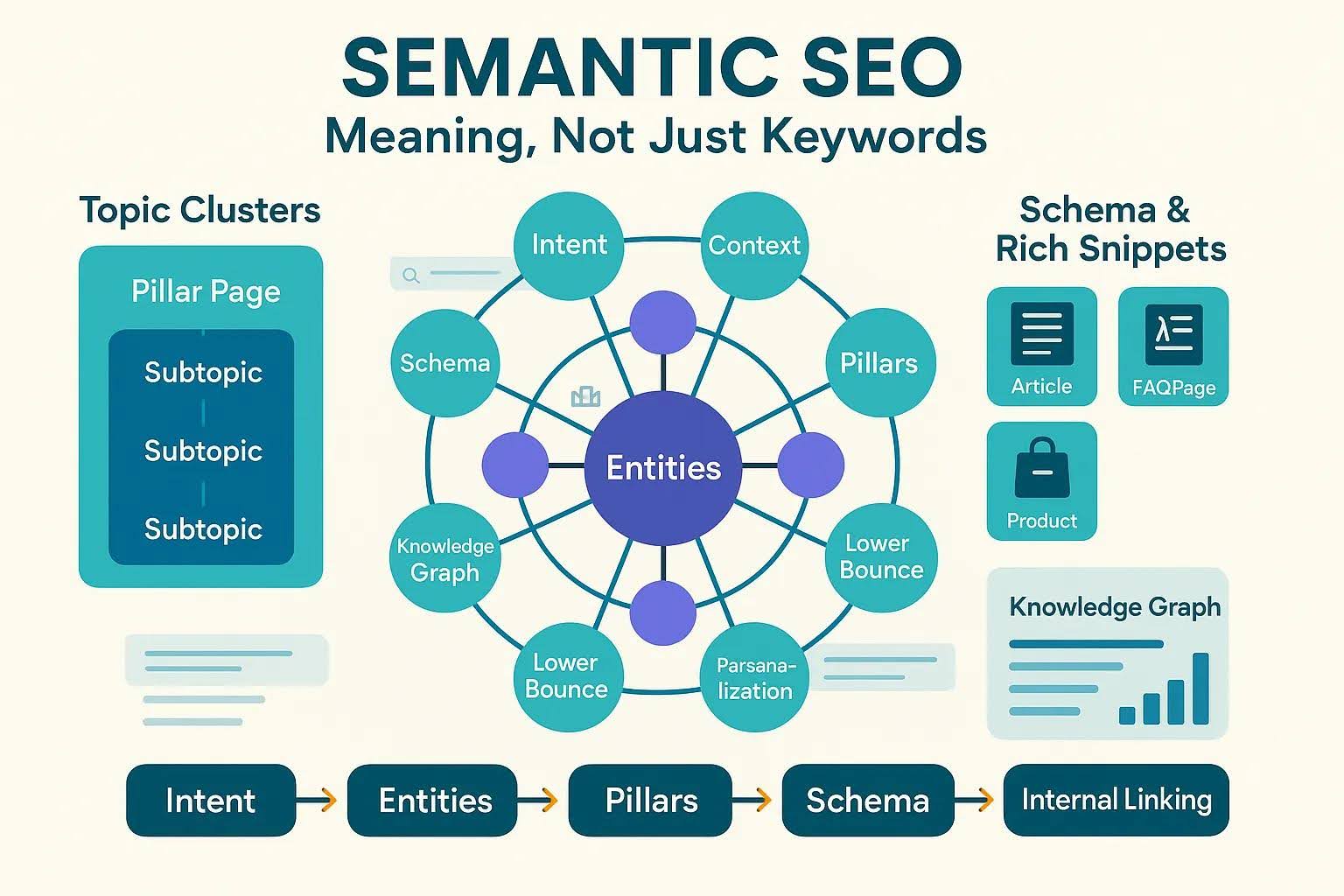
The core of this evolution is Natural Language Processing (NLP). By leveraging NLP, search engines can now distinguish between a user looking for "Tesla" the car company and "Tesla" the electrical unit, or even differentiate between "Elon Musk" the person and his various business ventures. This ability to map relationships between entities—people, places, and things—is how search engines provide the most relevant, helpful results to users.
Entities and the Knowledge Graph
A central component of Semantic SEO is the concept of an entity. Think of an entity as a distinct, unique concept that a search engine can identify. When you search for information on a topic, Google’s Knowledge Graph connects various entities to provide immediate, credible answers. For instance, if you search for a historical figure or a scientific concept, the search engine pulls data from sources like Wikipedia to build a snapshot of that entity on the search results page.
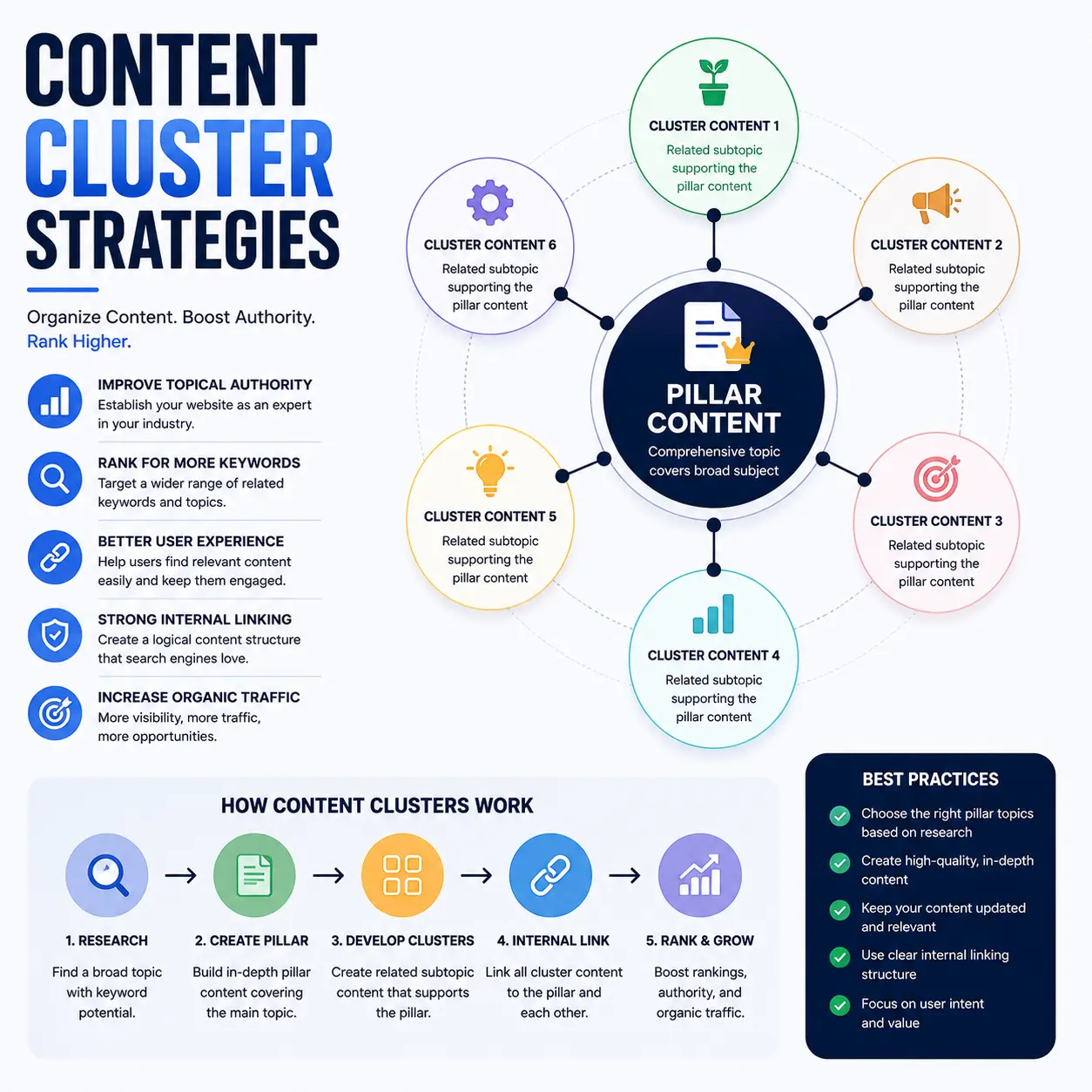
Mapping these relationships is vital. If a website establishes itself as a hub of information for specific entities, it builds topical authority. At BKThemes, experts like Brian Keary emphasize that creating content that covers a broad range of related topics helps search engines categorize your site as a trusted source. This is effectively achieved through topic clusters and pillar pages. A pillar page acts as a comprehensive guide on a broad topic, while clustered content focuses on the specific sub-topics or entities that support the main theme, all linked together through a robust internal linking structure. To learn more about this read our content cluster strategy guide.
Improving User Experience Through Meaning
Semantic SEO is not just about pleasing an algorithm; it is about providing a better experience for the human reader. When content directly answers the intent behind a search, users are less likely to bounce back to the search results page. This reduction in bounce rates signals to search engines that the page is providing high-quality, relevant information.
Structuring data is a fundamental part of this process. Using schema markup allows website owners to provide explicit clues about the meaning of their content. Whether it is a recipe, a product review, or a local business listing, structured data helps search engines generate rich snippets—those visually appealing search results that often include images, ratings, or pricing information. These snippets not only improve visibility but also provide users with immediate value before they even click the link.
Preparing for the Future of Search
The way we interact with technology is changing. Voice search is a prime example of why semantic understanding is necessary. Unlike typing a short query like "weather," a voice search query is often longer, more conversational, and phrased like a natural question. Because voice assistants need to provide a single, accurate answer, they rely heavily on semantic clarity to parse what the user truly needs.
Furthermore, the rise of generative AI models like ChatGPT and Gemini is fundamentally altering how users obtain information. These tools are designed to be context-aware and highly conversational, moving search away from a list of blue links toward a direct, synthesized response. To stay relevant in this environment, content must be structured to answer the "who, what, where, and why" of a topic comprehensively. As noted in insights from the University of Wisconsin-Green Bay, information literacy and clear, organized content have never been more critical to navigating the digital information ecosystem.
Conclusion
Semantic SEO is the bridge between rigid keyword optimization and the fluid, human-centric nature of modern search. By focusing on intent, context, and the relationships between entities, content creators can ensure their work reaches the right audience at the right time. Whether through implementing schema markup, building topical authority, or simply writing for the user’s needs rather than the search engine’s metrics, the goal remains the same: provide clear, valuable information. As search technology continues to evolve, those who prioritize meaning over mechanics will be the ones who thrive in the current digital landscape. For more detailed insights on these strategies, you can explore the original analysis.
What is Semantic SEO?
Semantic SEO is a search engine optimization strategy that focuses on the meaning, context, and user intent behind search queries rather than simply targeting specific keyword frequencies. It involves structuring content so that search engines can easily understand the relationships between different topics and entities.
Why are entities important for SEO?
Entities are the people, places, and things that search engines use to map information in the Knowledge Graph. By identifying and connecting these entities within your content, you help search engines understand the broader context of your site, which increases your topical authority and improves your chances of appearing in relevant search results.
How does schema markup help?
Schema markup is a form of structured data that you add to your website's code to explicitly tell search engines what your content represents. This helps the search engine generate rich snippets, which can make your result stand out in search results and provide users with immediate, helpful information.
What is the role of topic clusters?
Topic clusters involve creating a main "pillar" page that covers a broad subject in depth, supported by several smaller pages that cover specific sub-topics. This strategy builds strong internal linking and helps search engines see your site as a comprehensive, authoritative source for that subject matter.
How does AI affect search?
Generative AI tools like ChatGPT and Gemini are making search more conversational and context-aware. Because these models are designed to understand nuances in human language, they prioritize content that answers questions comprehensively and clearly, making semantic optimization more important than ever.
Does Semantic SEO help with voice search?
Yes, Semantic SEO is critical for voice search. Voice queries are typically longer and more conversational than typed queries. By focusing on the intent and context of a user's question, you are better positioned to provide the natural, direct answers that voice assistants require.
About the Author

Brian Keary
Founder & Lead Developer
Brian is the founder of BKThemes with over 20 years of experience in web development. He specializes in WordPress, Shopify, and SEO optimization. A proud alumnus of the University of Wisconsin-Green Bay, Brian has been creating exceptional digital solutions since 2003.
Expertise
Writing since 2003