
WordPress conversion rate optimization (CRO) turns qualified visitors into leads and customers by eliminating technical friction, streamlining checkout flows, and clarifying value propositions. The median website conversion rate across industries is 2.35%. Site owners convert significantly less revenue when underperforming against this metric. Conversion rates are calculated by dividing total goal completions by total unique visitors and multiplying by 100. This guide breaks down seven actionable strategies to audit, test, and scale conversions on your WordPress site.
Strategy 1: Establish a Continuous Optimization Framework
Many site owners fall into the trap of viewing optimization as a one-time task. However, the most successful platforms—those that achieve exponential growth—treat it as a continuous loop of analysis and implementation. For instance, a recent industry case study highlighted a business that successfully increased its conversion rate from a stagnant 0.3% to a robust 4.8% in just 30 days. This transformation was not the result of a lucky guess, but rather the outcome of disciplined site optimization, including better navigation, faster load times, and more intuitive calls-to-action.
Strategy 2: Diagnose Common WordPress Conversion Bottlenecks
Before you can fix your conversion rate, you must identify why visitors are leaving without taking action. Poor site speed is often the primary suspect. In an era where users expect near-instant gratification, a sluggish page can cause bounce rates to soar. When a site takes longer than three seconds to load, a large percentage of your audience will simply hit the back button.
Another common issue is the lack of clear, persuasive calls-to-action (CTAs). If a visitor does not know exactly what they should do next, they will likely do nothing at all. Furthermore, the absence of social proof can make a brand feel untrustworthy. According to modern digital marketing research, social proof—such as customer reviews, testimonials, and trust badges—can increase conversion rates by over 50%. When visitors see that others have had a positive experience, their hesitation to purchase or sign up diminishes significantly.
Strategy 3: Run Technical Audits for Core Web Vitals
To improve your site, you must rely on data rather than intuition. Several industry-standard tools are essential for conducting a thorough conversion audit. Tools like Google PageSpeed Insights and GTmetrix provide granular reports on how your site performs across different devices. Tracking Google's Core Web Vitals metrics—specifically Largest Contentful Paint (LCP) and Interaction to Next Paint (INP)—is critical, as delayed load times and sluggish touch responsiveness directly drive conversion drop-off, particularly on mobile devices. These tools don't just tell you that your site is slow; they point to specific scripts, image sizes, or server issues that are dragging down your performance.
By integrating these tools into your workflow, you can identify technical bottlenecks that hinder user flow. For example, if your checkout page is lagging, it is likely leaking potential revenue. Once you have the data, you can prioritize fixes that have the highest impact on your bottom line. Regular audits ensure that as you add new plugins or features to your WordPress site, you aren't inadvertently introducing new barriers to conversion.
Strategy 4: Deploy Controlled A/B Split Tests
A/B testing is perhaps the most critical method for comparing different versions of a webpage to see which one performs better. By changing one element at a time—such as the color of a button, the phrasing of a headline, or the placement of an image—you can gather empirical evidence on what resonates with your audience. Leveraging native WordPress split-testing tools like Nelio A/B Testing allows you to run experiments directly within your WordPress dashboard without relying entirely on generic third-party platforms.
When conducting these tests, it is important to have a clear hypothesis. Are you testing to see if a shorter form increases sign-ups, or if a video testimonial builds more trust than text? Keep your tests focused so you can clearly attribute any changes in conversion to the specific variable you modified. Over time, these small, incremental gains compound, leading to significant improvements in your overall conversion rate.
Strategy 5: Implement Automated Email Capture Funnels
Not every visitor is ready to convert on their first visit. Some users need more information, while others are in the research phase of their journey. This is where email automation becomes an indispensable part of your strategy. By capturing visitor information through lead magnets or newsletters, you can guide them down a funnel at their own pace.
Platforms like MailerLite and ConvertKit allow you to create automated sequences that deliver value to your subscribers. Whether it is a welcome series, a product recommendation, or a helpful educational resource, these tools keep your brand top-of-mind. For more complex enterprise needs, companies often look toward tools like Braze or HubSpot, which offer advanced segmentation and behavioral tracking. By nurturing these relationships, you turn one-time visitors into long-term customers, effectively raising your conversion rate over time.
Strategy 6: Eliminate Plugin Bloat and Database Latency
WordPress remains a powerhouse for businesses looking to scale because of its flexibility and deep ecosystem of plugins. However, with great power comes the responsibility of maintenance. As you scale, it is vital to ensure that your site remains lean. Too many active plugins can bloat your code, leading to the very speed issues you are trying to avoid.
When working within the WordPress ecosystem, always prioritize themes and tools that are performance-oriented. As discussed in Conquering the Conversion Crisis: My WordPress Journey, the choice of your development foundation can dictate your long-term success. By selecting efficient frameworks and maintaining a clean backend, you allow your content and your offers to take center stage, unobstructed by technical debt.
Strategy 7: Optimize Mobile UX and Checkout Flows
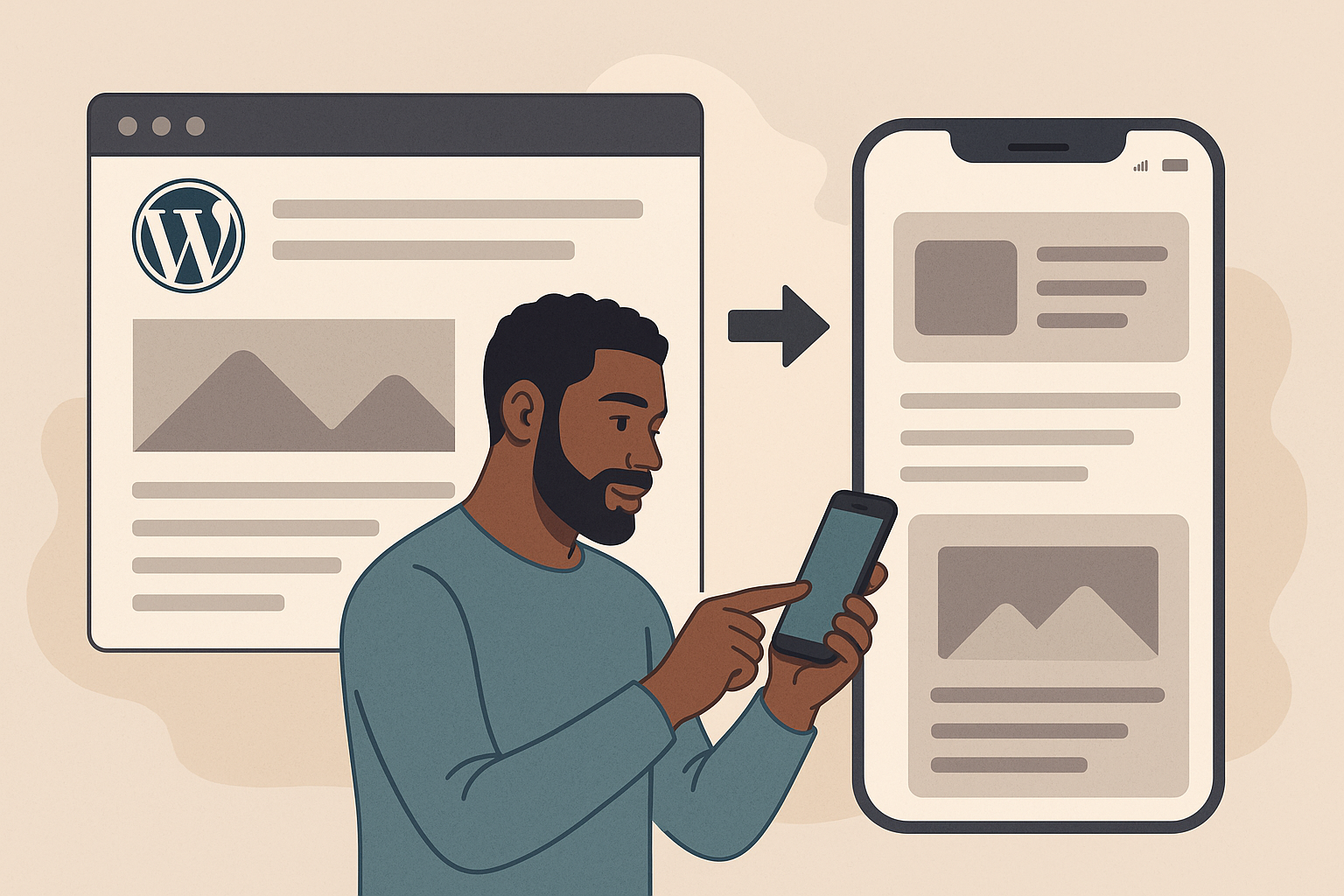
User experience (UX) design is the silent architect of conversions. If your site is difficult to navigate, users will feel frustrated and leave. A clean, intuitive layout that guides the eye toward your primary objective is essential. This is particularly important for mobile users, who now account for the majority of web traffic. Ensuring that your CTAs are large, tappable, and easily visible on smaller screens is a non-negotiable aspect of modern web design.
In e-commerce, optimizing user flows directly targets cart abandonment. For WooCommerce stores, implementing one-page checkouts streamlines the purchasing process by eliminating multi-step form fatigue, while defaulting to guest checkout removes account creation barriers that often cause buyers to abandon their carts.
Additionally, consider the psychology of your visitors. What are their pain points? How can your product or service solve them? By aligning your design with the needs and desires of your audience, you create a seamless journey from the landing page to the checkout screen. A frictionless experience is one of the most effective ways to build trust and encourage repeat business.
Frequently Asked Questions (FAQ)
Why Should I Focus on Conversion Rates?
Focusing on conversion rates is the most efficient way to grow your business without necessarily increasing your marketing spend. When you improve your conversion rate, you are effectively getting more value out of the traffic you already have. This is often more cost-effective than paying for more ads or trying to rank for highly competitive keywords. By optimizing your site for the visitors you already receive, you create a sustainable model for growth that benefits your business for years to come.
How Often Should I Run A/B Tests?
There is no "perfect" frequency for A/B testing, but it should be a consistent part of your marketing strategy. The key is to run tests only when you have enough traffic to achieve statistical significance. If you have a low-traffic site, you might run one test per month. If you have high traffic, you might run multiple tests simultaneously on different pages. The goal is to keep learning and iterating rather than testing for the sake of it.
What is the Most Important Factor in Conversion?
While there is no single "magic bullet," site speed and clear value propositions are generally considered the most critical. If a user cannot access your site quickly, they will not see your offer. If they can access it but do not understand why they should care, they will not convert. Start by ensuring your site is fast and your message is clear, then move on to optimizing secondary elements like button colors and layout.
Can Social Proof Really Increase Conversions by 50%?
Yes, social proof is one of the most powerful psychological triggers in marketing. When potential customers see that others have had a positive experience, it reduces their perceived risk of making a purchase. Whether it is through star ratings, video testimonials, or case studies, showing that you are a trusted entity can drastically improve your conversion metrics. It validates the visitor's choice and gives them the confidence to proceed.
What Tools Should I Use for My Conversion Audit?
For a comprehensive audit, you should use a combination of performance and behavior tools. Google PageSpeed Insights and GTmetrix are excellent for technical speed and performance metrics. For understanding user behavior, consider using tools that offer heatmaps or session recordings. These will show you exactly where users are clicking, where they are scrolling, and where they are dropping off, giving you the insights needed to make informed changes.
How Does Email Automation Help with Conversion?
Email automation helps by keeping your brand in front of potential customers who are not yet ready to buy. It allows you to provide ongoing value, build authority, and stay top-of-mind. By segmenting your audience and sending targeted emails based on their interests or behavior, you can gently nudge them toward a purchase. It turns a cold lead into a warm one, significantly increasing the likelihood of a conversion over time.
Conclusion
Optimization is a journey that requires patience, data, and a commitment to the user experience. By following these strategies, you can transform your WordPress site from a simple online presence into a powerful conversion machine. Start small, test often, and always prioritize the needs of your visitors, and you will see the results reflected in your metrics.
Looking for implementation support? Visit our web development services page for the full service overview.
About the Author

Brian Keary
Founder & Lead Developer
Brian is the founder of BKThemes with over 20 years of experience in web development. He specializes in WordPress, Shopify, and SEO optimization. A proud alumnus of the University of Wisconsin-Green Bay, Brian has been creating exceptional digital solutions since 2003.
Expertise
Writing since 2003