
Link building is the intentional work of earning links from other sites to your site. It remains a core SEO tactic because links pass authority, relevance, and referral traffic that search engines use when ranking pages. In this guide, we explain why ethical, advanced link building matters in 2024, how to create content that naturally attracts links, which outreach and technical methods deliver the best outcomes, and how to measure and protect a healthy backlink profile. Many teams chase noisy, low-value links that give short-term lift and long-term risk; this article offers practical, principle-first tactics that emphasize topical relevance, editorial value, and measurable ROI. We cover guiding principles, content formats that attract quality links, outreach workflows like broken-link and competitor-driven approaches, and advanced plays such as local link building, digital PR, and link reclamation. You’ll also find simple tables and templates to make these methods actionable for SMBs and e-commerce teams that want to scale responsibly.
Core principles for effective link building
Effective link building rests on relevance, authority, and naturalness. Prioritize editorial links from sites that share topical context and deliver value to readers—those links send the strongest signals and bring qualified referral traffic. Search engines treat links as endorsements, but endorsement strength depends on the referring site’s authority, topical fit, anchor text, and placement. Choosing quality over volume reduces risk and creates compounding returns through sustained traffic and visibility. Below is a short checklist of principles to apply to every campaign.
Successful link programs follow a few simple rules :
- Relevance first: aim for links from sites that match your topic and audience.
- Editorial value: earned in-body links in useful content outperform boilerplate or footer links.
- Diverse referring domains: a healthy profile shows many reputable sites, not many links from one source.
- Natural anchor-text mix: favor branded or descriptive anchors and avoid over-optimization.
- Placement matters: links inside body copy are more valuable than hidden or obscure placements.
- Compliance and ethics: stick to search engine guidelines and avoid manipulative networks.
These principles guide tactic selection and outreach priorities; the next section explains the measurable benefits backlinks
Why backlinks matter for SEO and site authority
Think of backlinks as weighted endorsements that help search engines judge a page’s authority and topical relevance—factors that influence indexing and rankings. Links from high-authority sites in your niche pass trust and topical signals that can lift organic visibility. Practically, strong backlinks increase referral traffic and often speed up indexation of new content, improving impressions and click-through rates. For site owners, each editorial backlink is an asset that can drive targeted visits and conversions over time—so link acquisition is a long-term investment, not a quick fix.
With that in mind, we can evaluate which backlink types are worth prioritizing in your campaigns.
Which backlink types deserve your focus?
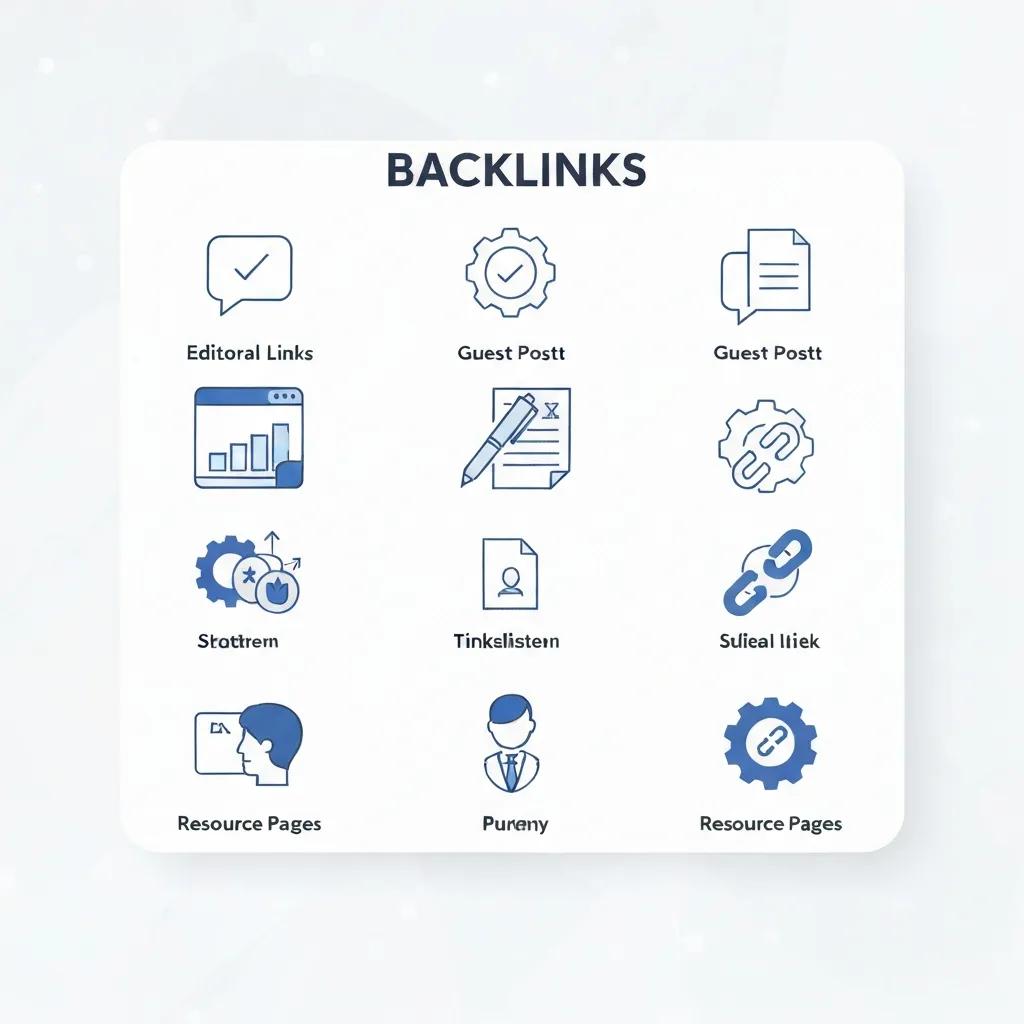
Editorial (in-body) links—earned naturally inside relevant content—are the highest-value targets because they signal genuine endorsement and context. Guest posts on respected niche sites, placements on curated resource pages, and links to original research typically outperform generic directories or UGC links in authority and referral quality. Low-value options like generic directories, paid link networks, or mass-bought backlinks carry higher risk and shorter lifespans; vet or avoid them. The table below compares common link types, their authority potential, and typical use cases.
| Backlink Type | Authority Potential | Typical Use Case |
|---|---|---|
| Editorial (in-body) | High | Original research or expert commentary on niche sites |
| Guest Post | Medium–High | Thought leadership pieces on relevant blogs |
| Resource Page | Medium | Reference links in curated lists or tools pages |
| Directory / Citation | Low–Medium | Local citations or vetted niche directories |
| UGC / Forum Link | Low | Community engagement; often nofollow or UGC-tagged |
Prioritizing editorial, guest, and resource links helps campaigns grow with lower risk and stronger long-term ROI than volume-focused tactics.
If you prefer outside help, BKThemes offers ethical link building as part of its SEO services to support teams that need implementation while keeping editorial standards intact. Consider external support once you’ve defined a principle-led campaign.
How to create content that earns high-quality backlinks

Link-worthy content solves a real problem, offers fresh insight, or packages practical utility that other authors will reference. Examples are original data studies, interactive tools, deep how-to guides, and shareable visuals. The core value is a clear reason for others to cite your work—unique data, proprietary analysis, or downloadable assets that save time. Investing in depth and distribution makes outreach credible because you can point to genuinely useful resources. Below are the top formats and a short promotion playbook for earning editorial links.
Top link-worthy content formats:
- Original research and data studies: unique datasets and insights others cite.
- Interactive tools and calculators are useful assets that attract links and repeat visits.
- Long-form cornerstone guides : comprehensive resources that become long-term references.
- Infographics and visualizations: easy-to-share visuals for social and editorial use.
- Templates and downloadable assets: practical tools that practitioners use and link to.
Creating the asset is only half the work—pair it with a targeted promotion plan to reach link authors and journalists.
Top content marketing and link-bait tactics
Good link bait combines a noteworthy idea with a disciplined distribution plan targeting authors, curators, and influencers. Start with a distinct angle—new data, contrarian insight, or a practical tool—then prepare outreach assets: a short pitch, a mini media kit, and visual snippets to ease citation. Do selective pre-launch outreach to a few high-value contacts, then broader outreach post-publish to niche blogs, resource curators, and industry roundups. Personalization and follow-up increase conversion rates. Offer easy ways to use your work—quotes, data snippets, or guest content —to make linking frictionless.
How guest blogging builds ethical backlinks
Guest blogging earns contextual backlinks when you publish original, valuable articles on reputable niche sites and include natural links to relevant resources or case studies on your site. Start by finding hosts with aligned audiences and clear editorial standards, then pitch specific, audience-first ideas. In the article, prioritize value over link placement: include a small number of contextual links that genuinely help readers and use the author bio for brand attribution rather than stuffing anchor text. Done right, guest posts build relationships and repeat linking opportunities while staying within search guidelines.
Scalable outreach workflows and technical discovery help keep quality high as you scale; we cover those next.
Outreach and technical methods that produce results
Outreach turns opportunities into links, while technical discovery surfaces the most efficient targets. Proven outreach workflows include broken-link reclamation, unlinked-mention outreach, and competitor-driven targeting—supported by tools for prospecting and relationship management. Technical discovery relies on crawlers, backlink explorers, and search operators to build a prioritized prospect list; ethical automation can speed personalization without replacing human judgment. The table below maps common methods to effort, expected quality, and typical tools.
The outreach methods table highlights effort versus expected quality.
| Method | Effort Level | Expected Link Quality & Typical Tools |
|---|---|---|
| Broken link building | Medium | High-quality editorial links; tools: site crawlers, backlink explorers |
| Competitor backlink replication | Medium | Medium–High; tools: backlink analysis platforms, content-gap mapping |
| Unlinked brand mention reclamation | Low–Medium | Medium; tools: mention trackers, manual outreach |
| Digital PR (journalist outreach) | High | High-authority media links; tools: PR databases, HARO |
| Scalable guest outreach | Medium | Medium; tools: prospecting software, outreach CRM |
Pick a mix that balances team capacity, topical relevance, and the authority of target sites. The following sections walk through key tactics step by step.
How broken link building reclaims valuable opportunities
Broken link building finds authoritative pages linking to dead resources, then proposes one of your relevant assets as a replacement. The process: discover (crawl or use search operators), match (map broken pages to your content), pitch (personalized outreach explaining the fix), and follow up (friendly reminders and extra value). Typical tools include site crawlers, backlink explorers, and browser extensions that reveal outbound links. Conversion rates vary, but well-targeted, helpful outreach often gets positive responses—frame it as maintenance, ot a sales pitch.
This approach pairs well with competitor analysis to surface more high-value prospects.
The role of competitor backlink analysis
Competitor backlink analysis shows where similar sites earn links and reveals repeatable opportunities you can pursue with comparable or better content. Export competitor referring domains, filter by topical relevance and authority, prioritize by traffic potential, and identify content gaps you can fill. Backlink explorers and gap-analysis tools speed this work and help rank opportunities by ease versus impact. Turn the findings into a prioritized outreach plan listing the asset, pitch, and contact for each target.
With those operations in place, you can layer in advanced and localized strategies for broader impact.
Advanced and niche link-building strategies for 2024
In 2024, the best campaigns mix classic outreach with digital PR, local partnerships, and diligent reclamation that reflect newsroom behaviors and evolving algorithms. Local SEO link building —citations, sponsorships, event pages, and hyperlocal content—helps multi-location businesses create location signals for the local pack. Digital PR uses timely data and newsworthy angles to attract high-authority media links, while link reclamation recovers lost links and converts unlinked mentions into formal backlinks. Together, these approaches broaden topical authority and diversify referring domains for more resilient rankings.
How local SEO link building helps small businesses
Local link building focuses on community relevance: curated local directories, partnerships with community organizations, sponsorship pages, and localized event coverage create signals search engines use for local rankings and map-pack visibility. Produce city-specific guides, customer case studies with a local angle, and event recaps that local media and partners can naturally link to. The local outreach checklist: find trusted local publishers, pitch mutually beneficial coverage (sponsorship or events), and keep NAP/citation data consistent. These tactics boost local visibility and drive qualified foot traffic.
How digital PR and link reclamation strengthen your profile
Digital PR earns high-authority links by pitching data-driven stories, unique studies, or expert commentary to journalists and industry outlets. Link reclamation finds mentions or previously live links that were removed and asks for reinstatement. Digital PR workflow: ideation (newsworthy angle), asset creation (press-ready visuals and key quotes), targeted journalist pitching, and follow-up with tailored materials. For reclamation, monitor mentions and lost links, then send a polite outreach with an easy way to restore the link. Combined, these tactics raise link authority and reduce outbound leakage of backlink equity.
How to measure and maintain link-building success
Measure KPIs that connect link acquisition to business outcomes: new referring domains, referral traffic, domain rating/authority of linking sites, anchor-text diversity, and conversions from referrals. Regular audits flag toxic or low-value links and keep your profile diverse; schedule checks to detect and address risk. Map each KPI to a tool and reporting cadence so teams can assess progress and decide on tactical shifts. The table below pairs common KPIs with tools and suggested monitoring frequency to help you standardize reporting.
KPIs and recommended tools for link-building monitoring.
| KPI | Measurement Tool | Benchmark / Recommended Frequency |
|---|---|---|
| New Referring Domains | Backlink explorer platforms | Monthly, aim for steady month-over-month growth |
| Referral Traffic | Web analytics (referral reports) | Weekly to monthly; track conversions from referrals |
| Domain Authority / DR | Domain rating tools | Monthly, prioritize links above your domain median |
| Anchor Text Distribution | Backlink auditors | Quarterly, ensure a natural, branded-heavy mix |
| Lost / Broken Links | Site crawlers & alerts | Weekly, reclaim or replace high-value lost links promptly |
These KPIs help teams judge link quality and decide when to remediate or disavow without overreacting to normal churn.
For a deeper dive in "Domain Authority" and how links act as "votes" of confidence.
Key metrics to track for link building
Track new referring domains, organic referral sessions, authority of referring domains, anchor-text variety, and conversions from referral traffic. Each metric has a purpose: referring domains show reach and diversity, referral sessions show direct traffic impact, domain authority proxies link value, anchor checks spot over-optimization, and conversions measure business ROI. Set benchmarks from historic performance and industry context, report monthly, and review strategy quarterly. This metric-driven approach links acquisition activity to real business outcomes and supports scalable decision-making.
Consistent tracking also helps you respond quickly to algorithm changes, which the next section covers.
Staying ahead of Google updates that affect link building
Best practices include monitoring official Google channels and reputable industry sources, auditing link profiles after major announcements, and maintaining an ethical link profile focused on editorial value. After an update, run targeted audits to spot sudden inflows of low-quality links, check anchor-text distributions, and remediate or disavow only when you see clear manipulative patterns. Keep a diversified outreach mix and nurture long-term relationships with authoritative sites to reduce volatility. These habits lower downside risk and make it easier to adapt without sacrificing long-term gains.
Ethical link building and its long-term impact
Ethical link building focuses on targeted, relevant, editorially earned links that comply with search guidelines—delivering long-term gains in authority, traffic, and brand visibility while minimizing penalty risk. The approach is simple: create assets worth citing, be transparent about sponsored relationships, and avoid schemes that prioritize volume over context. Over time, earned citations from trusted sources compound into topical authority and referral networks that sustain organic growth. Below are succinct best practices that capture ethical link-building behaviors and how they compare with bulk backlink tactics.
Core ethical practices and the benefits they deliver: blog
- Create genuinely linkable assets that attract editorial citations.
- Personalize outreach and build real relationships instead of trading links.
- Moderate anchor-text and diversify referring domains.
- Audit links regularly to remediate risks and reclaim lost equity.
Below we contrast ethical strategies with bulk backlink services so you can weigh trade-offs and risks.
Ethical strategies vs. bulk backlink services
Ethical strategies are deliberate and relevance-driven—seeking links from niche-relevant domains with editorial context. Bulk backlink services focus on volume and often deliver non-niche or low-quality links that can temporarily inflate metrics but expose you to long-term penalty risk. Bulk approaches may create short-term ranking gains, but they frequently come from unrelated pages, low-authority domains, or link networks that search engines devalue. For example, some marketplaces sell mass backlink packages promising thousands of non-niche links for minimal cost (e.g., a “Bulk Backlinks” pack at $5.00), which can be tempting but risky. Ethical link building accepts slower initial growth in exchange for durable authority; weigh quick wins against potential remediation costs.
Why relationship building matters for sustainable link acquisition
Relationships turn single placements into ongoing pipelines of editorial opportunities. Practical playbooks include offering consistent value—exclusive data, expert commentary, or co-created pieces—keeping a respectful outreach cadence, and using follow-ups that fit editors’ workflows. Over time, these relationships reduce friction, improve placement quality, and open doors to high-authority outlets that rarely respond to cold outreach. If you need help operationalizing these tactics, working with a partner that blends development and SEO expertise can streamline technical fixes and asset creation while preserving editorial standards; BKThemes offers SEO and development services that integrate link strategy with site architecture and content operations for multi-location and e-commerce teams.
That wraps up the tactical playbook and points to service options for teams that want support implementing ethical, tool-driven link campaigns.
If you’re ready to scale responsibly, consider partnering with specialists who combine development and SEO skills to fix technical issues, build link-worthy assets, and run outreach while protecting editorial integrity. BKThemes includes ethical link building in its SEO practice and can consult on campaign design and execution to help multi-location and e-commerce sites build measurable, sustainable backlink equity.
Frequently Asked Questions
Conclusion
Advanced link building, when done ethically, strengthens your site’s authority and visibility over the long term. Focus on creating genuinely useful content, building real relationships, and measuring link impact against business KPIs. If you need a hand, our SEO and development teams can help design and run campaigns that prioritize editorial value and sustainable growth. Start building a resilient backlink profile today to support long-term organic success.
About the Author

Brian Keary
Founder & Lead Developer
Brian is the founder of BKThemes with over 20 years of experience in web development. He specializes in WordPress, Shopify, and SEO optimization. A proud alumnus of the University of Wisconsin-Green Bay, Brian has been creating exceptional digital solutions since 2003.
Expertise
Writing since 2003