Introduction
Backlinks are a fundamental component of search engine optimization (SEO), acting as powerful signals of trust and authority for search engines like Google. Essentially, a backlink is a link from one website to another, indicating that the linked content is valuable and relevant. High-quality backlinks from reputable sources significantly influence your site's visibility and ranking potential. This guide will explain what backlinks are, why they are crucial for SEO, and how to effectively acquire and manage them to improve your search performance.
What Are Backlinks?
What are the definitions and types of backlinks?
Backlinks, also called inbound or incoming links, connect one website to another. They serve as endorsements that tell search engines your content deserves attention.
There are two primary backlink types to know:
- Dofollow backlinks – These pass SEO value (often called “link juice”) from the source site to the target.
- Nofollow backlinks – These don’t transmit the same SEO equity, but they still drive referral traffic and visibility.
Learn about the Importance of Quality Backlinks to boost your website's trust and authority.
The Role of Backlinks in Search Engine Algorithms
Search engines like Google treat backlinks as a trust signal. The more high-quality, relevant links you earn, the better your chances of ranking well. Backlinks sit alongside content quality and user experience as core ranking factors.
SEO that moves rankings
Want help turning SEO traffic into leads, not just pretty reports?
This post is in SEO, so here’s the most relevant next step if you want help applying it.
We build practical SEO systems around content, technical fixes, internal links, and conversion intent so rankings actually help the business.
- Technical SEO, on-page improvements, and content strategy
- Local SEO, link building, and entity-focused optimization
- Clear execution instead of vague SEO theater
Why are backlinks important for SEO?
How Backlinks Boost Domain Authority and Rankings
When authoritative sites link to your pages, your domain’s perceived authority grows — and that often translates to higher visibility in search results. Backlinks serve as strong endorsements, increasing search engine trust in your content.
What is the difference between high-quality and low-quality backlinks?
Not every link helps your SEO.
- High-quality backlinks come from respected sites that are relevant to your niche.
- Low-quality backlinks often originate from spammy or unrelated sites and can drag down your performance.
Regular monitoring with a tool like Backlink Monitor helps you keep the good links and address the harmful ones quickly.
How to Acquire Quality Backlinks
Proven Strategies for Earning Backlinks
Acquiring quality backlinks involves several proven strategies, including:
- Guest blogging: Contribute thoughtful, original articles to reputable sites in your industry.
- Content marketing: Produce useful, shareable assets — guides, infographics, and original research attract links naturally.
- Partnerships and collaborations: Work with influencers and complementary brands to earn organic mentions.
- Broken link building: Find broken links on other sites and offer your relevant content as a replacement.
Identifying Backlink Opportunities
Tools like Backlink Monitor let you study competitors’ link profiles and spot gaps you can exploit. When you know where peers earn links, you can prioritize outreach that’s more likely to pay off.
Monitoring and Managing Backlinks with Backlink Monitor
Overview of Backlink Monitor’s Features
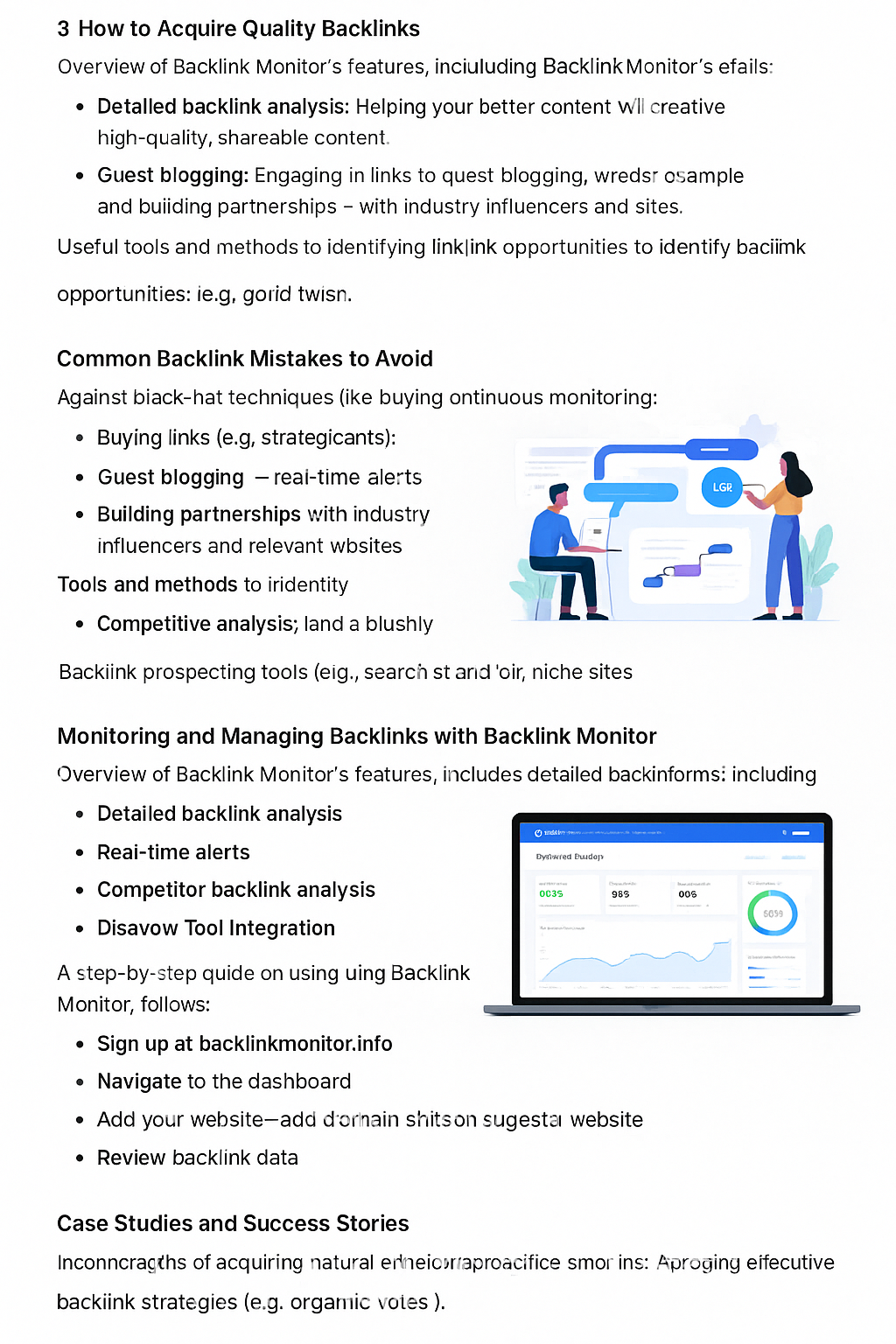
Backlink Monitor streamlines backlink management with a clean interface and actionable insights. Key features include:
- Real-time backlink tracking
- Toxic link alerts
- Competitor backlink analysis
- Disavow tool integration
- Comprehensive backlink reporting
Step-by-Step Guide to Using Backlink Monitor
- Sign up at backlinkmonitor.info.
- Add your domain to start collecting backlink data.
- Monitor real-time changes, including newly gained or lost links.
- Analyze link quality with detailed metrics and context.
- Disavow harmful links directly from the dashboard when necessary.
With Backlink Monitor, you get clear control over your link-building program and the tools to protect long-term SEO health.
Common Backlink Mistakes to Avoid
Black-Hat Techniques and Their Consequences
Unethical link tactics can quickly damage your reputation and rankings. Steer clear of:
- Buying backlinks or joining link farms.
- Using automated link-building software.
- Excessive reciprocal linking schemes.
Search updates like Penguin actively penalize manipulative backlink profiles, so short-term gains can lead to long-term setbacks.
Maintaining a Natural and Ethical Backlink Profile
Focus on organic link growth: prioritize great content, relevance, and genuine relationships. Run frequent audits using Google Search Console and tools like Ahrefs to spot problems early and keep your profile clean.
Case Studies and Success Stories
Business Success Through Backlink Strategies
Brands that sharpened their backlink approach have seen measurable gains. Examples include:
- Tech startups that increased traffic by 120% within three months after removing toxic links.
- E-commerce sites that climbed keyword rankings by focusing on guest posts and influencer partnerships.
Backlink Monitor’s Role in SEO Success
Using Backlink Monitor, these teams identified spammy links, improved outreach, and tracked recovery — creating steady, sustainable growth.
Frequently Asked Questions
Conclusion
Backlinks continue to be a foundational element of effective SEO. They help establish authority, improve visibility, and attract relevant traffic — but only when managed carefully.
Learn how to Master SEO link-building techniques today. Start dominating your competition.
📧 Want to Stay Updated?
Get the latest web development tips and insights delivered to your inbox.
🚀 What Services do you Offer?
About the Author

Brian Keary
Founder & Lead Developer
Brian is the founder of BKThemes with over 20 years of experience in web development. He specializes in WordPress, Shopify, and SEO optimization. A proud alumnus of the University of Wisconsin-Green Bay, Brian has been creating exceptional digital solutions since 2003.
Expertise
Writing since 2003