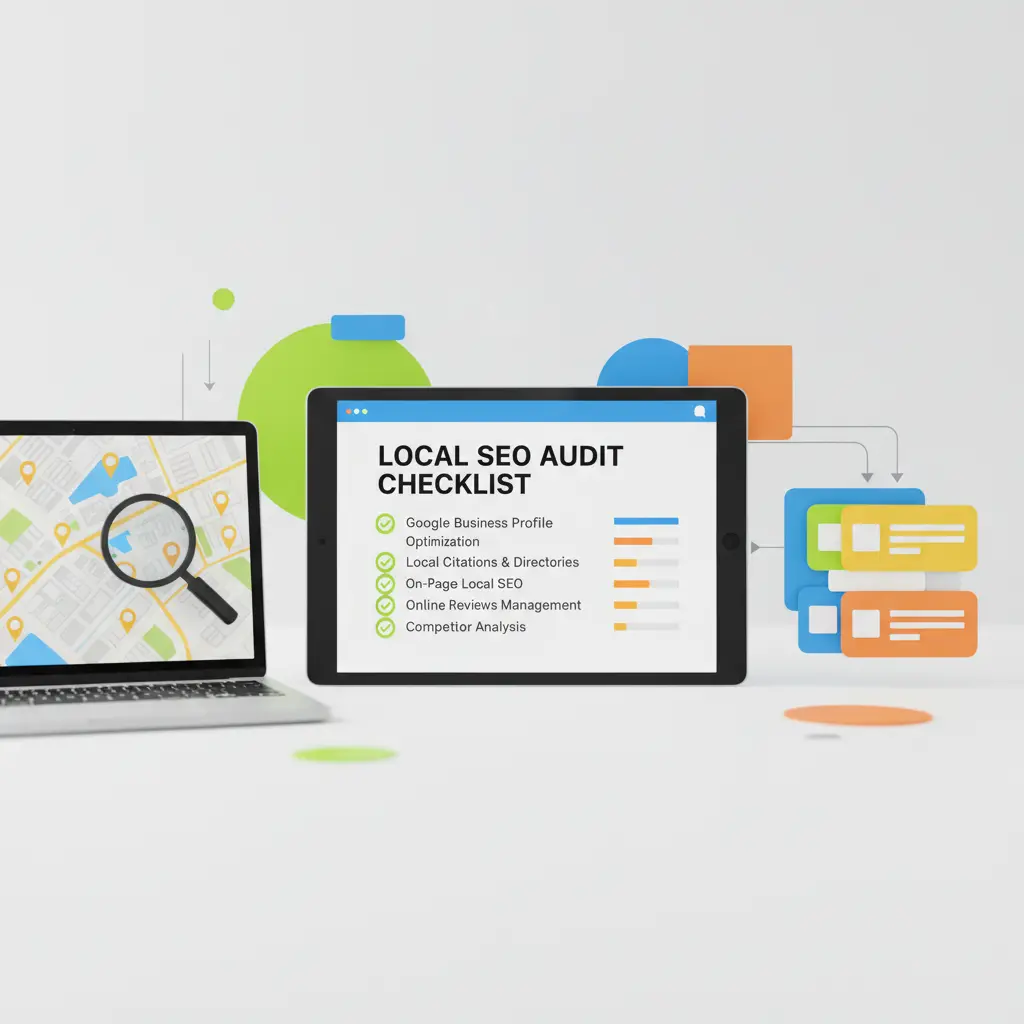
In today's "near me" economy, where mobile-first interactions and voice search dominate, your local digital presence is not just a convenience—it's a critical competitive battleground. Simply appearing in the Local Pack or on Google Maps isn't enough; true local dominance in 2026 requires a sophisticated, technical approach that goes far beyond basic checklists. This advanced local SEO audit framework is designed to uncover hidden opportunities and rectify complex issues, ensuring your business isn't just visible, but truly authoritative and conversion-optimized in your target geographies.
For hands-on citation rollout after this audit, use Local citations and how to use them to boost local SEO.
1. Advanced Google Business Profile (GBP) Optimization & Entity Management
Your Google Business Profile is the cornerstone of local visibility. In 2026, optimization extends beyond NAP consistency to granular entity management and leveraging AI-driven insights. We must ensure:
- Granular Category Strategy: Beyond primary and secondary categories, explore less obvious, highly specific categories that accurately reflect niche services and reduce competition. Monitor competitor category changes quarterly.
- Service Area & Geo-Fencing: For service-area businesses (SABs), precise service area definition is critical. Consider geo-fencing strategies within GBP to target specific neighborhoods or postal codes, and ensure this aligns with your website's Local Business schema.
- Attribute & Feature Maximization: Leverage every relevant attribute (e.g., "wheelchair accessible," "online appointments," "women-led business"). These are increasingly used in filtered searches and can be powerful differentiators.
- Q&A & Review Sentiment Analysis: Implement AI-powered tools to analyze sentiment in reviews and Q&A, identifying common pain points or unique selling propositions. Proactively address negative sentiment and generate content based on frequently asked questions.
- Post & Offer Strategy: Develop a consistent GBP posting schedule for offers, events, and updates. These posts not only engage users but also provide fresh signals to Google about your business's activity and relevance.
- Duplicate Listing & Suspension Remediation: Implement a robust process for identifying and resolving duplicate GBP listings. For suspensions, a detailed understanding of Google's guidelines and a systematic appeal process are paramount.
2. Technical Website Signals for Local Authority
Your website is the primary source of truth for Google's understanding of your local entity. A technical audit ensures it speaks the language of local search engines:
- Hyper-Local Landing Pages: For multi-location businesses, each location needs a dedicated, unique, and content-rich landing page. These pages should include unique local content, embedded Google Maps, local schema markup, and specific local contact information.
- Schema Markup Implementation: Beyond basic
LocalBusiness schema, implement advanced properties like hasMap, geo (with latitude/longitude), openingHoursSpecification, aggregateRating, and review markup. For service businesses, consider Serviceschema. Validate all schemas using Google's Rich Results Test. - Mobile-First & Core Web Vitals Optimization: Local searches are predominantly mobile. Ensure your site is not just responsive but delivers an exceptional mobile user experience, with fast loading times and optimal Core Web Vitals scores. This directly impacts local pack rankings.
- Geo-Targeting Signals: Utilize internal linking structures to connect local pages, demonstrating a clear hierarchy. Ensure XML sitemaps include all local pages. Consider using Hreflang for international local businesses, though less common for purely local.
- Content-Keyword Alignment: Integrate city-specific keywords naturally within headings, body content, and image alt text. Avoid keyword stuffing; focus on providing truly helpful, locally relevant content that answers user queries. This aligns with Google's Helpful Content System.
3. Advanced Citation & Link Building Strategy
Citations and local backlinks remain crucial for establishing local prominence and trust. Our focus shifts to quality, relevance, and strategic acquisition:
- Data Aggregator & Niche Directory Audit: Ensure consistency across major data aggregators (e.g., Factual, Infogroup) and highly relevant industry-specific directories. Manual submission to high-authority local and industry-specific sites is more impactful than broad directory blasts.
- NAP Consistency at Scale: Implement a single source of truth for your NAP data to prevent discrepancies across the web. Utilize tools for automated monitoring and error detection.
- Local Link Building for Authority: Focus on acquiring backlinks from local news outlets, community organizations, local bloggers, and complementary local businesses. These links pass a significant local authority. Consider sponsoring local events or offering local scholarships to build genuine connections. This complements broader link-building strategies.
- Unlinked Mentions & Brand Signals: Proactively search for unlinked brand mentions in local publications or forums and convert them into valuable backlinks. Strong brand signals across various local platforms reinforce your entity.
4. Review Management & Reputation Engineering
Reviews are a powerful ranking factor and conversion driver. A proactive strategy is essential:
- Proactive Review Generation: Implement systematic processes to encourage satisfied customers to leave reviews on Google, Yelp, and industry-specific platforms. Integrate review requests into post-service follow-ups.
- Strategic Review Response: Respond to all reviews, positive and negative, in a timely and professional manner. For negative reviews, offer solutions and take conversations offline. Incorporate keywords naturally in responses where appropriate.
- Review Velocity & Recency: Monitor the rate and freshness of reviews. A consistent stream of recent, positive reviews signals an active, reputable business to search engines and potential customers.
- Leveraging Reviews for Content: Use insights from reviews to identify content gaps, create FAQs, or develop new service offerings, further enhancing your site's relevance.
5. Performance Tracking & Competitive Intelligence
Without robust tracking, optimization efforts are blind. In 2026, this includes advanced analytics and competitive monitoring:
- Integrated Analytics: Beyond GA4, integrate Google Business Profile Insights directly into your reporting dashboards. Track calls, direction requests, website clicks, and booking conversions originating from GBP.
- Local Rank Tracking: Utilize specialized tools to track local pack and map rankings for your target keywords across various geo-modifiers. Monitor competitor movements closely.
- Conversion Attribution: Implement advanced call tracking and form tracking to accurately attribute local leads to specific channels and campaigns.
- Competitor Analysis: Regularly audit your top local competitors' GBP profiles, websites, and citation profiles to identify their strengths, weaknesses, and potential opportunities for your business.
By adopting this technical, forward-thinking local SEO audit framework, businesses can move beyond basic visibility to achieve sustainable hyper-local dominance. This isn't just about showing up; it's about owning your local market and converting local intent into loyal customers.
Related resources
About the Author

Brian Keary
Founder & Lead Developer
Brian is the founder of BKThemes with over 20 years of experience in web development. He specializes in WordPress, Shopify, and SEO optimization. A proud alumnus of the University of Wisconsin-Green Bay, Brian has been creating exceptional digital solutions since 2003.
Expertise
Writing since 2003