What does it take to become a Full Stack Developer?
Introduction: What Is a Full Stack Developer?
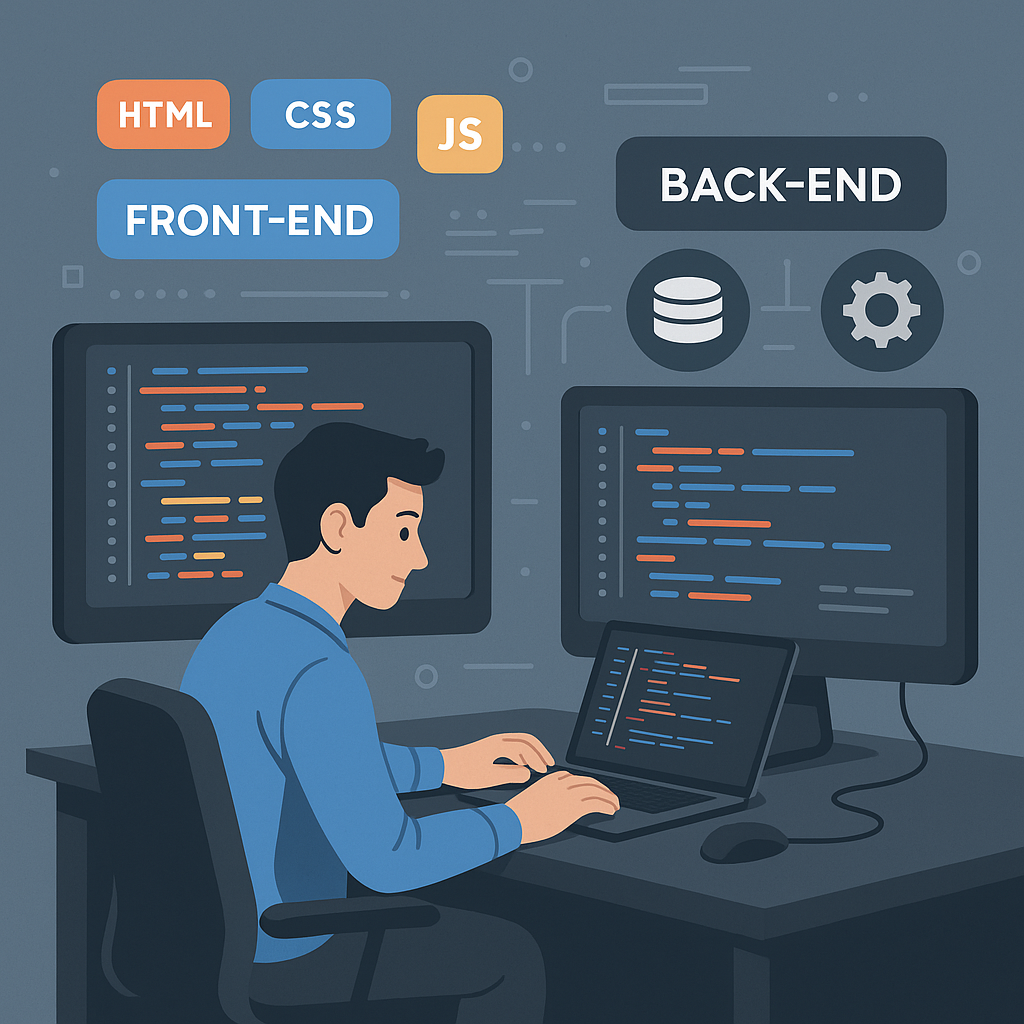
A Full Stack Developer is a skilled professional capable of developing both the frontend (client-side) and backend (server-side) of web applications. In 2025, as digital ecosystems evolve, companies will increasingly value developers who can manage end-to-end development processes.
Full-stack developers have the unique ability to design, develop, deploy, and maintain applications seamlessly. They’re the bridge between design and functionality — making them indispensable in today’s software landscape.
Build something better
Need a developer who can actually ship the fix, feature, or rebuild?
This post is in Web Development, so here’s the most relevant next step if you want help applying it.
We handle custom web development, performance improvements, design upgrades, and ongoing technical support for sites that need more than templates.
- Custom development for WordPress, Shopify, and modern web stacks
- Performance, UX, and conversion-focused improvements
- Hands-on implementation with no pass-the-buck nonsense
Why Follow a Structured Learning Path in 2025
Becoming a full-stack developer requires mastering multiple technologies. Without a structured roadmap, it’s easy to get lost among countless frameworks and tools. A structured learning path ensures you build a solid foundation, progress logically, and become job-ready faster.
The Rising Demand for Full Stack Developers
According to Indeed and LinkedIn, the demand for full-stack developers has risen by over 35% since 2022. As startups and enterprises seek cost-effective solutions, full-stack developers are increasingly in demand for their versatility and ability to handle multiple aspects of development.
Benefits of Becoming a Full Stack Developer
- Versatility: You can work across multiple tech layers.
- Career Opportunities: Access roles like Software Engineer, Technical Lead, or Solution Architect.
- High Pay: Average salary ranges between 130,000 annually.
- Freelance Flexibility: Build your own projects or work remotely.
Understanding the Core Components of Full Stack Development
What is Frontend Development?
Frontend development focuses on the visual interface and user experience of a website or application.
HTML, CSS, and JavaScript Basics
These three are the building blocks of web development:
- HTML for structure
- CSS for design
- JavaScript for interactivity
A solid grasp of these is essential before jumping into frameworks.
Popular Frontend Frameworks: React, Angular, and Vue
Modern apps rely on component-based frameworks:
- React.js – Fast, flexible, and backed by Meta.
- Angular – Full-featured and scalable, maintained by Google.
- Vue.js – Lightweight and easy to learn.
What is Backend Development?
The backend handles data processing, authentication, and business logic behind the scenes.
Server-Side Languages: Node.js, Python, Java, PHP
Each has unique strengths:
- Node.js – JavaScript runtime for scalable APIs.
- Python (Django, Flask) – Simple, efficient, and beginner-friendly.
- Java (Spring Boot) – Enterprise-grade robustness.
- PHP (Laravel) – Great for CMS and web apps.
RESTful APIs and GraphQL
APIs connect frontend and backend systems.
- REST APIs are simple and widely used.
- GraphQL allows efficient data querying and flexibility.
Databases and Data Management
SQL vs NoSQL Databases
- SQL (MySQL, PostgreSQL): Structured data, ideal for complex queries.
- NoSQL (MongoDB, Firebase): Flexible schema, perfect for dynamic apps.
Database Design and Optimization
Learn how to: protect your wp database from cyber threats
- Normalize data
- Optimize queries
- Use indexing and caching
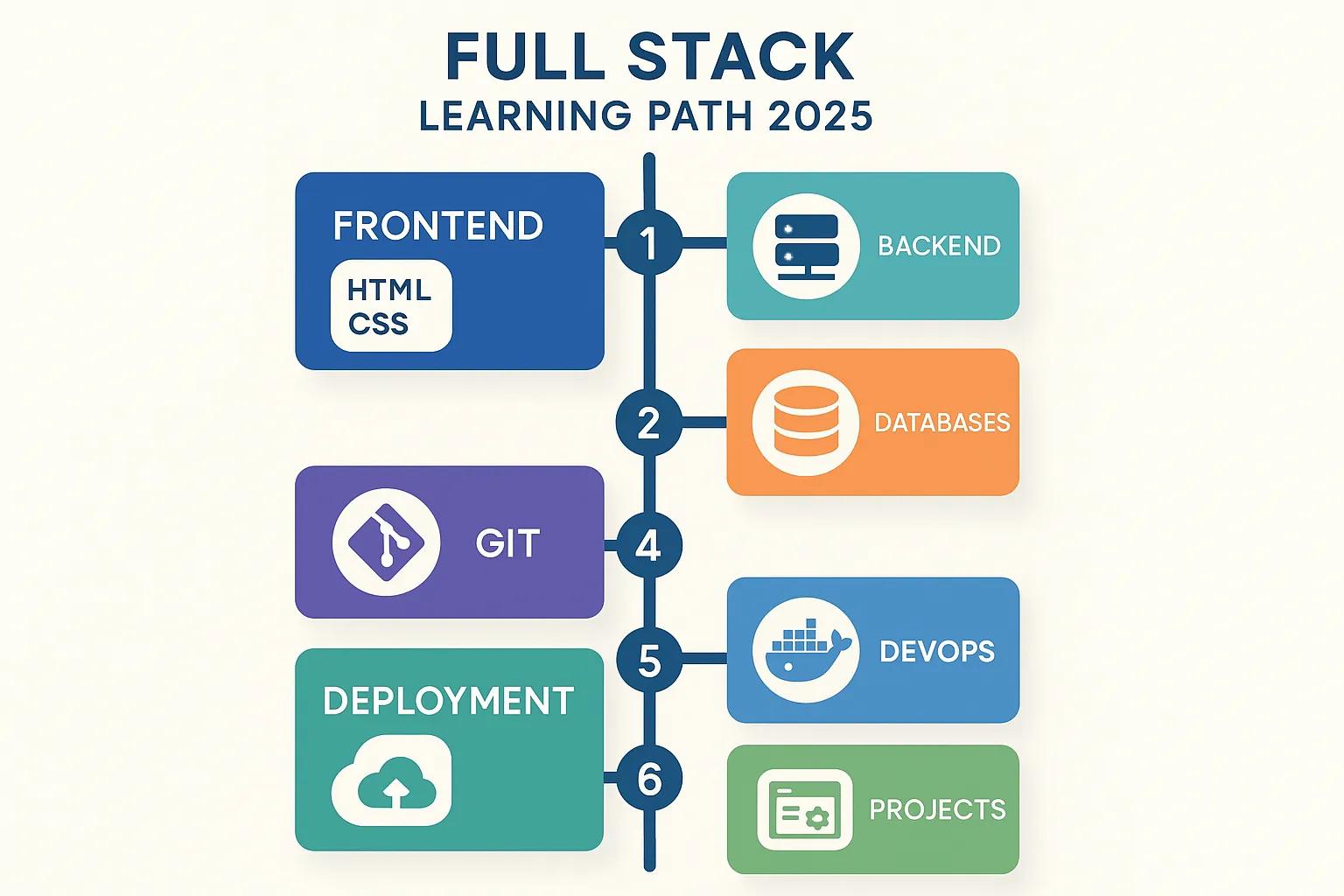
Step-by-Step Full Stack Developer Learning Path
Step 1: Master Frontend Development
Start with HTML, CSS, JavaScript, then move to React or Vue. Practice by building portfolios, landing pages, and small apps.
Step 2: Learn a Backend Language
Choose Node.js if you prefer JavaScript everywhere, or Python for simplicity and readability.
Step 3: Work with Databases
Understand CRUD operations and ORM tools like Mongoose (for MongoDB) or Sequelize (for SQL).
Step 4: Understand Version Control (Git & GitHub)
Version control is vital for collaboration and backup. Learn commands like git commit, git push, and git merge.
Step 5: Learn Deployment and Hosting
Explore Heroku, Vercel, or AWS for deployment. Understanding CI/CD pipelines is a bonus.
Step 6: Explore DevOps Basics
DevOps enhances development efficiency. Learn Docker, Kubernetes, and CI/CD concepts.
Step 7: Build Real-World Projects
Create real apps:
- A social media dashboard
- An e-commerce store
- A personal blog platform
These demonstrate your ability to handle real-world challenges.
Recommended Tools and Technologies for Full Stack Developers
Essential Frontend Tools
- VS Code
- Chrome DevTools
- Prettier / ESLint
Popular Backend Technologies
- Node.js + Express
- Django
- Spring Boot
Developer Productivity Tools
- Postman
- Docker
- GitHub Actions
Common Mistakes to Avoid
Ignoring the Fundamentals
Many rush into frameworks without mastering the basics — a huge mistake.
Learning Too Many Frameworks
Focus on one stack first (like MERN or MEAN ) before exploring others.
Avoiding Practical Projects
Theory without practice leads nowhere. Apply what you learn in small projects regularly.
Full Stack Developer Career Opportunities in 2025
Job Roles and Salaries
- Junior Developer: 90k
- Mid-Level Developer: 110k
- Senior Engineer: $120k+
Freelancing vs Employment
Freelancers enjoy flexibility, while full-time employees get stability and benefits.
Remote Work Trends
Remote jobs are booming, especially for MERN and MEAN stack developers.
FAQs About Full Stack Developer Learning Path
Conclusion: Your Roadmap to Becoming a Full Stack Pro
The Full Stack Developer Learning Path in 2025 is all about mastering essentials, practicing consistently, and staying updated. Start small, build projects, and grow into a confident, job-ready developer.
To explore more, check out MDN Web Docs — a trusted resource for web development.
📧 Want to Stay Updated?
Get the latest web development tips and insights delivered to your inbox.
🚀 What Services do you Offer?
About the Author

Brian Keary
Founder & Lead Developer
Brian is the founder of BKThemes with over 20 years of experience in web development. He specializes in WordPress, Shopify, and SEO optimization. A proud alumnus of the University of Wisconsin-Green Bay, Brian has been creating exceptional digital solutions since 2003.
Expertise
Writing since 2003