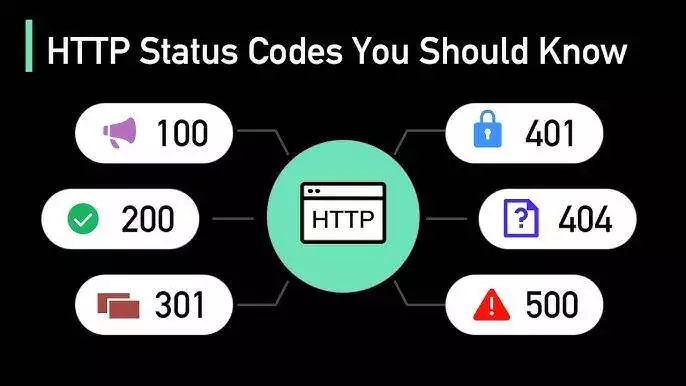
Updated on March 15 2026 to reflect the latest SEO best practices and Google's evolving algorithms. In the dynamic realm of 2026 SEO, HTTP status codes transcend mere server responses; they are critical signals influencing crawl budget, indexation, and user experience. While foundational knowledge of 2xx, 3xx, 4xx, and 5xx codes remains essential, modern SEO demands a more sophisticated approach. This article delves into advanced diagnostics, strategic implementation, and the proactive management of HTTP status codes to secure and enhance your site's visibility in a competitive search landscape.
Understanding the Evolving Landscape of HTTP/3 and SEO
The web's infrastructure is constantly evolving, with HTTP/3 becoming more prevalent. While the core principles of status codes remain, their interaction with faster, more secure protocols can subtly impact how crawlers perceive and process requests. Understanding this underlying infrastructure is crucial for diagnosing nuanced issues. For instance, a 200 OK response over HTTP/3 might be processed faster, potentially influencing crawl efficiency. Conversely, misconfigured server-side rendering (SSR) or CDN interactions can introduce unexpected 4xx or 5xx errors that are harder to trace without deep server-level insights.
Beyond the Basics: Strategic Implications of 3xx Redirects
While 301 (Moved Permanently) and 302 (Found/Temporary) redirects are well-known, their strategic deployment in 2026 SEO is far more complex than simple URL changes. Large-scale site migrations, domain consolidations, and international SEO strategies often involve thousands of redirects. A poorly planned redirect strategy can lead to significant link equity loss, crawl budget waste, and indexation issues. Advanced considerations include:
- Redirect Chains & Loops: Identifying and collapsing multi-hop redirect chains (e.g., URL A > URL B > URL C) to ensure direct resolution and preserve link equity.
- Regex Redirects: Implementing regular expression-based redirects for scalable management of URL patterns, especially useful for dynamic URLs or legacy systems.
- Soft 404s vs. 301s: Differentiating between pages that should genuinely return a 404/410 and those that are mistakenly serving a 200 OK with minimal content (soft 404s), which can waste crawl budget.
- JavaScript Redirects: Understanding when client-side redirects are used and their potential impact on search engine processing, often necessitating server-side alternatives for critical pages.
For comprehensive guidance on how search engines process redirects and other crawling signals, refer to Google's official documentation on crawling and indexing.
SEO that moves rankings
Want help turning SEO traffic into leads, not just pretty reports?
This post is in SEO, so here’s the most relevant next step if you want help applying it.
We build practical SEO systems around content, technical fixes, internal links, and conversion intent so rankings actually help the business.
- Technical SEO, on-page improvements, and content strategy
- Local SEO, link building, and entity-focused optimization
- Clear execution instead of vague SEO theater
Conquering 4xx Client Errors: Proactive Detection and Resolution
Client errors (4xx) are often perceived as user-side issues, but their impact on SEO is profound. Excessive 404 (Not Found) or 410 (Gone) errors signal a poorly maintained site, eroding trust and wasting crawl budget. Proactive strategies for 2026 include:
- Automated 404 Monitoring: Implementing real-time monitoring solutions that alert SEO teams to new 404s as they appear, rather than relying solely on periodic crawl reports.
- Intelligent 404 Pages: Beyond custom 404 pages, leverage AI-driven suggestions for related content or internal search functionality to guide users and crawlers to relevant alternatives.
- Strategic 410 Implementation: Using 410 Gone for content that is permanently removed and has no suitable replacement, explicitly signaling to search engines to deindex the URL faster than a 404.
- Broken Internal Link Audits: Regular, automated audits of internal links to prevent the creation of new 404s and ensure optimal SEO performance.
Mitigating 5xx Server Errors: Monitoring and Infrastructure Resilience
Server errors (5xx) are catastrophic for SEO, leading to immediate de-indexing risk and severe user experience degradation. In 2026, a robust infrastructure and proactive monitoring are non-negotiable:
- Real-time Server Log Analysis: Integrating server logs with SEO monitoring tools to detect 5xx errors as they occur, providing immediate insights into the root cause (e.g., database issues, overloaded servers, application errors).
- Load Balancing & Scalability: Ensuring server architecture can handle traffic spikes to prevent 503 (Service Unavailable) errors during peak periods or viral content events.
- CDN & Edge Caching Strategies: Leveraging Content Delivery Networks (CDNs) to serve cached content and absorb traffic, reducing the load on origin servers and minimizing 5xx risks.
- Automated Rollbacks & Redundancy: Implementing systems that can automatically roll back problematic deployments or switch to redundant servers in case of critical failures.
HTTP Status Codes in the Age of JavaScript and Dynamic Content
The rise of JavaScript-heavy websites and dynamic content generation introduces new complexities. A page might return a 200 OK, but if critical content is rendered client-side and fails to execute, search engines might perceive it as a blank or incomplete page. This is where the distinction between the HTTP status code and the rendered DOM becomes vital.
- Hydration Issues: Diagnosing scenarios where server-side rendered content doesn't correctly 'hydrate' with client-side JavaScript, leading to missing elements or functionality.
- API Dependencies: Understanding how external API calls (which might return their own status codes) impact the final content delivered to the user and crawler.
- Pre-rendering & Dynamic Rendering: Implementing strategies like pre-rendering or dynamic rendering for JavaScript-heavy sites to ensure search engines receive fully formed HTML, regardless of client-side execution.
Automated Monitoring and Alerting for Enterprise SEO
Manual checks are insufficient for modern, large-scale websites. A comprehensive HTTP status code management strategy requires automation:
- API-Driven Crawlers: Utilizing custom or commercial crawlers with API access to integrate status code data directly into dashboards and reporting systems.
- Synthetic Monitoring: Deploying synthetic monitoring tools that simulate user journeys and report on status codes and performance metrics from various global locations.
- Custom Alerting: Configuring alerts for specific status code thresholds (e.g., a sudden spike in 404s, any 5xx errors) delivered via Slack, email, or other communication channels.
- Integration with Analytics: Correlating status code data with user behavior analytics to understand the real-world impact of errors on engagement and conversions.
By adopting these advanced strategies, SEO professionals can move beyond reactive fixes to proactive, infrastructure-level optimization, ensuring robust indexation and superior user experience in 2026 and beyond. For more insights into creating content that truly serves user needs, consider Google's guidelines on creating helpful, reliable, people-first content.
Related Resources
📧 Want to Stay Updated?
Get the latest web development tips and insights delivered to your inbox.
🚀 What Services do you Offer?
About the Author

Brian Keary
Founder & Lead Developer
Brian is the founder of BKThemes with over 20 years of experience in web development. He specializes in WordPress, Shopify, and SEO optimization. A proud alumnus of the University of Wisconsin-Green Bay, Brian has been creating exceptional digital solutions since 2003.
Expertise
Writing since 2003