
Choosing between custom web development vs. website builder shapes far more than how your site looks on launch day. It affects your budget, design freedom, SEO control, maintenance workload, and how easily the site can grow with your business. If you are weighing a drag-and-drop platform against a fully tailored build, this guide will help you compare both options clearly and decide which path fits your goals.
Custom web development gives you deeper control over the codebase, site architecture, user experience, and integrations. Website builders give you speed, simplicity, and lower up-front costs. Neither option is universally better; the right choice depends on your timeline, technical needs, and growth plans.
What is the difference between custom web development vs. website builders?
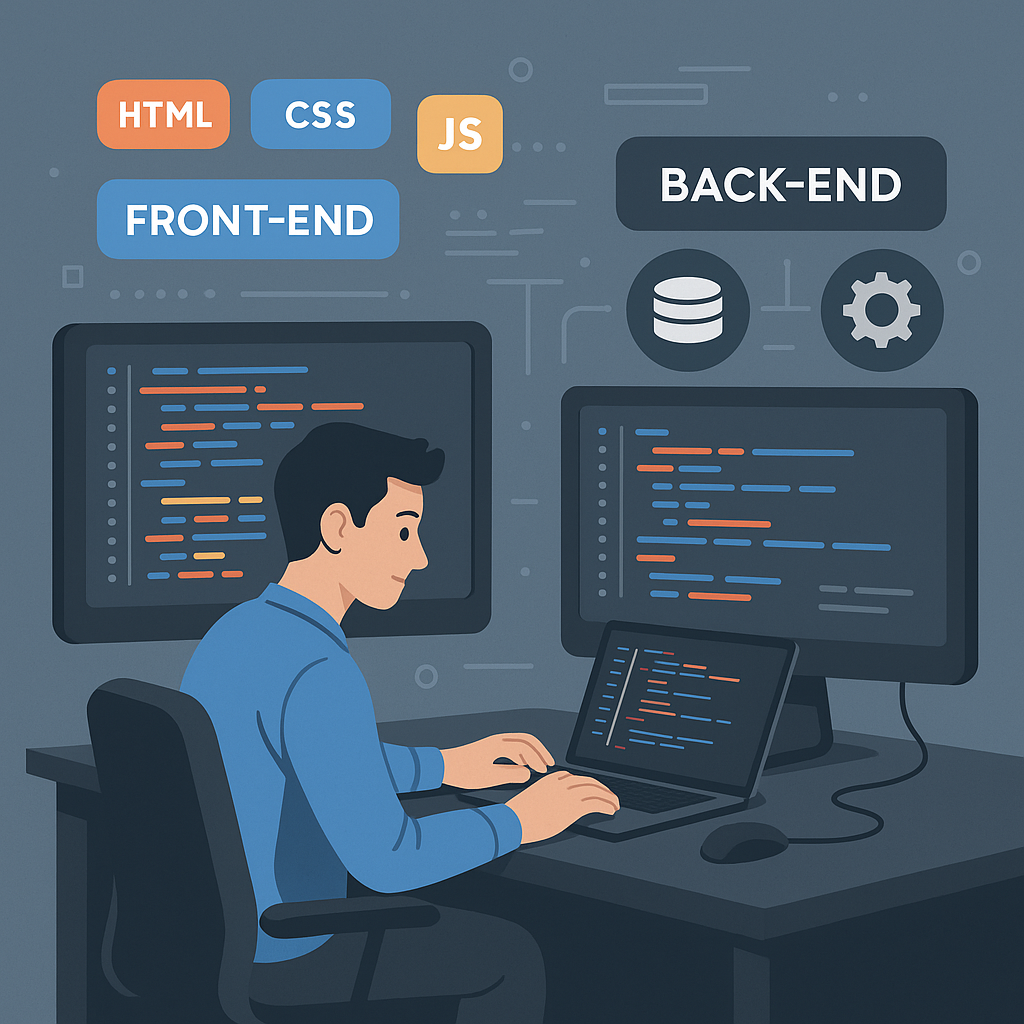
Custom web development means building a site around your specific requirements instead of fitting your business into a prebuilt template. That may involve custom front-end work, tailored back-end logic, API integrations, performance tuning, and a site structure designed to support your brand and workflows from day one.
Website builders such as Wix, Squarespace, Webflow, Shopify, or similar hosted platforms simplify the process with templates, visual editors, and bundled hosting. They are ideal when speed and ease of use matter more than deep customization.
At a high level:
- Custom web development favors flexibility, scalability, and ownership.
- Website builders favor convenience, affordability, and quick deployment.
When does custom web development make more sense?
Custom development is usually the stronger option when your business needs more than a polished brochure site. If you need custom workflows, CRM or ERP integrations, specialized checkout experiences, unique filtering, gated content, member features, or performance-critical pages, custom development gives you the room to build exactly what you need.
It also makes sense when brand differentiation matters. A custom build lets you design a user experience around your audience rather than around a template’s constraints. That can improve engagement, conversions, and long-term maintainability when paired with a clear strategy and strong execution.
Benefits of custom web development
- Full control over layouts, interactions, and branding
- Cleaner technical SEO implementation and structured data support
- Better flexibility for custom integrations and business logic
- Easier long-term scaling for complex features and traffic growth
- Greater ownership over files, architecture, and deployment choices
If your site is a serious revenue channel, web development often become more cost-effective over time than forcing a builder to do something it was not designed to do.
Build something better
Need a developer who can actually ship the fix, feature, or rebuild?
This post is in Web Development, so here’s the most relevant next step if you want help applying it.
We handle custom web development, performance improvements, design upgrades, and ongoing technical support for sites that need more than templates.
- Custom development for WordPress, Shopify, and modern web stacks
- Performance, UX, and conversion-focused improvements
- Hands-on implementation with no pass-the-buck nonsense
When is a website builder the better fit?
Website builders are a smart choice for startups, freelancers, local businesses, and simple content sites that need to launch quickly. If your top priorities are speed, simplicity, and predictable monthly costs, a builder can get you online with far less friction.
Builders also help non-technical teams make updates without relying on a developer for every change. For many basic websites, that ease of use is a genuine advantage, not a compromise.
Benefits of website builders
- Lower up-front cost
- Faster setup and launch
- Visual editing with little or no coding
- Bundled hosting, updates, and platform maintenance
- Useful built-in tools for basic SEO, forms, and content management
The trade-off is that convenience often comes with limits on performance tuning, code control, and advanced customization.
Cost comparison: custom websites vs website builders
The cost difference is one of the biggest reasons businesses hesitate between the two.
| Option | Typical up-front cost | Ongoing costs | Best fit |
|---|---|---|---|
| Custom web development | Higher initial investment | Hosting, support, updates, feature work | Businesses with long-term growth or unique requirements |
| Website builders | Low monthly or annual cost | Subscription, premium apps, template upgrades, transaction fees | Simpler sites that need speed and convenience |
Website builders usually win on initial affordability. Custom development often wins on long-term efficiency once you need better performance, fewer workarounds, stronger SEO control, or features that a builder handles poorly.
For a more detailed planning angle, this web development cost breakdown is a useful companion resource.
Design flexibility and functionality limits
This is where the gap between the two options becomes obvious.
Custom web development gives you a blank canvas. You can build custom layouts, animations, interactive tools, account areas, content workflows, and brand-specific UX without being boxed into a preset system. If your site needs to feel truly distinct, custom development gives you far more room to execute.
Website builders can still look polished, but they usually keep you inside predefined sections, theme logic, or app ecosystems. That is fine for many sites, but it becomes frustrating when your design or feature needs do not fit the platform neatly.
Choose custom development if you need
- A distinctive branded experience
- Complex forms, calculators, or app-like functionality
- Advanced integrations with third-party systems
- Flexible content models or workflow logic
- Better control over how pages load and behave
Choose a builder if you need
- A serviceable site quickly
- Standard marketing pages
- A manageable editing workflow for non-developers
- A simpler stack with fewer moving parts
SEO and performance differences
Custom development usually has the advantage in technical SEO because you control the markup, site structure, metadata patterns, schema output, asset loading, and performance strategy. That level of control matters if SEO is a primary acquisition channel.
Custom sites also make it easier to implement cleaner architecture, faster page delivery, and more precise internal linking. When you need advanced on-page SEO, technical SEO improvements, or a site tuned for Core Web Vitals, custom development gives you more leverage.
Website builders can still support basic SEO very well. Most include fields for titles, descriptions, alt text, redirects, and indexing controls. But they tend to limit how deeply you can optimize the underlying structure and resource loading.
Why custom development often wins for SEO
- Cleaner HTML and lighter front-end output
- Better control over schema, canonicals, and metadata patterns
- Stronger internal-linking flexibility
- More options for image, script, and caching optimization
- Easier alignment between UX, CRO, and SEO goals
Scalability, security, and ownership
If your business expects the site to grow meaningfully, scalability matters.
Custom websites can be planned with modular architecture, dedicated infrastructure, API integrations, and performance strategies that support heavier traffic and more advanced features. They also give you more control over security choices, data handling, and backup workflows.
Website builders reduce operational overhead because the platform handles much of the maintenance for you. That simplicity is helpful, but it also means you rely on the platform’s rules, release cycle, and limitations.
Ownership is another practical difference. With a custom site, you generally have more control over your files, code, hosting setup, and future migration path. With a builder, your site often stays tied to the platform’s ecosystem.
Support and maintenance expectations
Website builders make maintenance easy because updates, hosting, and many security tasks are bundled into the subscription. That convenience is part of their appeal.
Custom development requires a more intentional maintenance plan. You need updates, performance monitoring, backups, and support when features evolve. But that effort buys you flexibility and a more tailored support model. If your business depends heavily on the website, a managed support arrangement is often worth it.
If you need ongoing help rather than a one-time launch, website maintenance and structured support planning should be part of the decision.
Which option is right for your business?
The simplest way to decide is to start with business needs rather than platform hype.
Custom web development is usually best when
- Your site is central to sales or lead generation
- You need custom features, integrations, or workflows
- SEO and performance are major priorities
- Your brand needs stronger differentiation
- You expect the site to evolve significantly over time
Website builders are usually best when
- You need to launch quickly
- Your budget is limited right now
- Your requirements are straightforward
- You want a non-technical team to manage most updates
- A standard content or brochure site is enough
For growing e-commerce brands, there is also a middle ground: a platform like Shopify paired with tailored development work. In those cases, custom Shopify solutions can give you platform stability without sacrificing flexibility where it matters most.
Frequently asked questions
Is custom web development better for SEO than a website builder?
Usually, yes. Custom development gives you more control over structure, speed, schema, metadata, and internal linking. Website builders can handle basic SEO well, but custom development gives you more technical headroom.
Are website builders cheaper in the long run?
They are usually cheaper at the start. In the long run, they can become less efficient if you need premium apps, workarounds, migrations, or advanced customization that the platform does not support cleanly.
Can a small business still benefit from custom development?
Absolutely, especially if the website plays a major role in generating leads or revenue. A small business does not always need custom development, but it often benefits when the site needs to do more than present basic information.
Can I start with a builder and move to custom development later?
Yes, but migrations take planning. Content structure, URLs, design systems, and SEO signals all need to be handled carefully so you do not lose momentum during the move.
Final thoughts
Custom web development and website builders both have valid use cases. Builders are excellent for getting online quickly and affordably. Custom development is the better long-term choice when you need deeper control, better performance, stronger SEO flexibility, and a site built around your exact business model.
If your site only needs to exist, a builder may be enough. If your site needs to compete, convert, and scale, custom development usually gives you more upside.
📧 Want to Stay Updated?
Get the latest web development tips and insights delivered to your inbox.
🚀 What Services do you Offer?
About the Author

Brian Keary
Founder & Lead Developer
Brian is the founder of BKThemes with over 20 years of experience in web development. He specializes in WordPress, Shopify, and SEO optimization. A proud alumnus of the University of Wisconsin-Green Bay, Brian has been creating exceptional digital solutions since 2003.
Expertise
Writing since 2003