
Deciding between a custom WordPress build and a template shapes how people experience your brand online. This guide lays out the key differences, practical benefits, and trade-offs so you can choose the approach that supports your goals. Custom work gives precise control over user journeys, speed, and SEO; templates get you live quickly and on budget. We cover design flexibility, costs, SEO, and performance, plus real-world examples to help you decide with confidence.
Why choose custom WordPress design services?
A custom WordPress build gives you control—tailored workflows, SEO tuned to your needs, and design that reflects your brand instead of fitting a generic mold. Those advantages typically translate to stronger engagement, clearer conversion paths, and a site that scales as your business grows.
How custom design boosts efficiency and search performance
Custom sites remove one-size-fits-all limits by adding features that match how your team works — for example, bespoke e-commerce flows, specialized content editors, or integrations with internal systems. That tighter fit streamlines tasks and lets developers optimize markup and assets for search engines, improving load times and organic visibility.
What customization looks like beyond a template
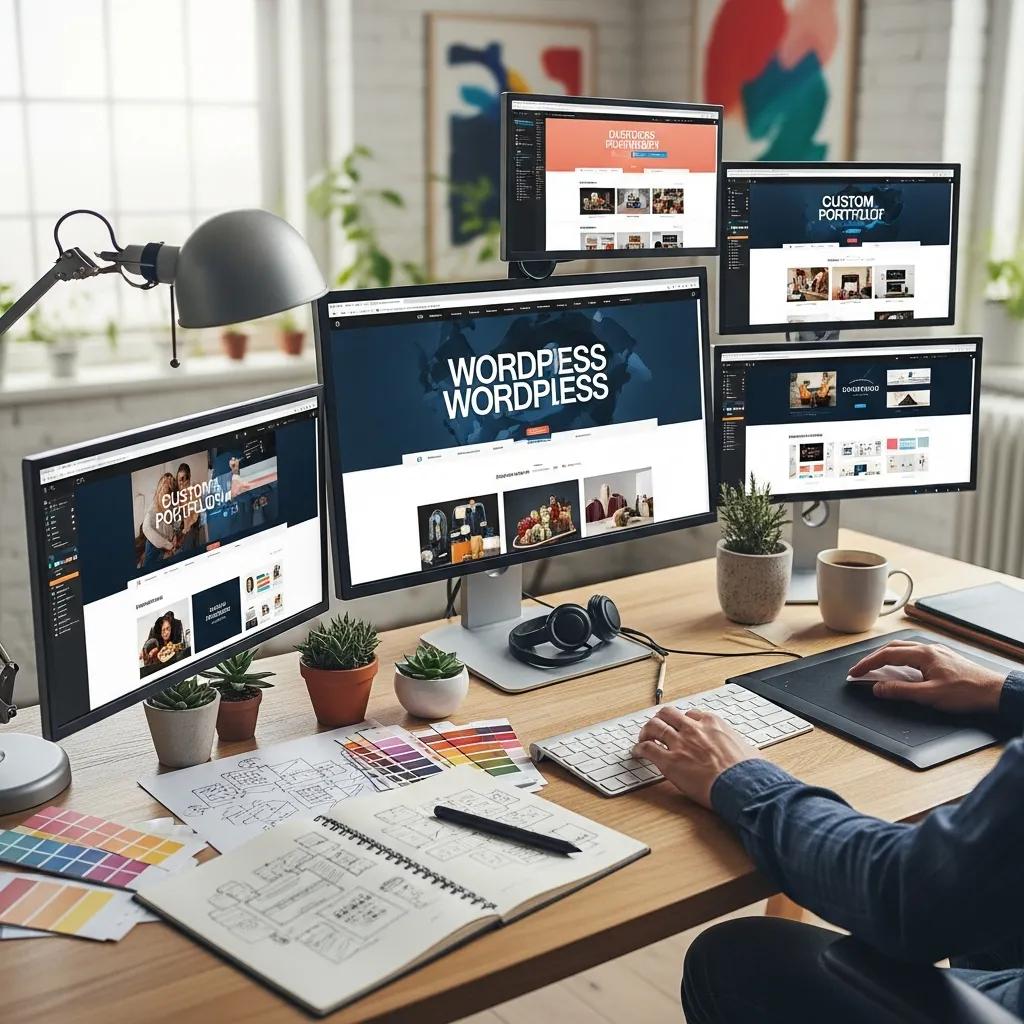
With a custom approach, you define layout structure, micro-interactions, and branded components that templates rarely offer. You choose which plugins and integrations to include, control data flows, and ensure the site follows your visual identity and business rules—not the other way around.
What templates do well — and where they fall short
Templates are a practical choice when speed and budget matter. They provide ready-made layouts and features so you can launch quickly. The trade-offs are flexibility and distinctiveness: templates can limit how you present your brand and sometimes include extra code or features you don’t need.
Can templates be tailored to business needs?
Templates allow some customization, but many rely on preset layouts and theme options that can’t match the freedom of a tailored build. For many businesses, templates are a smart short-term solution; for unique workflows or stronger brand differentiation, a custom design is usually the better fit.
Common limits of template-based sites
Template sites often face constraints around layout flexibility, component reuse, and advanced integrations. That can make it harder to stand out, and templates sometimes include unused features or heavy scripts that hurt performance and SEO.
Comparing costs: custom builds vs. templates
Costs depend on the scope. Custom projects require a larger upfront investment for planning, design, and development, but they can reduce long-term maintenance and enable features that drive revenue. Templates lower initial costs but may require extra work later to extend or secure them. Services
What drives the price of a custom WordPress site?
Price scales with complexity: the number of custom templates, integrations, bespoke features, and the level of design polish. More functionality and tighter integrations increase development time, so scope and priorities determine the budget.
Template pricing and ongoing maintenance
Templates are cheaper to start, but updates, plugin compatibility fixes, and customization work can add up. When choosing a template, factor in future maintenance costs and the potential need to migrate if limitations become blocking.
SEO and performance: where each option stands

SEO and speed are shaped by how the site is built. Custom sites let you control markup, loading behavior, and content structure precisely; templates are made for many use cases and can include extra code that affects performance. Either approach can be SEO-friendly if implemented deliberately.
Which option gives better SEO results?
Custom builds generally offer more control for SEO: tailored content structures, optimized asset loading, and targeted technical fixes. That control makes it easier to improve rankings and organic traffic. Templates can perform well, but they often need careful cleanup and optimization.
How performance typically differs between the two
Custom sites tend to be leaner because developers include only what’s necessary and can optimize code paths. Templates are convenient, but sometimes bundle unused features or bulky frameworks that slow pages down unless you strip and tune them.
What multi-location case studies reveal about design choices
Multi-location examples show how design decisions affect brand consistency and local performance. Custom solutions usually make it simpler to manage many locations with shared components and localized content. Templates can work across locations, but keeping each site aligned and optimized for local search often requires extra effort.
An enterprise case demonstrates WordPress can meet strict security and governance needs while remaining cost-effective.
WordPress for Enterprise: Cost-Effectiveness & Strategic Business Decisions The choice extends beyond technology — it’s a strategic preference for transparency over vendor lock-in, community maturity over closed platforms, and cost-effectiveness over expensive licensing. By running WordPress headlessly with modern frontends, applying rigorous security hardening, and enforcing strong governance, Malwarebytes met strict security requirements while retaining the agility and cost benefits that help power 43.6% of the web. This case study examines the technical and business trade-offs behind that decision.
Real success stories that favor custom builds
Companies that invested in custom WordPress solutions often report clearer brand presentation, higher engagement, and stronger conversion funnels. Those gains usually come from purposeful design and integrations that templates can’t replicate without significant modification.
When templates have met multi-location needs
Templates can support multi-location businesses when requirements are straightforward and budgets are tight. They work best when sites share the same structure and content; once locations need differentiated features or deeper local SEO, custom work typically delivers better results.
Why accessibility, compliance, and sustainability matter
Accessibility and compliance are essential for many organizations — custom builds allow precise implementation of accessibility features and compliance controls. Sustainable practices, like efficient hosting and optimized assets, reduce carbon impact and improve performance, which benefits users and brand reputation.
How custom design helps accessibility and compliance
Custom projects let you design with accessibility in mind from the start: semantic markup, keyboard navigation, correct ARIA support, and tested screen-reader flows. That approach lowers retrofit costs and improves the experience for all users.
Sustainable design choices for WordPress sites
Sustainable choices include eco-conscious hosting, optimized images and code, and removing unnecessary plugins. These steps reduce energy use and speed up pages — a win for the planet and your visitors.
Frequently Asked Questions
Conclusion
The right choice depends on your priorities. Choose a custom WordPress build when you need control, performance, and a tailored experience that can scale with your business. Choose a template when time and budget are the main drivers and your needs are straightforward. If you’d like help weighing the options, our team can assess your goals and recommend the most effective path.
About the Author

Brian Keary
Founder & Lead Developer
Brian is the founder of BKThemes with over 20 years of experience in web development. He specializes in WordPress, Shopify, and SEO optimization. A proud alumnus of the University of Wisconsin-Green Bay, Brian has been creating exceptional digital solutions since 2003.
Expertise
Writing since 2003