
Did you know that a staggering 70% of small businesses consider SEO to be their primary digital marketing strategy? Yet, many unknowingly sabotage their own search engine visibility through fundamental web development oversights. It's a frustrating paradox: investing time and money into a website only to have it perform poorly in search results. This isn't about complex algorithmic mysteries; often, the culprits are simple, avoidable development blunders. Let's dive into the seven most common web development mistakes that can silently cripple your SEO efforts in 2026.
Key Takeaways
- Mobile-first design and responsiveness are non-negotiable for modern SEO.
- Slow page load speeds are a major deterrent for users and search engines alike.
- A logical site architecture and descriptive URLs aid both users and crawlers.
- Schema markup unlocks rich snippets, enhancing search result visibility.
- Optimized images contribute to faster load times and better search understanding.
- Website security (HTTPS) is a ranking signal and builds crucial user trust.
- Duplicate content issues must be addressed with canonicalization to avoid SEO penalties.
- Integrating SEO considerations from the start of web development is paramount.
What Are the Most Common Web Development Mistakes Hurting SEO?
Let's get down to brass tacks. These are the common missteps that developers, perhaps unintentionally, make which can send your search engine rankings plummeting.
Learn Technical SEO for WordPress to boost your WordPress visibility today with smart SEO tactics. Boost traffic and attract more visitors with effective strategies tailored for success.
1. Neglecting Mobile-First Design and Responsiveness
In 2026, mobile-friendliness isn't just a nice-to-have; it's a non-negotiable ranking factor. Google's mobile-first indexing means that the mobile version of your content is what they'll use for indexing and ranking. If your website looks like a dog's breakfast on a smartphone, or if it's a pain to navigate, search engines will notice. This isn't just about shrinking a desktop site; it's about fundamentally designing for smaller screens first, ensuring a seamless user experience across all devices.
A responsive design adapts your website's layout to the user's screen size. This means images resize, navigation menus transform, and text remains readable without constant pinching and zooming. When development teams skip this crucial step, they create a fractured user experience. Visitors bounce, bounce rates skyrocket, and search engines interpret this as a sign of a poor-quality site. This directly impacts your visibility.
2. Slow Page Load Speeds
Imagine walking into a shop, and the door takes ten seconds to open. You'd probably walk away, right? The same logic applies online. If your web pages take too long to load, visitors will leave. Search engines, including Google, prioritize fast-loading sites. Their algorithms evaluate user experience and load thresholds through Core Web Vitals:
- Largest Contentful Paint (LCP): Measures perceived loading speed by tracking when the main content of a page has loaded (target: seconds).
- Interaction to Next Paint (INP): Assesses overall page responsiveness by measuring the latency of user interactions like clicks and keypresses (target: milliseconds).
- Cumulative Layout Shift (CLS): Evaluates visual stability by quantifying unexpected layout shifts during page render (target: ).
Several development choices contribute to sluggish performance. Unoptimized images, bloated code, excessive third-party scripts, and poor server configuration are common culprits. Even sophisticated designs can become a drag if not built with performance in mind. It's a constant balancing act between aesthetics and speed. We've explored 5 common reasons your website is sluggish and how to fix it in detail, highlighting how optimization is key.
3. Poorly Structured URLs and Site Architecture
Think of your website's structure as a roadmap for both users and search engine crawlers. If the map is confusing, full of dead ends, or uses cryptic symbols, finding destinations becomes a chore. URLs should be descriptive, logical, and easy to understand. For instance, yourwebsite.com/services/web-design/seo-optimization is far more informative than yourwebsite.com/page?id=12345.
A well-organized site architecture ensures that important pages are easily discoverable. This involves a logical hierarchy, clear navigation, and strategic internal linking. When development teams create a labyrinthine structure, search engine bots struggle to crawl and index all your content efficiently. This means valuable pages might never get seen by search engines, severely limiting your SEO potential. This is a foundational aspect of SEO that cannot be overlooked.
4. Lack of Schema Markup Implementation
Schema markup is a form of microdata that you can add to your HTML to improve the way search engines understand and display your content. It's like providing a detailed label for your products, recipes, events, or articles. While structured data can be implemented in various formats (such as Microdata or RDFa), Google explicitly recommends JSON-LD Structured Data as its preferred format. Implemented as a clean JavaScript notation inside <script type="application/ld+json"> tags, JSON-LD allows developers to convey rich entity details without cluttering the visible HTML page structure.
Without structured data, search engines have to infer what your content is about, which is less efficient and can lead to less informative search result listings. Implementing JSON-LD schema unlocks rich snippets—those eye-catching elements in search results that display ratings, prices, event dates, and breadcrumbs. Failure to implement schema is a missed opportunity that can result in lower click-through rates compared to competitors in SERPs.
5. Ignoring Image Optimization
Images are vital for engaging users and breaking up text, but unoptimized images can be a major performance killer. Large file sizes mean longer load times, which, as we've discussed, is detrimental to SEO. Furthermore, images themselves can be optimized for search engines. This includes using descriptive alt text and relevant file names.
Alt text (alternative text) serves two primary purposes: it describes the image for visually impaired users using screen readers, and it provides context for search engines. If an image doesn't load, the alt text is displayed instead. For SEO, descriptive alt text helps search engines understand the image content, which can contribute to image search rankings and overall page relevance. Developers often treat image optimization as an afterthought, but it's a critical element for both user experience and SEO.
6. Insecure Website (Lack of HTTPS)
Security is paramount online, and search engines are keenly aware of this. Websites that are not secure (lacking HTTPS) are flagged by browsers and are viewed with suspicion by users. Google has confirmed that HTTPS is a lightweight ranking signal. While it might not be the most powerful factor, it's an easy win that many websites still miss.
A secure website builds trust. Users are more likely to interact with and share content from a site they know is protecting their data. Development teams must ensure that SSL certificates are properly installed and configured, redirecting all HTTP traffic to HTTPS. This is a foundational security measure that directly impacts user confidence and search engine perception.
7. Duplicate Content Issues
Duplicate content occurs when identical or substantially similar content appears on multiple URLs. This can happen for a variety of reasons during web development, such as having both http://yourwebsite.com and https://yourwebsite.com versions accessible, or having product pages accessible via different URLs (e.g., with and without tracking parameters). Search engines struggle to determine which version is the "original" or most authoritative, which can dilute ranking signals and cause indexing problems.
Proper canonicalization is the solution. Developers can use rel="canonical" tags to tell search engines which URL is the preferred version. If this isn't implemented correctly, or if the development process creates multiple pathways to the same content without clear instructions, SEO performance can suffer significantly. This is one of the top 5 common issues to expect in any web development project that can be avoided with careful planning.
Which Development Practices Should Teams Proactively Prevent?
When building or revamping a website, it's easy to get caught up in design trends or flashy features. However, overlooking these fundamental SEO aspects during development can lead to costly rework and lost opportunities down the line.
- Don't assume SEO happens after development: SEO should be integrated into the development process from the very beginning. It’s far more efficient and effective than trying to retrofit it later.
- Don't prioritize aesthetics over functionality and speed: A beautiful site that is slow or difficult to use will not perform well in search or with users.
- Don't ignore the mobile user: Designing solely for desktop is a recipe for disaster in today's mobile-dominant world.
- Don't forget about technical fundamentals: Things like clean code, proper URL structure, and schema markup are the bedrock of good SEO. We've discussed Does clean code improve SEO? A web designer’s perspective to highlight this.
- Don't underestimate the power of security: An insecure site erodes trust and negatively impacts rankings.
Actionable Checklist for Developers and Website Owners
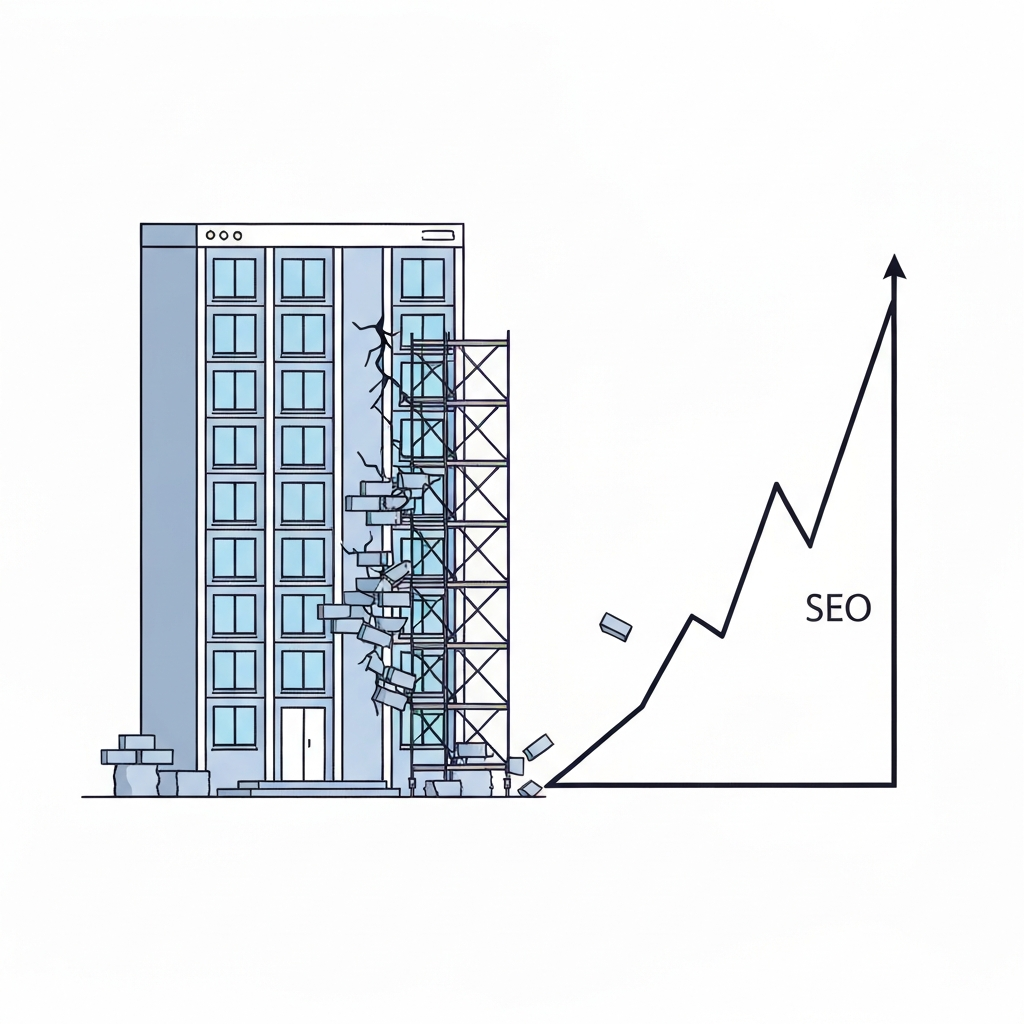
Here’s a practical checklist to ensure your web development project doesn’t sabotage your SEO:
Pre-Development & Planning
- Define clear SEO goals for the website.
- Conduct thorough keyword research to inform content and structure.
- Plan a logical and user-friendly site architecture.
- Prioritize mobile-first design principles.
During Development
- Implement responsive design for all screen sizes.
- Optimize all images for size and descriptive alt text.
- Write clean, efficient code.
- Ensure fast page load speeds through code optimization and efficient hosting.
- Develop descriptive, SEO-friendly URLs.
- Implement schema markup for relevant content types.
- Configure robots.txt directives correctly to guide crawler traffic and protect staging environments.
- Validate hreflang tags across localized and regional pages to prevent canonical confusion.
- Ensure the website is secure (HTTPS).
- Set up 301 redirects for any old URLs.
- Implement canonical tags to prevent duplicate content issues.
Post-Launch & Ongoing
- Submit an XML sitemap to Google Search Console and Bing Webmaster Tools.
- Monitor site speed regularly.
- Perform regular technical SEO audits.
- Ensure all links are working correctly.
- Keep software and plugins updated.
Conclusion
Web development and SEO are inextricably linked. A technically sound, user-friendly website built with SEO best practices in mind is the strongest foundation for organic growth. By avoiding these common development mistakes, you can ensure your website not only looks great but is also easily discoverable by your target audience. Investing in a development process that values SEO from the outset is an investment in your website's long-term success and visibility in the competitive digital landscape of 2026. Remember, a technically sound website is a powerful marketing asset. Consider exploring resources like The ultimate guide to professional web design crafting websites that convert to further enhance your understanding of effective web design principles.
Frequently Asked Questions
Why is mobile responsiveness so important for SEO?
Mobile responsiveness is crucial because Google uses mobile-first indexing, meaning it primarily crawls and indexes the mobile version of websites. A site that isn't responsive provides a poor user experience on mobile devices, leading to higher bounce rates and lower rankings.
How can I improve my website's page load speed?
Improving page load speed involves several strategies: optimizing images, minifying CSS and JavaScript files, leveraging browser caching, reducing server response time, and potentially using a Content Delivery Network (CDN). Developers play a key role in implementing these technical optimizations.
What is schema markup and how does it help SEO?
Schema markup is a vocabulary that adds structured data to your HTML, helping search engines understand the context of your content. It enables rich snippets in search results, which can increase click-through rates and improve visibility. For example, it can highlight product prices, star ratings, or event dates directly in the SERPs.
What are the consequences of duplicate content for SEO?

Duplicate content can confuse search engines, making it difficult for them to determine which version of a page is the most relevant or authoritative. This can dilute ranking signals, lead to lower rankings, or cause one version of the content to be indexed while others are ignored. Using canonical tags is the standard solution.
Is website security (HTTPS) really an SEO ranking factor?
Yes, Google has confirmed that HTTPS is a lightweight ranking signal. More importantly, it builds user trust. Browsers often flag non-HTTPS sites as "not secure," which can deter visitors and negatively impact your brand's reputation and user engagement metrics.
Can excessive JavaScript execution prevent search crawlers from indexing content?
Excessive JavaScript execution can indeed hinder search crawlers from properly indexing content. If critical content is rendered only after heavy JavaScript execution, crawlers may not see it, leading to incomplete indexing. It's important to ensure that essential content is accessible without relying solely on client-side JavaScript, and to use server-side rendering or dynamic rendering when necessary.
Looking for implementation support? Visit our web development services page for the full service overview.
About the Author

Brian Keary
Founder & Lead Developer
Brian is the founder of BKThemes with over 20 years of experience in web development. He specializes in WordPress, Shopify, and SEO optimization. A proud alumnus of the University of Wisconsin-Green Bay, Brian has been creating exceptional digital solutions since 2003.
Expertise
Writing since 2003