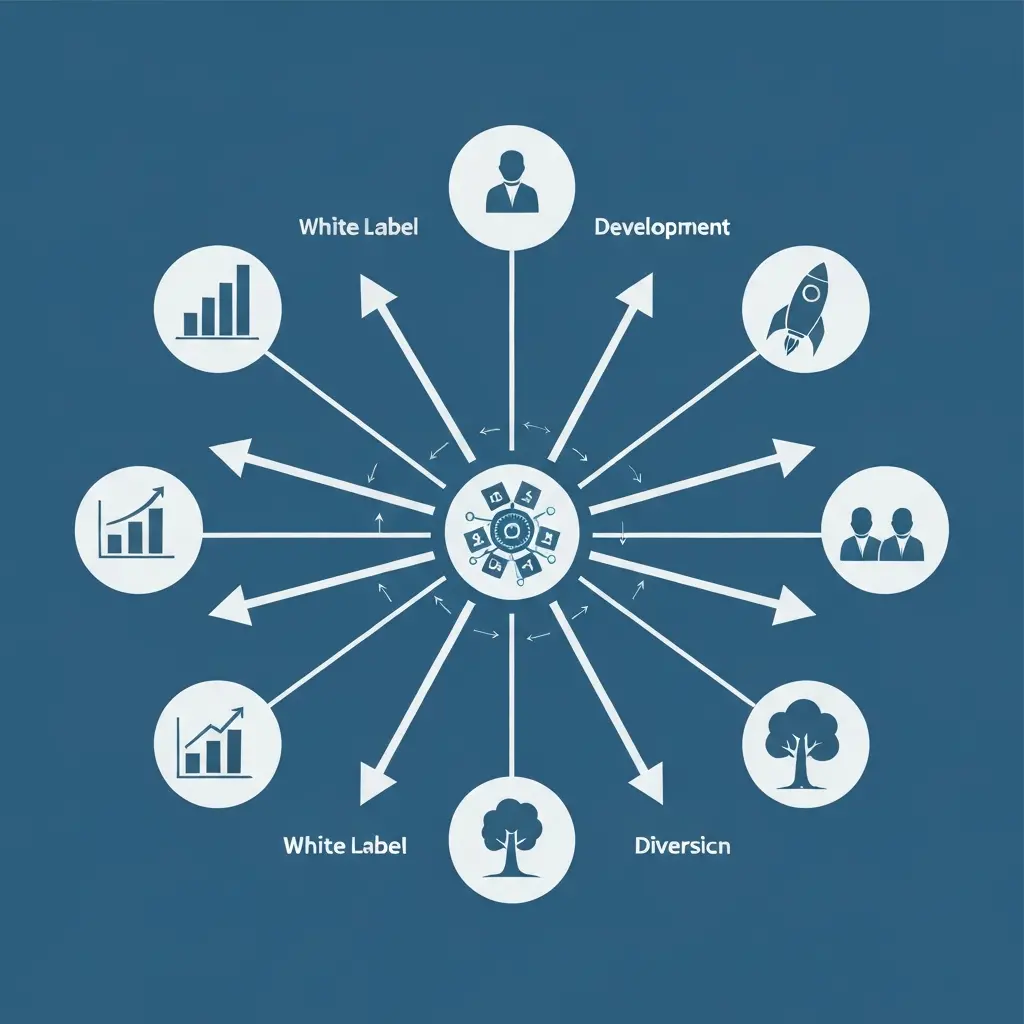

WordPress powers more than 40% of all websites globally, creating a continuous volume of technical maintenance, layout bug fixes, and plugin updates that frequently overwhelm creative agencies. White label WordPress support allows digital agencies to outsource technical execution to a specialized fulfillment partner under their own brand. This comprehensive guide outlines the operational triggers for outsourcing, cost tradeoffs against in-house hiring, and the criteria for selecting an invisible support partner.
Key Takeaways
- White label WordPress support allows agencies to outsource technical execution while maintaining client relationships and brand visibility.
- Agencies remain the primary point of contact, handling strategy, approvals, and communication.
- Commonly outsourced tasks include theme edits, plugin troubleshooting, maintenance, content implementation, and custom functionality.
- Selecting the right white label partner is crucial for seamless delivery and client satisfaction.
- Outsourcing can help agencies scale operations, manage workload, and focus on high-value activities.
What Is White Label WordPress Support?
White label WordPress support is a delivery model. An agency sells and manages WordPress services, and a fulfillment partner does the development, troubleshooting, maintenance, and implementation work invisibly.
The client never sees the partner's name. They see the agency's brand, the agency's project manager, and the agency's invoices.
The split of responsibilities is clean:
- The agency handles communication, approvals, strategy, and the client relationship.
- The white label partner handles technical execution behind the scenes.
You stay the face of the work. Your partner stays in the background. Done well, the client experiences a faster, more capable version of your agency. Learn when outsourcing makes sense and how to do it effectively.
Which WordPress Tasks Are Best Suited for White Label Outsourcing?
Agencies often struggle to keep up with the technical demands of WordPress projects. Routine tasks, recurring maintenance, and small fixes can consume significant time and resources. White label outsourcing allows agencies to delegate these tasks to a specialized partner, freeing internal teams to focus on strategy, design, and client management.
Common outsourced tasks include:
- Theme edits and styling adjustments
- Page builder fixes in tools like Elementor, Divi, or Beaver Builder
- Plugin troubleshooting and conflict resolution
- Ongoing WordPress maintenance and updates
- Content implementation from a client's draft or design file
- Speed and performance improvements
- Layout corrections after content changes
- Custom functionality and small feature builds
- Technical cleanup of messy or inherited sites
- Launch support and migration checks
Notice what these tasks have in common. They are necessary, they are recurring, and they rarely need a strategy meeting. They just need to get done, correctly, on time.
That is exactly the kind of work that eats an agency's week.
Why Does WordPress Work Become a Bottleneck?
Because WordPress work never stays neatly contained. One request pulls in a developer, then a designer, then an account manager, and suddenly half the team is involved in a two-hour fix.
The bottleneck usually shows up in one of a few ways:
- The internal team lacks technical depth. Designers can design. Account managers can manage. But neither should be debugging a PHP conflict.
- Senior developers spend their day on small tasks. The person who should be architecting the next big build is instead updating plugins.
- Designers get pulled into implementation. Every hour spent fixing a layout is an hour not spent on billable design work.
- Maintenance interrupts project work. Updates and fixes arrive without warning and shove planned work aside.
- Deadlines slip. Not because anyone is lazy, but because the queue is full of small jobs with no owner.
None of these are signs of a bad agency. They are signs of a growing one.
What Are the Signs It Is Time to Outsource?
Agencies often realize they need help only after the internal team is stretched too thin. Recognizing the signs early can prevent bottlenecks and protect both revenue and team morale.
Here are the signs that the time has already arrived:
- Small requests are slowing everything down
- You are selling WordPress work you cannot fulfill efficiently
- Deadlines keep slipping, even with good people
- Senior staff are stuck in production instead of strategy
- You want to offer recurring support but cannot justify a hire
If two or three of these sound familiar, the bottleneck is already costing you money. Every delayed project is a delayed invoice. Every overloaded developer is a retention risk.
When Does Hiring In-House Make More Sense?
Deciding between hiring in-house and outsourcing depends on the agency's workload, growth stage, and financial flexibility. Each approach has its advantages and trade-offs.
In-house hiring tends to make sense when:
- WordPress work is stable and constant
- Volume keeps a developer fully utilized
- You want full-time capacity you control directly
- Your margins can carry payroll overhead
That last point matters more than people admit. A full-time developer costs more than salary: benefits, equipment, management time, and the risk that the work dries up for a month. If the volume is steady and the margins are healthy, a hire can be a great investment.
If the volume arrives in waves, though, a hire can turn into a fixed cost you cannot flex.
When Does White Label Support Make More Sense?
Outsourcing to a white label partner allows agencies to handle fluctuating workloads without committing to permanent hires. It provides the flexibility to scale resources up or down based on project demands, ensuring that deadlines are met and internal teams remain focused on high-value work.
It fits best when:
- Requests come in waves rather than a steady stream
- You need flexibility without long-term commitments
- You want specialized help without a full-time hire
- Execution is needed immediately, not after a hiring cycle
- You want to add services without growing headcount
Think about a typical agency month. Three site launches, a handful of maintenance requests, one emergency fix, and a client who suddenly wants a redesign. A single in-house developer would be underwater one week and idle the next. A white label partner absorbs the peaks and disappears during the valleys.
That flexibility is the whole point. You pay for the work you need, when you need it.
What Are the Benefits of White Label WordPress Support?
Outsourcing to a white label partner can transform agency operations by improving efficiency, consistency, and scalability. It allows internal teams to focus on strategic and high-value work while routine and specialized tasks are handled by experts. The benefits extend across turnaround times, workload management, service expansion, and optimal use of senior talent.
How Does White Label Support Accelerate Turnaround Times?
A white label partner can significantly reduce turnaround times by handling requests promptly and efficiently. Work moves the moment it is submitted, without waiting for an internal developer to finish another project or navigate an internal queue. This ensures that client needs are met quickly and deadlines are consistently achieved.
Less Internal Overload
By offloading routine and specialized tasks to a white label partner, internal teams are freed from constant context switching and can concentrate on their core responsibilities. This reduces burnout, improves productivity, and ensures that high-value work receives the attention it deserves.
More Consistent Delivery
Consistency is a hallmark of a reliable white label partner. By handling similar tasks repeatedly, they develop expertise and processes that ensure high-quality delivery every time. This reduces the risk of errors and maintains a uniform standard across all client work.
Easier Service Expansion
Want to offer maintenance retainers? Speed optimization? Ongoing WordPress support? A white label partner lets you launch those services without hiring or training anyone.
Better Use of Senior Talent
By delegating routine and specialized tasks to a white label partner, senior developers and other key team members can focus on high-value projects that require their expertise. This ensures that the most skilled personnel are working on the initiatives that drive the agency's growth and client satisfaction, rather than being bogged down by repetitive or lower-priority work.
What Should You Look for in a White Label Partner?
Price is the easiest thing to compare and the least useful. A cheap partner who misses deadlines costs far more than a reliable one who charges a fair rate.
Look for these qualities instead:
- Dependable communication. Updates arrive without you chasing them.
- Realistic turnaround times. Promises match what actually gets delivered.
- Agency workflow experience. They understand tickets, approvals, and client deadlines.
- Strong troubleshooting skills. They can diagnose a weird bug rather than only following a checklist.
- Consistency. The tenth task is as good as the first.
- Respect for your client relationship. They never contact your client directly.
That last point is non-negotiable. Your partner should understand that the client belongs to you. Any partner who wants to talk to your clients directly is not a white label partner. They are a competitor in waiting.
How Does White Label Support Fit Different Agency Models?
White label WordPress support serves more than development shops. It fits several agency types, often in different ways.
| Agency Type | How White Label Support Helps |
|---|---|
| Agencies selling WordPress websites | Handle builds and post-launch fixes without hiring developers |
| Agencies managing multiple client sites | Keep maintenance and updates running across every site |
| Design agencies | Hand off implementation while keeping the creative work in-house |
| SEO agencies | Get WordPress execution done for on-page and technical changes |
| Agencies wanting maintenance revenue | Launch recurring support plans without adding staff |
An SEO agency, for example, can recommend a page speed fix, a schema update, or a content restructure and have it implemented the same week. No awkward handoff to the client's developer. No waiting.
A design agency can present a beautiful mockup and know the build will match it, because the fulfillment partner handles the implementation.
The model flexes to fit the agency, not the other way around.
What Mistakes Should Agencies Avoid?
Outsourcing can be highly effective, but it comes with pitfalls that agencies must navigate carefully. Most outsourcing problems stem from a handful of avoidable mistakes. Watch for these.
- Choosing on price alone. The cheapest option is rarely the most reliable. Factor in turnaround, communication, and rework rates.
- Waiting until the team is overwhelmed. By then, every handoff is urgent, and you cannot evaluate a partner calmly. Start before the crisis.
- Poor scope definition. Vague requests produce vague results. Say exactly what needs to change and where.
- Skipping internal review. Even with a strong partner, your team should do a final QA pass before anything reaches the client.
That last mistake is the most common and the most damaging. A partner can do excellent work, but only you know the client's preferences, history, and quirks. A quick review before delivery protects the relationship you have built.
For more on how agencies structure this kind of delivery, WordPress.org maintains developer documentation that is useful for understanding what technical execution actually involves.
How Do You Get Started with White Label Support?
Before fully integrating a white label partner into your workflow, it is wise to start with a controlled, low-risk approach. This allows your team to evaluate the partner's capabilities, communication style, and reliability without jeopardizing critical client relationships.
A sensible rollout looks like this:
- Pick one or two low-risk tasks, like a theme edit or a plugin fix.
- Write a clear brief with screenshots and expected outcomes.
- Review the delivered work carefully and note anything that needs adjustment.
- Give feedback and watch how the partner responds.
- Increase volume as trust builds.
Within a month or two, you will know whether the partner fits your workflow. If they do, you can start routing maintenance and recurring work to them and free up your team for bigger projects.
If they do not, you have lost very little.
Why Does the Client Relationship Stay with the Agency?
Because that is the entire promise of white label. The client continues working with the agency. The agency manages communication, approval, and strategy. The partner handles technical execution behind the scenes. This matters for trust. Clients buy from people they know. They do not want to discover that their agency quietly handed their site to a stranger. When the model works, they never need to know. The agency keeps the brand, the relationship, and the recurring revenue. The partner keeps the work. Everyone wins.
How Does White Label Support Help Agencies Scale?
Scaling usually means one of two things. You add more clients, or you add more services. Both are hard without more hands. White label support solves both problems at once. You can take on more clients without hiring. You can offer maintenance retainers without building a support department. You can say yes to WordPress work outside your team's current skills, because the fulfillment partner covers the gap.
The result is growth without the fixed costs and management overhead of a bigger internal team. Your agency scales its delivery without scaling its payroll. For agencies thinking about the long game, this is the difference between growing steadily and growing until something breaks.
How Do You Measure Whether Outsourcing Is Working?
Track a few simple numbers. They will tell you more than any gut feeling.
- Turnaround time. Are tasks coming back faster than your team could do them?
- Rework rate. How often does delivered work need fixes?
- Team hours freed. How much time has moved off your internal team?
- Client satisfaction. Are clients noticing faster delivery?
- Margin per project. Is the work still profitable after the partner's fee?
If turnaround is fast, rework is low, and margins hold, the model is working. If any of those slip, it is worth a conversation with the partner before you consider switching.
What Should You Include in a White Label Support Agreement?
A clear agreement prevents most disputes before they start. Whether you formalize it in a contract or a simple statement of work, spell out the essentials.
- Scope of work. List the task types you expect the partner to handle, and note anything explicitly excluded.
- Turnaround expectations. Define standard response and delivery times, and how urgent requests are handled.
- Communication channels. Agree on where tickets live and who on each side is the point of contact.
- Revision policy. State how many rounds of adjustments are included and what counts as a new task.
- Confidentiality. Require the partner to keep client details private and never contact clients directly.
- Billing terms. Clarify whether you pay per task, per hour, or on a retainer, and when invoices are due.
Putting these points in writing protects both sides. It also gives you a benchmark for the measurement questions above, because you can compare actual delivery against what was promised.
How Do You Keep Quality High Over Time?
A strong first month does not guarantee a strong first year. Quality drifts when communication loosens or briefs get sloppy. A few habits keep standards steady. All code commits should pass through Git version control and be tested in isolated staging environments before merging to production.
- Keep briefs consistent. Use a template so every request includes the same details: the goal, the page, the expected result, and screenshots.
- Rotate your QA reviewer. Fresh eyes catch issues that a single reviewer might miss over time.
- Review the numbers monthly. A rising rework rate is an early warning worth acting on.
- Give feedback promptly. Partners improve fastest when they know what went wrong and why.
- Revisit the agreement. As your volume grows, update scope and turnaround terms to match reality.
None of this requires heavy process. A shared ticket system, a brief template, and a short monthly review are usually enough. The agencies that get the most from outsourcing treat it as a partnership with clear expectations, not a transaction.
Conclusion
WordPress work rarely stays small for long. A simple edit becomes a layout fix, a plugin update becomes an emergency, and suddenly your best people are stuck in production instead of doing the work that grows the agency.
White label WordPress support gives agencies a way out of that cycle. You keep the brand, the client relationship, and the strategy. A fulfillment partner handles the technical execution behind the scenes. Your team gets its time back, your clients get faster delivery, and your agency gets room to scale without adding headcount. The key is to start before the bottleneck becomes a crisis. Pick a partner carefully, define scope clearly, and always do a final review before delivery. Do those three things, and white label support becomes one of the quietest, most reliable parts of your agency's operation.
If you are ready to take WordPress work off your team's plate, the right white label partner agency is out there. Start with one small task, and let the results make the case.
Frequently Asked Questions
What is white label WordPress support?
White label WordPress support is a service where an agency delivers WordPress work under its own brand while a fulfillment partner handles development, troubleshooting, maintenance, and implementation behind the scenes. The client works only with the agency, which manages communication, approvals, and strategy.
What kinds of WordPress tasks can be outsourced?
Most technical and recurring tasks can be outsourced, including theme edits, page builder fixes, plugin troubleshooting, maintenance, content implementation, speed improvements, layout corrections, custom functionality, technical cleanup, and launch support.
Is white label support cheaper than hiring in-house?
Not always, but it is more flexible. You pay for the work you need rather than a fixed salary, benefits, and overhead. For agencies with fluctuating workloads, that flexibility often costs less overall than a full-time hire who sits idle between busy periods.
Will clients know I am using a white label partner?
They should not. A proper white label partner stays invisible. They do not contact your clients, do not appear on invoices, and do not put their name on the work. You remain the only point of contact.
How long does it take to see results from outsourcing?
Most agencies see a difference within the first month. Turnaround times improve as soon as small tasks leave the internal queue, and team capacity frees up almost immediately. The bigger gains, like launching recurring support services, usually show up over the first few months.
Do I still need to review work before it reaches the client?
Yes. Even with a strong partner, your team should do a final QA pass before delivery. You know the client's preferences and history better than anyone. A quick review protects the relationship and catches small issues before they become client conversations.
About the Author

Brian Keary
Founder & Lead Developer
Brian is the founder of BKThemes with over 20 years of experience in web development. He specializes in WordPress, Shopify, and SEO optimization. A proud alumnus of the University of Wisconsin-Green Bay, Brian has been creating exceptional digital solutions since 2003.
Expertise
Writing since 2003